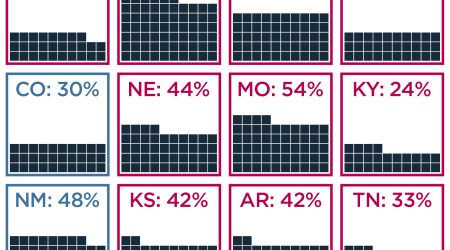
The United States-Mexico-Canada (USMCA) trade agreement, negotiated in the last year of President Donald Trump's first term in 2020, called for the parties to decide whether to renew its terms by July 1. That deadline will no doubt be missed. Fitful negotiations started earlier this year, indicating fierce disagreements over many issues. Outright termination of the USMCA in the course of the current 6-year review is highly unlikely. But the risk is not zero for the simple reason that Trump is making heavy demands on Canada and Mexico while offering no concessions on US trade barriers.
The USMCA is the successor to the North American Free Trade Agreement (NAFTA) negotiated by President Bill Clinton in the early 1990s and reviled by Trump since then. The remote possibility of termination could evolve in three ways.
First, the review could result in no agreement, leading to annual reviews for the next 10 years of the USMCA's 16-year life. This might not seem like termination, but the prospect of annual reviews would create a cloud over North American trade and investment and deprive the USMCA of a key attribute: business certainty.
Second, any of the three partners, but most likely the United States, could issue notice to terminate the pact in six months. That alone would resurrect most favored nation (MFN) tariffs between the partners. US MFN tariffs average around 3 percent, Canadian MFN tariffs around 6 percent, and Mexican around 7 percent.
Third, in keeping with Trump's goal of erecting a much higher tariff wall around the US market, following termination, the US administration might impose uniform tariffs of 10 to 15 percent on imports from Canada and Mexico, along with higher tariffs for national security claims (e.g., 50 percent on iron and steel, 25 percent on the non–North American component of autos). In turn, Canada and Mexico might take selective measures against US exports.
The purpose of this blog post is to highlight the risk that the third termination scenario poses to the most exposed US states and product categories. If termination looms on the political horizon in the course of the 6-year review, these states and producers (along with others) can be expected to voice strong opposition.
We analyze Census state exports data based on the origin of movement, which covers both manufactured and nonmanufactured goods. For manufactured products, especially autos and auto parts, some exports contain foreign content and may cross the border in North America multiple times during production. As a result, the true US domestic value-added in exports to Mexico and Canada may be overestimated due to double counting. But even with this limitation, the data are useful for sizing up the scale and geographic pattern of US exports to its neighbors. For nonmanufactured commodities, the data often reflect the state where the port of export is located rather than the state where the goods were produced.
Table 1 summarizes US merchandise exports to Canada and Mexico by region. Not surprisingly, regions closer to the northern border tend to have larger exports to Canada, while regions closer to the southern border tend to have more exports to Mexico.
| Table 1 Exports to Canada and Mexico in 2025, by US region | ||
| Region |
Exports, billions of dollars |
|
|
to Canada |
to Mexico |
|
| New England |
8.6 |
5.2 |
| Mideast |
40.6 |
12.8 |
| Great Lakes |
76.4 |
49.3 |
| Plains |
27.8 |
18.0 |
| Southeast |
55.2 |
46.1 |
| Southwest |
39.3 |
147.4 |
| Rocky Mountain |
6.3 |
4.1 |
| Far West |
28.5 |
45.2 |
| Notes: Exports in this table do not include exports to Puerto Rico or the US Virgin Islands, as well as those without specified origin of movement. The Mideast region covers Mid-Atlantic states such as New York, New Jersey, and Maryland. More details can be found through the Bureau of Economic Analysis regions by state | ||
| Sources: US Census state exports HS 6 (origin of movement) and US Bureau of Economic Analysis GDP by state. | ||
Table 2 shows states with per capita exports in 2025 to Canada and Mexico combined amounting to $2,000 or more. It also shows total exports per capita by these states, exports to Canada and Mexico as a share of total exports, and total exports as a percentage of state GDP. In the event termination becomes part of the political dialogue, all these metrics ought to be stressed by leaders in states at risk. It is worth noting that seven of the nine high-impact states voted for Trump in 2024.
| Table 2 States with per capita exports to Canada and Mexico over $2,000 in 2025 | |||||||||
| State | Total exports, billions of dollars |
Exports to Canada and Mexico | Population estimate for 2025, millions |
2025 GDP, billions of dollars |
Total exports per capita dollars |
Exports to Mexico and Canada per capita, dollars |
Total exports as a percentage of state GDP | Electoral votes result in 2024 | |
| billions of dollars | percentage of total exports | ||||||||
| North Dakota | 8.6 | 7.8 | 89.9% | 0.8 | 82 | 10,814 | 9,723 | 10.6% | Trump |
| Texas | 450.3 | 159.8 | 35.5% | 31.7 | 2,904 | 14,200 | 5,039 | 15.5% | Trump |
| Michigan | 58.3 | 37.8 | 64.9% | 10.1 | 730 | 5,754 | 3,734 | 8.0% | Trump |
| New Mexico | 15.3 | 7.3 | 47.9% | 2.1 | 153 | 7,196 | 3,450 | 10.0% | Harris |
| Indiana | 68.8 | 20.6 | 30.0% | 7.0 | 545 | 9,872 | 2,960 | 12.6% | Trump |
| Kentucky | 50.6 | 12.3 | 24.4% | 4.6 | 307 | 10,990 | 2,677 | 16.5% | Trump |
| Iowa | 16.2 | 8.1 | 50.0% | 3.2 | 277 | 5,000 | 2,498 | 5.8% | Trump |
| Illinois | 80.0 | 29.5 | 36.9% | 12.7 | 1,202 | 6,286 | 2,319 | 6.7% | Harris |
| Arizona | 44.4 | 17.3 | 39.0% | 7.6 | 598 | 5,827 | 2,275 | 7.4% | Trump |
| Sources: US Census state exports HS 6 (origin of movement), US Census state population, American Presidency Project (University of California, Santa Barbara), and US Bureau of Economic Analysis GDP by state. | |||||||||
Table 3 calls out nine product categories in the Harmonized Commodity Description and Coding System (HS) 4-digit classification where US exports to Canada and Mexico combined exceeded $10 billion in 2025. It also shows the percentage of US exports to the world accounted for by these exports to Canada and Mexico. US producers of the affected products will surely be alarmed if USMCA termination talk attracts political notice.
As table 3 shows, automotive products are a major US export to Canada and Mexico. These would be easy targets for higher Canadian and Mexican tariffs if the United States ramps up protection against their auto exports.
The United States is a big exporter of petroleum, computers, and aircraft to Canada and Mexico. Again, Canadian and Mexican tariffs could shift part of these markets to domestic or third-country suppliers.
Texas, for example, exported roughly $42.6 billion of petroleum products to Canada and Mexico in 2025.[1]
In addition, there were roughly $11 billion of civilian aircraft exports to Canada and Mexico from the following states: Texas, Washington, Florida, Kentucky, California, and Ohio. Boeing, for example, is one of the key players in aircraft production and exports in Texas.
Texas, Arizona, New Mexico, and California together contributed to some $33 billion of exports of data processing machines and parts to Canada and Mexico.[2] This could include products ranging from workstations to keyboards sold by companies like Apple, Dell, and HP.
Texas, California, Arizona, and New Mexico together contributed to some $11 billion of exports of semiconductors to Canada and Mexico. This includes processors such as graphics processing units (GPUs) and central processing units (CPUs), including products sold by technology firms such as NVIDIA, Intel, and AMD.[3]
| Table 3 Selected products with exports to Canada and Mexico over $10 billion in 2025 | ||||
| HS code | HS code description | Total exports, billions of dollars |
Exports to Canada and Mexico | |
| billions of dollars | percentage of total exports | |||
| 2710 | Petroleum oils and oils from bituminous minerals (other than crude) and products therefrom, nesoi, containing 70 percent (by weight) or more of these oils; waste oils | 109.5 | 39.8 | 36.4% |
| 8708 | Parts and accessories for tractors, public-transport passenger vehicles, motor cars, goods transport motor vehicles and special purpose motor vehicles | 43.3 | 32.7 | 75.6% |
| 9880 | Low value export shipments; Canadian estimated late receipts | 60.6 | 23.5 | 38.7% |
| 8473 | Parts and accessories nesoi for typewriters and other office machines of headings 8469 to 8472 | 35.8 | 21.2 | 59.4% |
| 8471 | Automatic data processing machines and units thereof; magnetic or optical readers, machines for transcribing and processing coded data, nesoi | 61.2 | 19.8 | 32.3% |
| 8800 | Civilian aircraft, engines, and parts | 152.8 | 17.8 | 11.6% |
| 8703 | Motor cars and other motor vehicles designed to transport people (other than public-transport type), including station wagons and racing cars | 53.5 | 16.7 | 31.2% |
| 8704 | Motor vehicles for the transport of goods | 17.5 | 13.6 | 77.7% |
| 8542 | Electronic integrated circuits and microassemblies; parts thereof | 51.5 | 13.2 | 25.6% |
| 2711 | Petroleum gases and other gaseous hydrocarbons | 81.9 | 12.1 | 14.8% |
| 8517 | Electrical apparatus for line telephony or line telegraphy, including such apparatus for carrier-current or digital line systems; parts thereof | 47.1 | 11.5 | 24.3% |
| HS = Harmonized Commodity Description and Coding System nesoi = not elsewhere specified or included or not elsewhere specified or indicated |
||||
| Source: US Census state exports HS 6 (origin of movement). | ||||
To conclude, while the risk of termination is slight, the impact on select US states and products could be dramatic. Political "blowback" from powerful interests in the US economy ought to deter the Trump administration from threatening termination in the course the 6-year review.
Notes
1. Petroleum products refer to the following export items: HS 2709, 2710, and 2711.
2. Data processing machines and parts are products under HS 8471 and HS 8473.
3. Electronic integrated circuits and parts are products under HS 8542.
Data Disclosure
Related Documents
- Document2026-06-09-hufbauer-zhang.zip (28.15 MB)