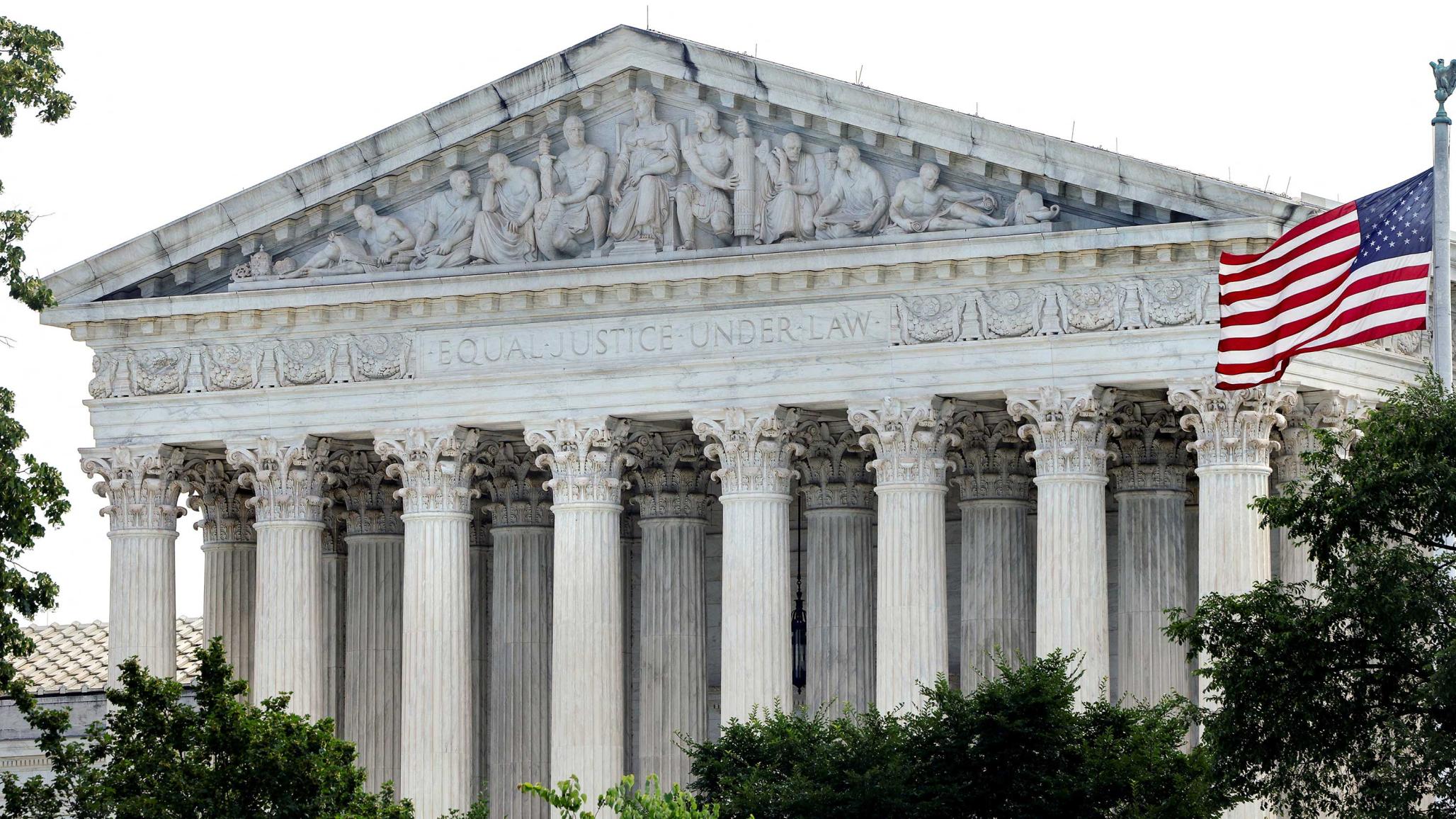
On June 17, a group of small US businesses that import educational toys asked the Supreme Court to take urgent action to declare illegal many of President Donald Trump’s tariffs. These include the so-called Liberation Day tariffs he announced April 2 and those he imposed earlier this year linked to fentanyl trafficking. This raises the most important trade-related issue ever brought before the court in terms of economic impact and constitutional implications. The petition presents the justices with an historic opportunity to demarcate the boundaries between presidential and congressional authority on trade. Is the Supreme Court about to end the massive across-the-board Trump tariffs that are threatening US and global economic growth and straining America’s relations with all other countries? The president created the tariffs with a stroke of his pen, through executive orders. Will the Supreme Court provide the requested relief and terminate them? Will it agree to hear the case immediately?
The likely answer is “no,” not now. But that would not be the end of the story.
The petitioners begin their argument for Supreme Court intervention on the merits by citing historian Douglas Irwin’s statements that the US Constitution gives the power over commerce to Congress, not the president. For anyone trying to fathom what this case is about, this is the fundamental premise that must be understood. If the president’s actions are legitimate, the authority for them is not derived from some innate power he has. On the contrary, he can act only under a proper delegation from Congress. When Congress gave the president emergency authority under the International Emergency Economic Powers Act (IEEPA), did that include the authority to impose tariffs?
The petitioners argue that the power to “regulate” trade under IEEPA does not imply a power to impose tariffs. The petitioners contend that Congress knew how to delegate tariff authority to the president expressly when it chose to do so. For example, it gave him authority to act to defend the balance of payments position of the United States. But this authority by its terms is very limited. It is narrowly drawn and any action taken under it can only be temporary, not lasting more than five months. But when Congress granted the IEEPA authority to regulate transactions, it was silent on including any tariff authority. And in the 50 years since IEEPA was enacted, it has never once been used to impose a tariff.
The Trump tariffs have been successfully challenged in two courts. Both the Court of International Trade and the US District Court for the District of Columbia found that the president did not have the authority to impose the broad tariffs announced April 2 and earlier. The two cases differ in that the District Court case has a narrower finding, that IEEPA does not authorize the imposition of any tariffs under any circumstances, while the Court of International Trade held that these tariffs that have been applied were unauthorized. This is an important point for the petitioners because the jurisdiction over tariff matters is not in the court (the DC District Court) to which they brought their action but in the Court of International Trade, and they want their “win” in the District Court to be preserved. A problem for the petitioners is that there is no definitive way of showing that “regulating trade” does not include imposing a tariff, just that tariffs and regulation have been separate matters in the way other statutes have been dealt with by Congress and the executive branch.
The decision of the Court of International Trade (CIT) is not concerned with whether there is some element of tariff authority within the term “regulation”. For the Court, it is enough to conclude that Congress could not delegate all of its tariff authority, as the “Liberation Day” tariffs would very nearly require. The CIT decision does not require a finding that there is no circumstance in which a tariff might be an appropriate tool with which to regulate trade. For example, one issue the courts may have to grapple with is whether the IEEPA authority can be used as a bludgeon to press for compliance with trade sanctions. (Secondary sanctions are used to press for cooperation in making sanctions more effective).
Although the small businesses won in their court challenges decided at the end of May, the tariffs have been left in effect pending an appeal by the government. In making their case for Supreme Court emergency action, the petitioners state, undoubtedly correctly, that Trump’s tariffs impose a large financial burden not only on them but shared by businesses similarly situated and American consumers. As the petitioners note, the situation may soon get worse for them. Many of the tariffs above 10 percent are currently suspended, so even higher tariffs and a larger burden are threatened.
The petitioners have already won decisively before the DC District Court and before a three judge panel of the Court of International Trade, from whose decisions the appeals are being taken. They make a number of compelling arguments that they and other businesses will likely prevail at the appellate level before the DC Circuit and Federal Circuit courts. For this reason, they say, any intermediate appeals are unnecessary. They add, even if they win their cases on appeal, having unfettered tariff power is of sufficient importance to the Trump administration that it will undoubtedly appeal any adverse finding to the Supreme Court. So, the petitioners contend that the case in any event will ultimately have to be decided by the Supreme Court, so it makes sense for it to hear the case immediately, despite the appeals not having been heard.
The economic burden is not by itself enough to move the Supreme Court to cut short the normal judicial process and rule immediately, preventing review by the DC Circuit Court of Appeals and the Federal Circuit. Neither appellate court thought the burden so great to cause them to deny the government a stay, keeping the tariffs in place, allowing the continuing collection of duties or responsibility to pay them, pending oral argument which has been scheduled to take place on July 31, two full months after the lower court decisions.
The bottom line: Instances in which the Supreme Court grants emergency review of a matter that cuts out the appellate process are rare. This is not on its face such an emergency.
Will this case ultimately reach the Supreme Court? Maybe. If the appellate courts give small businesses a win, on whatever basis, the administration would be likely to appeal a loss. Denial of further review would let the lower courts’ rulings stand. If the Supreme Court does weigh in, it will very likely make sure that any delegation of tariff authority is clearly defined and limited. There are no circumstances in which it can be presumed that Congress could or did give unlimited authority to the president to impose tariffs on the world. It is very likely that the Supreme Court will ultimately so find.
Postscript
The Supreme Court late on Friday, June 20, 2025, denied the petitioners’ motion for expedited consideration of this case, with the effect that the appeal in this and a similar challenge to the Trump tariffs will next be heard by appellate courts.
Data Disclosure
This publication does not include a replication package.