
Princess Awesome, LLC, is a small American business that sells colorful clothing and accessories for kids made in the US and abroad. The company—which decorates its products with dragons, dinosaurs, unicorns, and other fanciful images—is also the lead plaintiff in a lawsuit by 11 small importing businesses challenging the legality of many of President Donald Trump’s recent series of tariffs. More than anything else, Princess Awesome has demonstrated the majesty of the US constitutional system in which anyone directly and adversely affected by a government decision gets a chance to have that decision reviewed by the courts, certainly if there is a tariff at issue. Being heard, however, is by no means a guaranty of receiving a positive outcome.
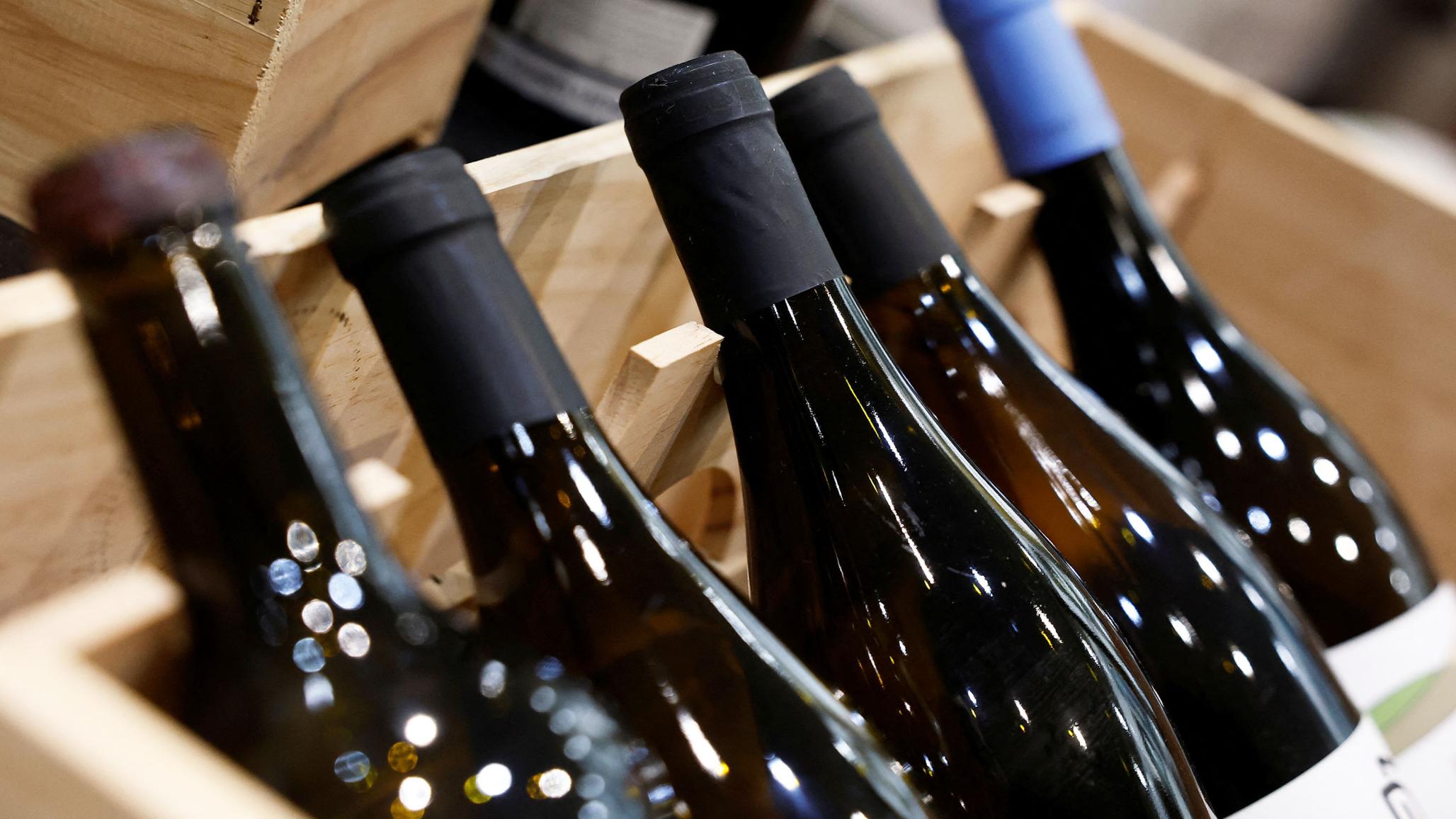
This is not the first case to come before the US Court of International Trade (CIT) challenging Trump’s tariffs. VOS Selections, a small business that imports wines, sakes, and spirits, brought a case, along with a few other small businesses, within a few days of the tariffs being imposed. The case has already been argued, and a recording of the arguments plaintiffs made and the government’s response is available online. Other cases are pending. (For example, over a dozen state governments as well as other private parties have sued separately.) The issues presented are relatively clear.
The starting point in thinking about the government’s power to impose tariffs is that under the US Constitution that power is given exclusively to the Congress, not the president. When the president announced his so-called “Liberation Day” tariffs on April 2 without going to Congress, he needed to have had in hand a pre-existing delegation of authority from the Congress for the tariffs to be legal. His announcement assigned tariff levels to nearly two hundred countries and territories. The grant of authority from Congress, if it occurred, must be very great indeed, nearly co-equal to that first given to Congress by the Constitution. The delegation to the president cannot have happened accidentally or simply be implied.
One would think that the issue is so clear-cut that the government would have no arguments to make, but it does have arguments and has made them. Here it is worth reflecting on the fact that what may appear to be inarguable on its face is often, in courts of law and in public discourse, very arguable. Take for example going to war. The Constitution assigns the sole authority to declare war to the Congress. But in the case of the Korean, Vietnam, and two Gulf Wars, all conflicts that were beyond all doubt “wars,” there was no Congressional declaration of war. Congressional approval was clear, it could be said, by Congress appropriating monies to support US participation in those conflicts. And besides, the president is commander-in-chief. Under the Constitution he has authority to conduct a war, not to declare it.
In a genuine balance of payments crisis in 1971, President Richard Nixon declared a national emergency. Using a World War I statute, the Trading with the Enemy Act (TWEA), in a way it had never been used before, he imposed a 10 percent import surcharge (a tariff) for four months to enable the US to abandon the gold standard and devalue the dollar, the latter with the agreement of America’s major trading partners. An importer of zippers, Yoshida International, challenged the president’s tariff. The CIT ruled that Nixon’s action was beyond what Congress had delegated. On appeal, the surcharge was upheld as an exercise of emergency authority properly delegated.
This did not sit well with the Congress. In 1974 it created a separate 150-day limited authority to deal with future balance of payments crises. In 1976, it enacted legislation to delete non-war situations from the 1917 TWEA and to terminate national emergencies by means of a vote of Congress. In 1977 it enacted the International Emergency Economic Powers Act (IEEPA), in which it provided authority to regulate trade whenever the president finds that an international economic emergency exists. Prior to the second Trump administration, presidents had declared 70 national emergencies but never used IEEPA to impose tariffs. Trump’s lawyers assert that this statute is a sufficiently broad delegation of the power over commerce that it authorizes his imposition of tariffs and his declaration of a national emergency.
The Senate sought to end this emergency, but its effort failed by a vote of 47–52. The Chinese president sought to remove all the tariffs by retaliating against American trade. The financial markets swooned when faced with the high levels of tariffs on both the Chinese and American sides. The resulting pressures appear to have caused President Trump to reduce substantially the tariffs on US imports from China. But the tariffs are suspended, not canceled. The UK prime minister negotiated an agreement using trade concessions to obtain elimination of some of the tariffs on British trade, but they largely remain at an average 10 percent level. As of this writing, dozens of countries are said to be in negotiations with the US. To date, none has succeeded in negotiating the elimination of the new Trump tariffs. The question of whether Trump’s broad tariffs will remain is therefore in the hands of the US courts.
Whether Princess Awesome, and similar small businesses, as well as state governments and other private parties, succeed in nullifying Trump's tariffs remains to be seen. The three-judge panel of the Court of International Trade, as well as other federal courts, will be considering whether the Congress could and did delegate the tariff authority the government lawyers claim for the president; whether the statute, IEEPA, contemplates the imposition of tariffs at all (however, regulating trade probably can be interpreted to include imposing a tariff in selected situations); whether the emergency authority’s wholesale use is permissible to create an entirely new US tariff scheme or whether doing so usurps the role of the Congress; and whether an international economic emergency exists as the president has determined (a complex issue given that presidents have the foreign affairs power and have been deferred to repeatedly on the question of whether an emergency exists).
How strong a bulwark against trade protectionism imposed at the sole discretion of the president will the courts prove to be? The plaintiffs have made clear why they believe that they should prevail, and they might well do so. A lot is at stake for small businesses such as Princess Awesome, indeed also for large businesses, as well as for the American and world economies.
Data Disclosure
This publication does not include a replication package.
