
Annual Report 2025

Leading research on the global economy
The Peterson Institute for International Economics (PIIE) is dedicated to strengthening prosperity and human welfare in the global economy through expert analysis and practical policy solutions.
Founded in 1981 and led since 2013 by President Adam S. Posen, the Institute anticipates emerging issues and provides rigorous, evidence-based policy recommendations with a team of the world’s leading economists and policy experts. It creates freely available content in a variety of accessible formats to inform and shape public debate, reaching an audience that includes government officials and legislators, business and NGO leaders, international and research organizations, universities, and the media.
“More than ever, we need an institution like Peterson. We need a lively intellectual debate and pragmatic solutions for the key issues facing the global economy.”
"It has been a turbulent few years for the trade policy community. Throughout it all, the top-notch experts at Peterson have provided fact-based, data-driven, and historically informed analysis to help us make sense of what's going on and better understand what is at stake for people's economic prospects, both within the United States and around the world. They are fearless, and that's what I like. They don't pander to anyone. They just tell it the way it is."
“It's a very good time for evidence-based analysis of international economics. And nobody does it better than the Peterson Institute.”
Subscribe to the PIIE Insider Weekly Newsletter


Letter from the President
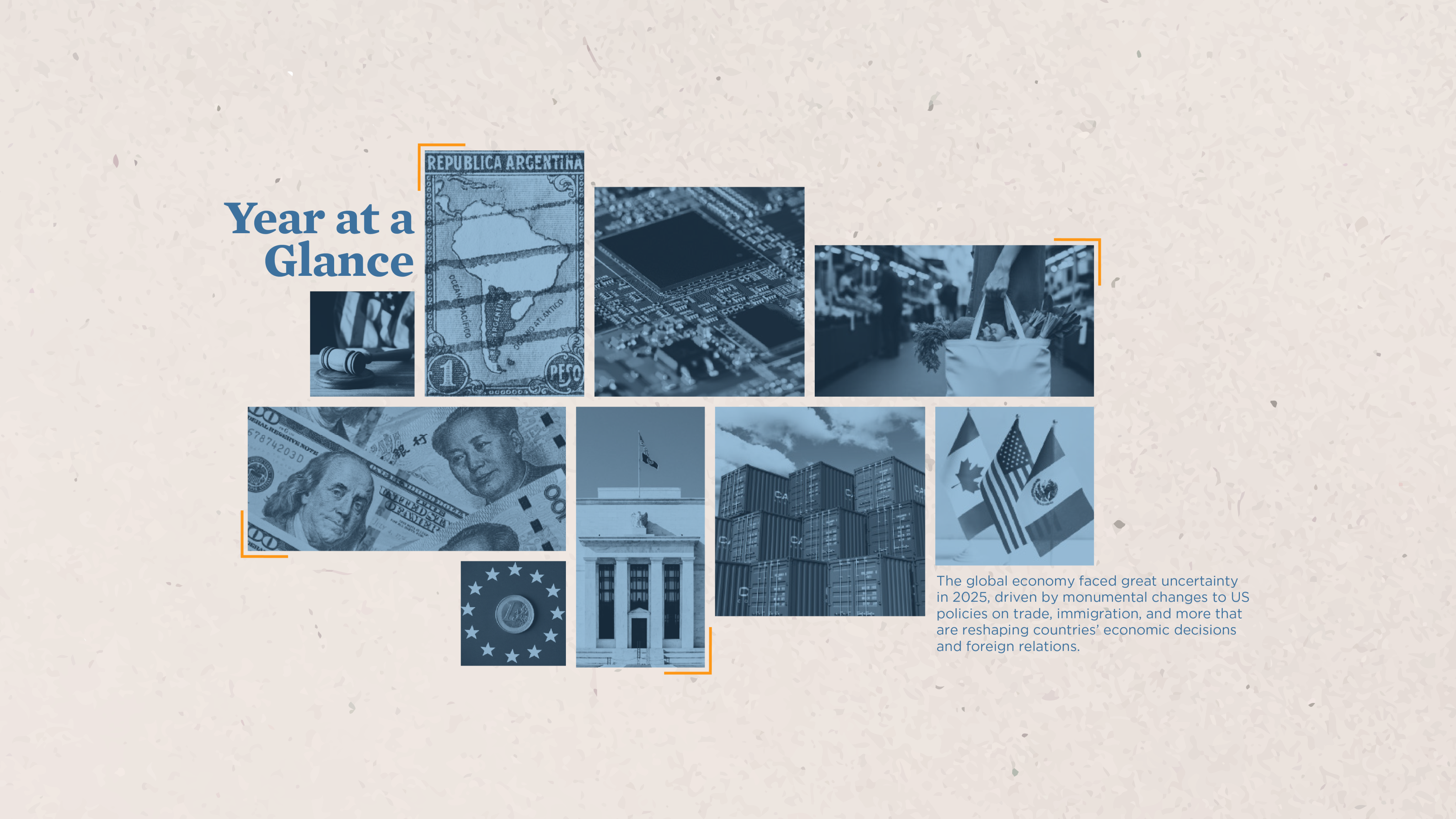
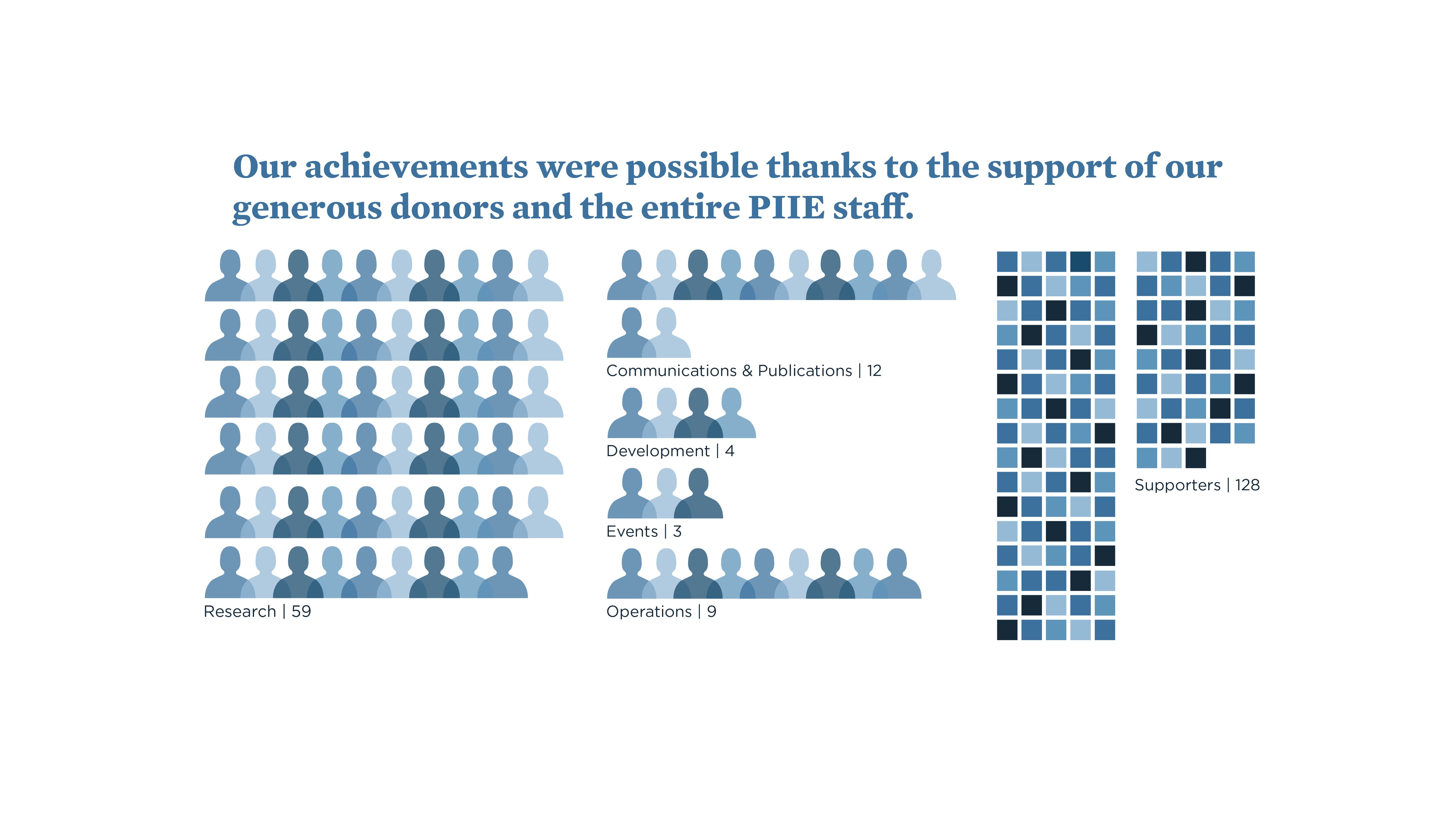
At a time defined by dramatic economic and geopolitical policy changes, the world needs an evidence-based, unbiased source of economic analysis more than ever. The Peterson Institute for International Economics proudly served that role again in 2025 as a nonpartisan provider of facts, insights, and practical solutions. Our scholars’ research helped policymakers and the interested public understand the economic issues of our time with policy advice grounded in unparalleled practical expertise. We will continue to do so in the years ahead, however the global economy and geopolitics evolve.
In this spirit, I am pleased to present the Peterson Institute’s annual review of our scholars’ work and our public outreach on numerous critical policy issues.
Global trade wars and rising economic costs
Following President Donald Trump's unilateral "Liberation Day" tariff increases through executive orders on April 2, 2025, PIIE scholars provided real-time analysis of the costs to American consumers and businesses, resulting in record media citations. Since then, our scholars have assessed US tariff changes, revenue and investment claims, and legal challenges, as well as the impact on the economy of protracted policy uncertainty.
Central bank independence and data integrity
PIIE experts examined the institutional credibility and guardrails needed to ensure monetary policymakers can sustain low inflation and long-term economic stability. The Institute convened leading voices from academia, government, and finance to share insights at a high-level conference. Our scholars also identified issues with the key US data that inform economic policy, including estimates of job growth, employment, and immigration.
US-China relations and China’s broader impact
Increased tensions between the United States and China underscored the need for more work in one of PIIE’s core research areas. PIIE’s analysis of China’s economy examined the consequences of its slowing growth, state-driven industrial policy, and trade frictions for China and the global economy.
The decentering of the dollar
PIIE scholars examined the implications of major US policy shifts for the dollar’s role in global finance and the international economic system. Throughout the year, PIIE held high-level events and produced critical analysis on the changing dollar regime.
The EU’s moves towards greater resilience and influence
PIIE research examined whether and how the European Union can confront growing security threats, trade tensions, and fiscal constraints as the United States withdraws from its role as global insurance provider. This included identifying ways Europe could achieve financial autonomy through creating a deep and liquid Eurobond market as well as creative initiatives to finance military spending and aid.
Crises in Argentina, wartime economies, and beyond
Beyond the G7 and Chinese economies, PIIE scholars examined how economic policy choices play out under crisis conditions—such as Argentina’s recurring monetary turmoil, wartime economies in Russia and Ukraine, energy-market shocks, and financial vulnerabilities across Asia and the Middle East.
As we look ahead to the remainder of 2026, PIIE scholars will continue working on these issues while also examining:
- The effects of President Trump’s tariffs on consumers, businesses, and supply chains as Europe, China, Canada, India, and others forge new trade agreements in the rapidly changing world trading system.
- The rapid advancement of artificial intelligence (AI)—particularly China's and the United States’ diverging and competing development of AI models—and its potential to reshape labor markets, productivity, and global competition.
- How Europe can generate the stronger economic growth and business dynamism it needs to cover rising social and national security costs.
- The implications for global imbalances—and international negotiations over them—of slowing growth, sticky deflation, and weak consumption in China, with the mirror image (accelerating growth and inflation, resilient consumption growth) characterizing the US economy, with ramifications for exchange rates.
- Renegotiation of the US-Mexico-Canada trade agreement, focusing on areas of dispute such as energy, auto rules of origin, and lumber. How much can US pressure bilaterally on Canada and Mexico result in the parties strengthening or revoking this important accord?
- The economic effects of new US barriers to immigration including on the labor market, GDP growth, and productivity gains.
As always, I express my sincere appreciation to each of our stakeholders and supporters—including philanthropic individuals, private-sector corporations, foundations, and government institutions—without whom we could not continue our crucial work during these uncertain times.
Sincerely,


Adam S. Posen
President | Peterson Institute for International Economics




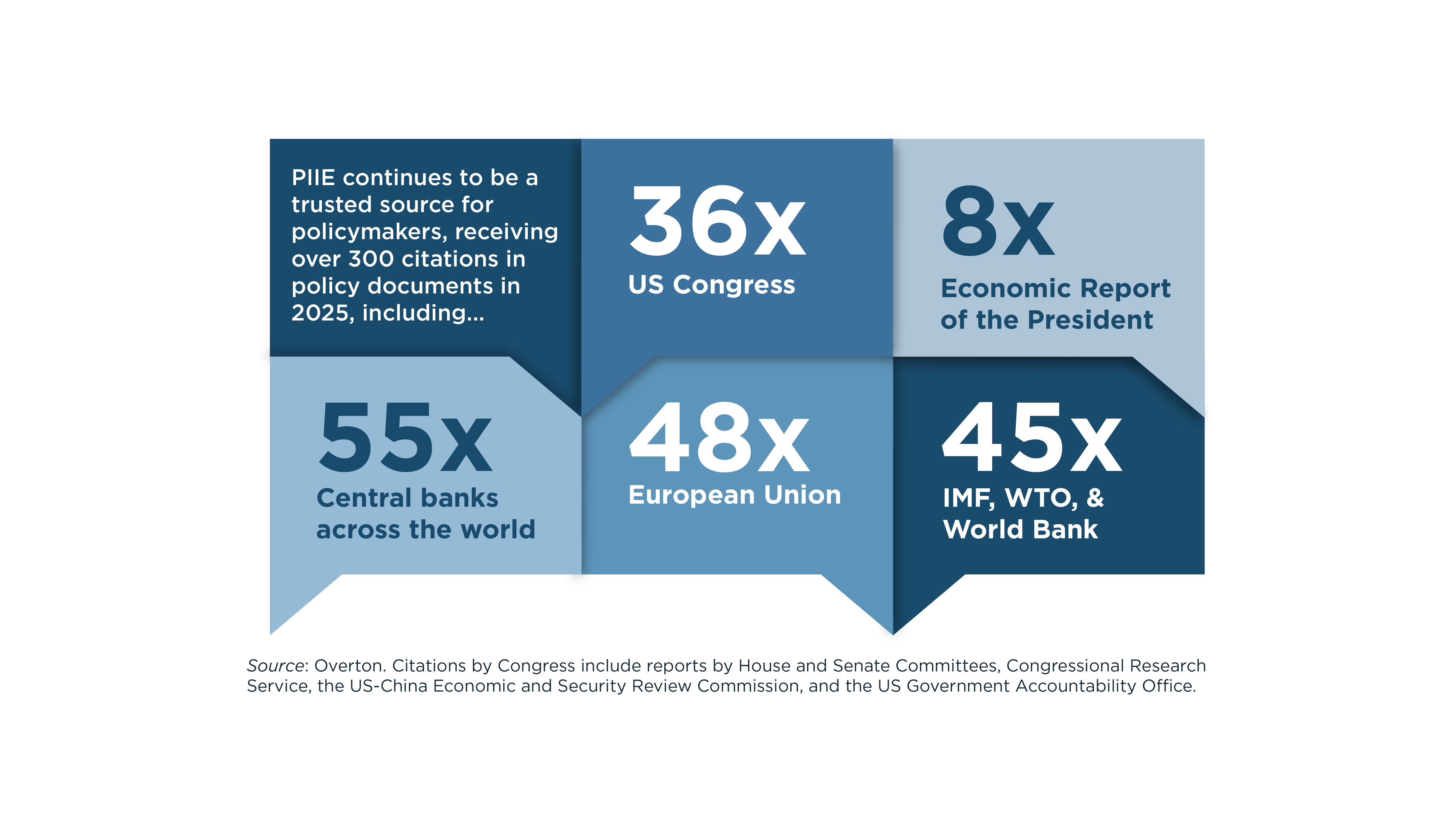

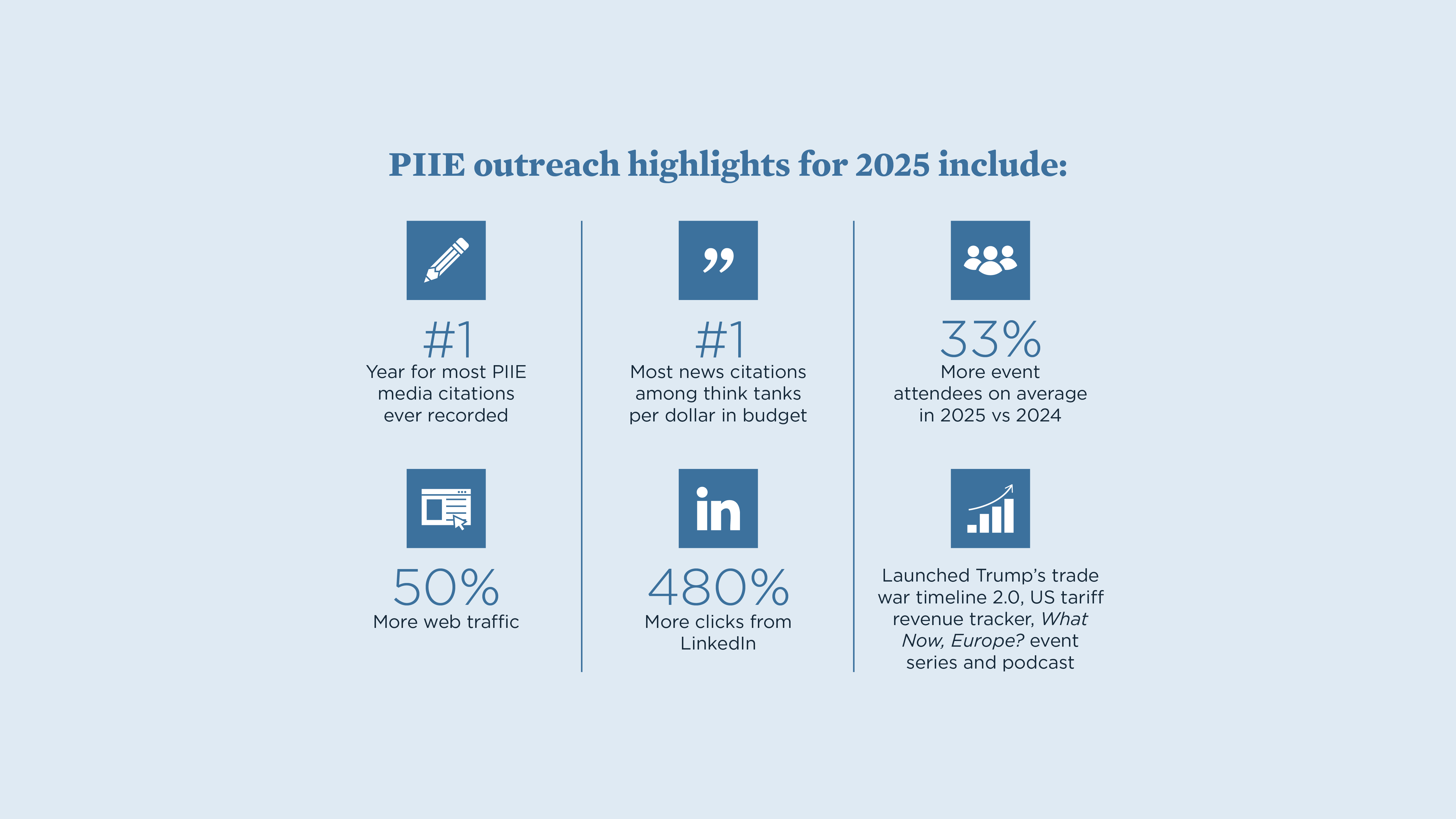

Key areas of impact

Tracking tariffs and the legal challenges
“Liberation Day” media frenzy
PIIE was one of the most prominent voices in the media on trade and the economy in the lead up to and aftermath of President Donald Trump’s “Liberation Day” tariff announcements on April 2, 2025. Our work garnered over 3,300 citations within a two-week period. In March and April 2025, the Institute’s media coverage reached its highest levels ever, as fellows provided real-time reactions and analysis for outlets such as CNN, Fox News, the Wall Street Journal, and Associated Press. PIIE had the biggest increase among peer think tanks year over year.
Trade war timeline 2.0
Chad P. Bown created a new trade war timeline tracking official government announcements since President Trump began his second term in office in January 2025. The timeline has had over 120 updates and was the most popular webpage published in 2025. It has been an invaluable resource for journalists and policymakers, cited by the 2025 US-China Economic Security Review Commission report to Congress, major media such as the New York Times, Atlantic, and Guardian, and recreated by the World Economic Forum.
US-China tariff rates
Chad P. Bown continued tracking average US-China tariff rates in a chart first created in 2019. The chart was cited in the 2025 US-China Economic Security Review Commission report to Congress, by the National Foreign Trade Council in a submission to the US Trade Representative Section 301 investigation, and extensively across media outlets, including by the Financial Times. Earlier research by Bown on China’s failed purchases under the 2020 phase one trade agreement was cited by the Coalition of Services Industries in a comment for the Section 301 investigation.
Tracking tariff revenue
Gary Clyde Hufbauer and Ye Zhang launched a monthly tracker measuring how much tariff revenue is being collected by the US Treasury from US importers by product category and country of origin. It was the second most popular page published in 2025 and was cited in a report by the Federal Reserve Bank of Boston, in a judicial review of tariff powers, and by news outlets such as CNN and the Financial Times.
Warnings for “reciprocal” tariffs
Prior to "Liberation Day,” PIIE fellows sounded the alarm about what tariffs on all trading partners would mean for American households and the global economy. The Financial Times cited Douglas A. Irwin, Mary E. Lovely, Kimberly Clausing, Warwick J. McKibbin, and Marcus Noland, who explained tariffs on allies would harm the US and other countries while putting the cost on American households. Maurice Obstfeld cautioned that tariffs will neither reduce the US trade deficit nor restore manufacturing jobs in an op-ed for the Financial Times. His op-ed received praise from Bloomberg’s Tom Keene, who described it as a “must read.” Chad P. Bown and Irwin advised in Foreign Affairs that the Trump administration should use a variety of economic policies rather than tariffs. Irwin explained in an op-ed for Wall Street Journal why “reciprocal” tariffs don’t make sense, and Lovely joined the Wall Street Journal’s What’s News podcast to discuss Trump’s tariff strategies. Clausing clarified when tariffs are useful remedies and when their use is misguided and also wrote an op-ed for US News.
Following “Liberation Day,” Lovely joined CNN International and McKibbin was featured in the Australian Broadcasting Corporation’s documentary, Are Trump's tariffs causing the US to collapse from within?, which has over 2.6 million views. Bown was interviewed by Kai Ryssdal on Marketplace, and he and Irwin were on the Economics, Applied podcast, which received over 160,000 views on YouTube. Irwin wrote an op-ed for The Economist that the damage from the tariffs will be geopolitical as well as economic. Robert Z. Lawrence found the methodology for the “reciprocal” tariffs was flawed and punitive toward poor countries dependent on commodity exports. Maurice Obstfeld warned the tariffs would curtail US trade most precisely where it provides America with the biggest benefits.
The Supreme Court
Alan Wm. Wolff wrote extensively on whether Trump’s “Liberation Day” tariffs were legal under the International Emergency Economic Powers Act (IEEPA) and whether the Supreme Court would strike them down. Wolff discovered and published the fact that no US president had invoked emergency powers to impose tariffs, despite a misconception that President Richard Nixon had invoked the Trading with the Enemy Act (1917) in imposing the 1971 Import Surcharge. In an op-ed for the Wall Street Journal, Wolff and Douglas A. Irwin argued the Supreme Court should not defer to Trump on his use of IEEPA to impose tariffs.
Tariffs make history
Douglas A. Irwin discussed how the US government implemented tariffs in the past and their economic impacts at an American Historical Association Congressional Briefing. He explained in a Bloomberg article that Trump’s tariffs are “going to be much bigger than Smoot-Hawley,” the US tariffs imposed in 1930.
USMCA review guide
Julieta Contreras, Gary Clyde Hufbauer, Jeffrey J. Schott, and Ye Zhang’s background guide explained why the US-Mexico-Canada trade agreement faces challenges and identified possible paths forward for negotiators ahead of the agreement’s 2026 review. The guide was one of the 10 most popular pieces published in 2025 and was mentioned by Marketplace.
Chad P. Bown joined Marketplace on April 9, 2025, on April 9, 2025, to discuss the “Liberation Day” tariffs. While on air, he reacted live to an announcement from President Donald Trump of new increases to previously set “reciprocal” tariffs.

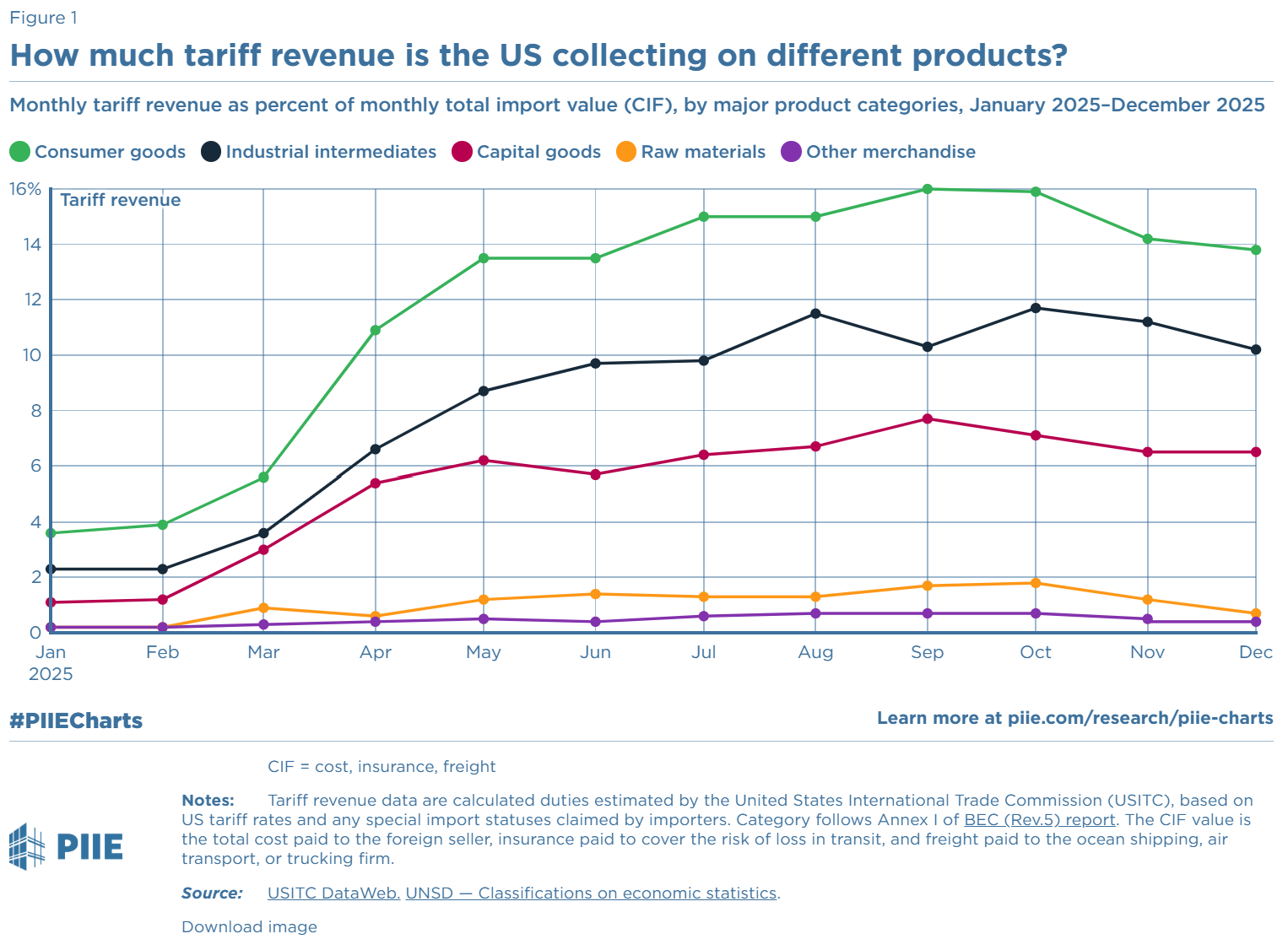
PIIE Chart from "Trump's tariff revenue tracker: How much is the US collecting? Which imports are hit?" by Gary Clyde Hufbauer and Ye Zhang.
PIIE Chart from "Trump's tariff revenue tracker: How much is the US collecting? Which imports are hit?" by Gary Clyde Hufbauer and Ye Zhang.

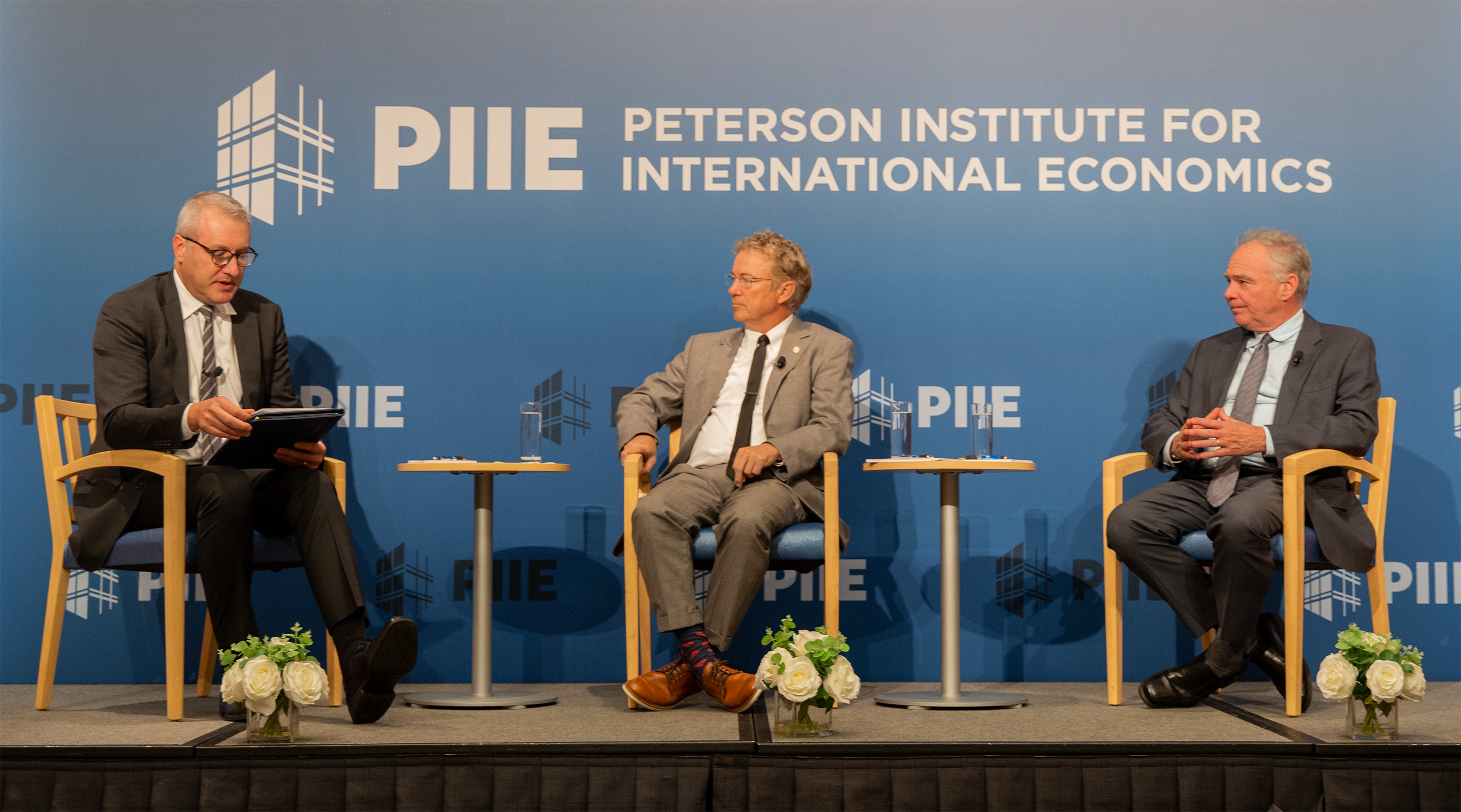
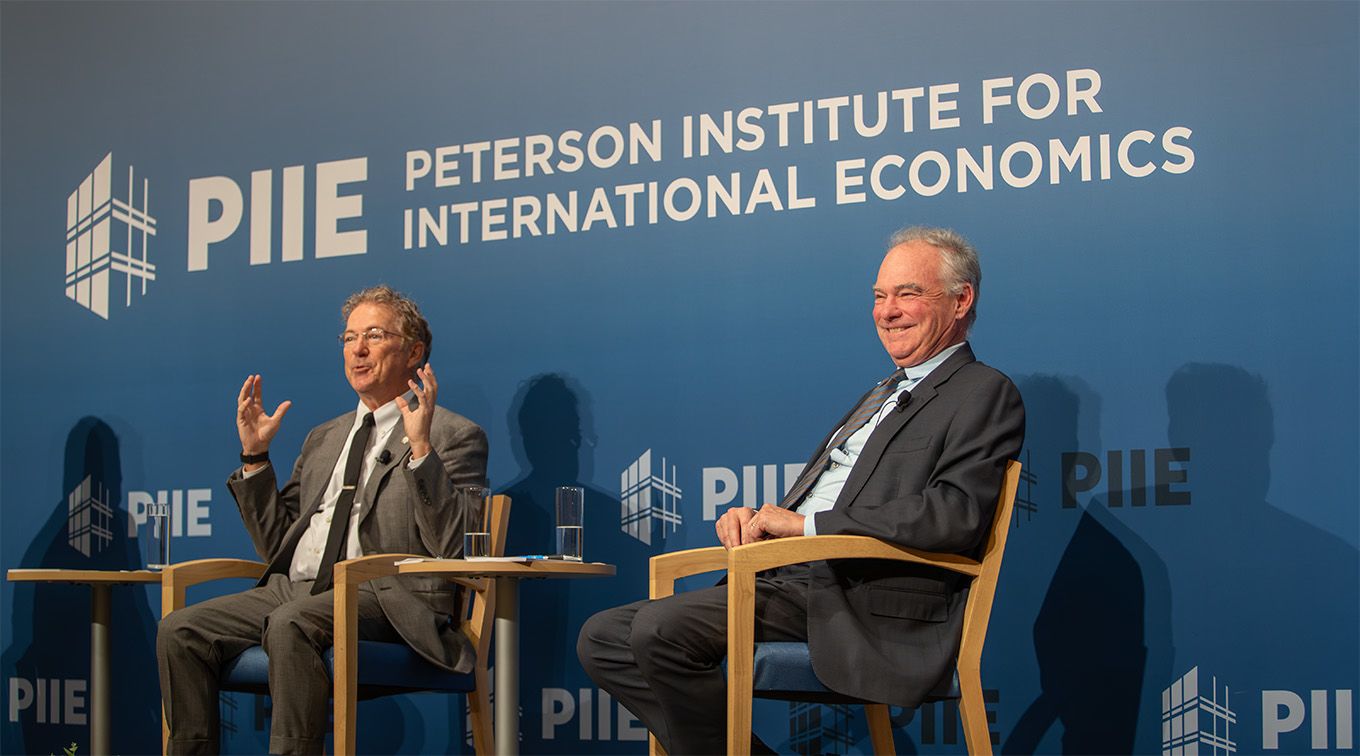
Senators Tim Kaine (D-VA) and Rand Paul (R-KY) joined PIIE in October for a special event moderated by Chad P. Bown on Congress’ role in the trade war. Speaking just as the Senate voted on a bipartisan basis to overturn some of Trump's tariffs on Brazil and Canada, they said that Congress should find ways to limit deference to the president, which has eroded lawmakers' role in trade policy. The event was livestreamed by C-SPAN and reported on by Bloomberg.
Senators Tim Kaine (D-VA) and Rand Paul (R-KY) joined PIIE in October for a special event moderated by Chad P. Bown on Congress’ role in the trade war. Speaking just as the Senate voted on a bipartisan basis to overturn some of Trump's tariffs on Brazil and Canada, they said that Congress should find ways to limit deference to the president, which has eroded lawmakers' role in trade policy. The event was livestreamed by C-SPAN and reported on by Bloomberg.
In an op-ed for the New York Times, Mary E. Lovely explained how in using IEEPA to sidestep constitutional constraints and impose new tariffs, President Trump is making unrestrained use of import taxes that seems to be based on personal whim rather than US trade law.
Evaluating the economic impact of tariffs
Macroeconomic projections by Warwick J. McKibbin, Megan Hogan, and Marcus Noland.
US Treasury Secretary Scott Bessent was asked on CBS News’ Face the Nation in March to respond to Kimberly Clausing and Mary E. Lovely’s finding that tariffs on Canada, Mexico, and China would cost US households $1,200 a year. This generated a significant spike in media citations for PIIE in the week following the interview. Host Margaret Brennan repeated the finding on CBS Mornings. The figure was discussed on ABC’s The View, citing the Peterson Institute.
US senators invited Adam S. Posen to deliver remarks at a Senate Spotlight Forum on the household impact of tariffs hosted by Senators Ben Ray Luján (D-NM) and Catherine Cortez Masto (D-NV). Posen argued that tariffs are a notably inefficient and harmful form of taxation in terms of the amount of revenue raised for the costs and the uncertainty inherently created.

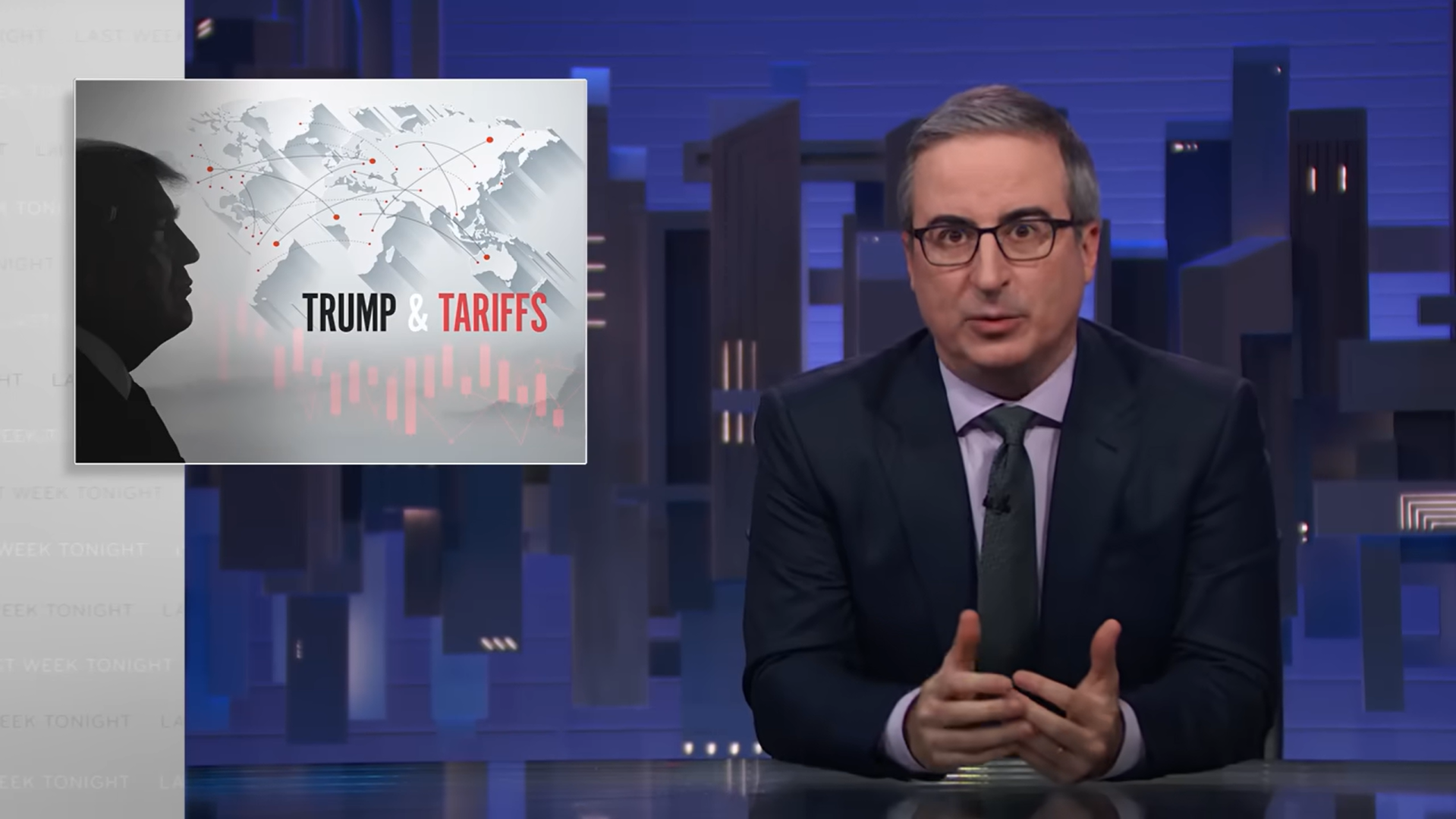
Last Week Tonight with John Oliver aired an episode in April featuring a 2020 study on “Buy America” policies by Gary Clyde Hufbauer and Euijin Jung, and findings from Chad P. Bown in 2022 on China’s lack of purchases under Trump’s trade deal. The video has over 15.4 million views on YouTube.
Last Week Tonight with John Oliver aired an episode in April featuring a 2020 study on “Buy America” policies by Gary Clyde Hufbauer and Euijin Jung, and findings from Chad P. Bown in 2022 on China’s lack of purchases under Trump’s trade deal. The video has over 15.4 million views on YouTube.

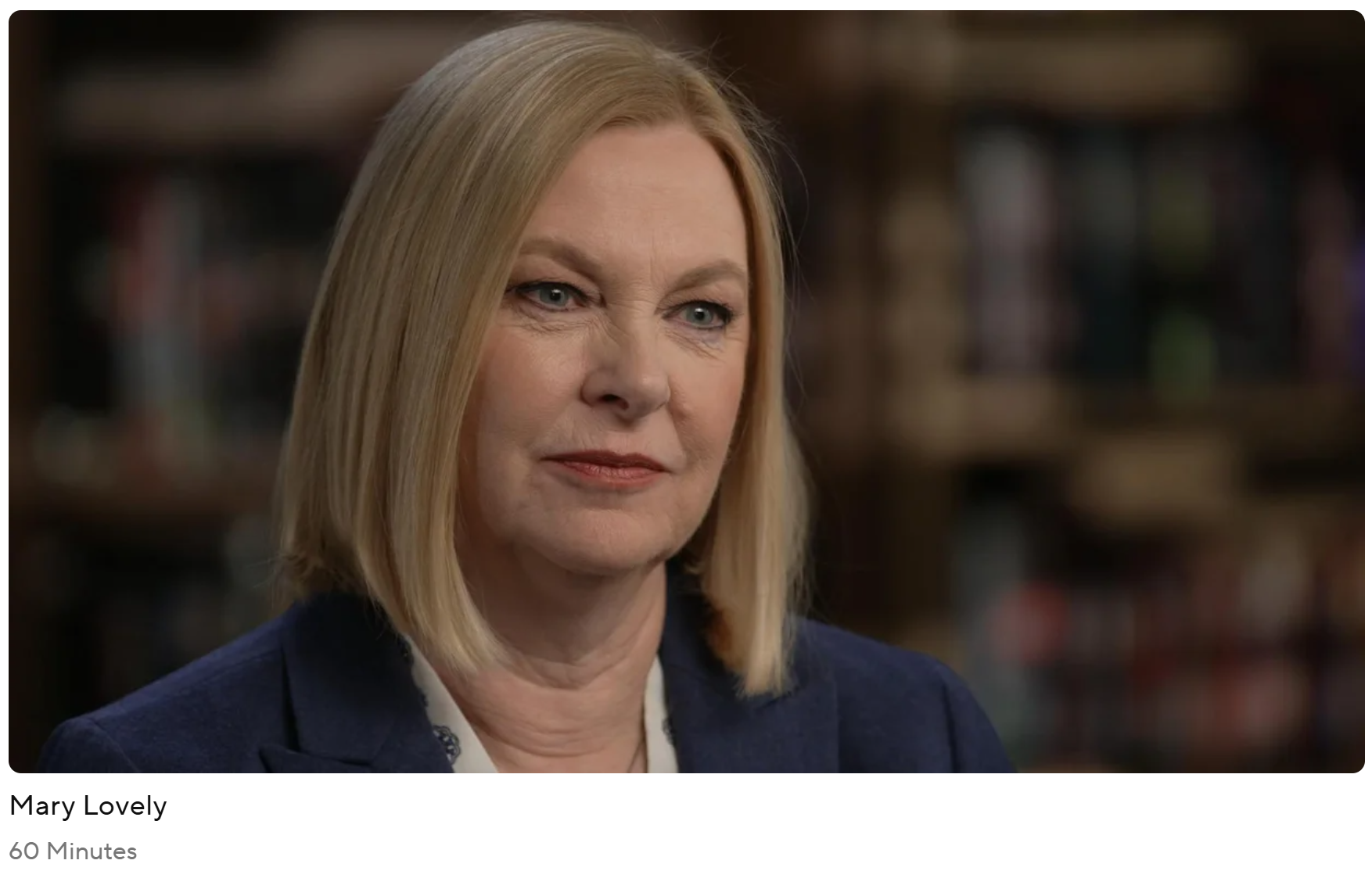
Mary E. Lovely solidified her role as a trusted expert on trade for the media. She was interviewed on 60 Minutes in February in an episode featuring Trump’s former trade chief Robert Lighthizer, which received over 1.9 million views on YouTube. Lovely made other high-profile TV appearances throughout the year, including on CNN, NBC News, and CNBC’s Squawk Box.
Mary E. Lovely solidified her role as a trusted expert on trade for the media. She was interviewed on 60 Minutes in February in an episode featuring Trump’s former trade chief Robert Lighthizer, which received over 1.9 million views on YouTube. Lovely made other high-profile TV appearances throughout the year, including on CNN, NBC News, and CNBC’s Squawk Box.
Macroeconomic projections
At a February House Financial Services Committee hearing with Federal Reserve chair Jerome Powell, US Representative Brad Sherman (D-CA) cited Warwick J. McKibbin, Megan Hogan, and Marcus Noland’s economic projections for Trump’s policies published in 2024. Representative Ayanna Pressley (D-MA) submitted the research for the Congressional Record, and it was cited by Nicholas Kristof in the New York Times.
In 2025, McKibbin and Noland followed up with projections of the economic effects of Trump’s tariffs on Canada, Mexico, and China, a 100 percent tariff on BRICS countries, a US-EU trade war, and "reciprocal" tariffs. The results received widespread coverage, including by the Financial Times, and data dashboards of the research are used by policymakers and corporations around the world.
Costs to US households
Kimberly Clausing and Mary E. Lovely's May 2024 findings on the consumer costs of Trump’s tariff and tax proposals were cited by US Representative Joe Courtney (D-CT) at a House meeting in February 2025. Senator Chris Coons (D-DE) in January 2025 cited their August 2024 estimates. Lovely and Clausing updated their research following announcements in February 2025 of tariffs on Canada, Mexico, and China, receiving widespread media coverage and social media shares by Michigan Governor Gretchen Whitmer and the Canadian embassy. US Representative Suzan DelBene (D-WA) cited the costs at a House Ways and Means Committee hearing, which received 66,000 views on YouTube; Senator Jack Reed (D-RI) remarked on them at a Senate meeting; and Senator Coons wrote about earlier cost estimates in the Bulwark. Clausing, Douglas A. Irwin, and Lovely were all featured at length on PBS News Hour.
Costs to US businesses
Gary Clyde Hufbauer and Ye Zhang reported in September that US businesses had absorbed most of the tariff costs through July 2025, and Hufbauer added that if US retailers heeded Trump’s call to “eat the tariffs,” their margins might no longer cover their total costs. Mary E. Lovely explained on CNN International that tariffs on autos would disrupt supply chains and result in higher prices, lower demand, and fewer choices for Americans purchasing cars. Following Trump’s 50 percent tariffs on steel, Hufbauer asserted that American steel and the industries that rely on steel are going to be less internationally competitive, raising costs for consumers while steel barons profit.
Tariffs as fiscal policy
Kimberly Clausing and Maurice Obstfeld evaluated tariffs as a broad tool of fiscal policy and concluded that while the current tariffs would generate large government revenues, they had significant downsides, including reduced US economic activity. In an op-ed for VoxEU, they argued large income tax cuts and new high tariffs would leave most Americans worse off.
Projected US revenues
PIIE and the Tax Foundation conducted separate studies on the projected fiscal and economic outcomes of universal tariffs on all US goods imports. The PIIE report coauthored by Warwick J. McKibbin was featured exclusively in Politico Morning Money and was launched at an event with over 700 attendees. The Australian Broadcasting Corporation covered the research and event in a segment that has over 2.4 million views on YouTube. The publication received additional coverage in Barron's, Bloomberg, and others.
Consumer prices
Soon after Democrats won special elections in November 2025 promising to address voters’ concerns about affordability, President Trump removed tariffs he had imposed on hundreds of grocery items. Gary Clyde Hufbauer and Ye Zhang reported that the annual value of the tariff reductions averaged $35 per US household. The number was circulated by Matt Egan on CNN. In August, in an op-ed for USA Today, Hufbauer argued that tariffs were unlikely to reduce trade deficits and might harm American consumers. Julieta Contreras, Mary E. Lovely, and Jing Yan explained in January that if President Trump followed through on his campaign trail threats to impose a tariff as high as 60 percent on all imports from China, it would raise the costs of many consumer goods such as toys, footwear, and electronics.
Manufacturing jobs
In an op-ed for China Daily, Robert Z. Lawrence explained manufacturing is increasingly unable to create enough jobs for workers who need them. He joined the Econofact podcast to answer the question: can manufacturing still provide inclusive growth in the US? His research was cited by the Financial Times, Fortune, Roll Call, New York Times, Christian Science Monitor, New Yorker, CNN, and USA Today.
Costs to USMCA countries
At the beginning of 2025, Warwick J. McKibbin and Marcus Noland found that Trump’s 25 percent tariff on Mexico and Canada and additional 10 percent tariff on China in response to conflicts over illegal immigration and the flow of drugs into the US would damage all economies involved, including the US. Julieta Contreras and Mary E. Lovely reported which imports from Canada and Mexico would be hit the hardest by Trump’s tariffs. Lovely joined Paul Krugman to discuss what tariffs on Canada and Mexico mean for the continent.
Hits to the music industry
The Trump administration's trade policies have choked off the supply of beginner-grade musical instruments and reduced the demand for higher-end, US-made instruments at the same time, Cullen S. Hendrix explained in a blog. He continued talking about the impacts of tariffs on music and the musical instrument industry on the Music Tectonics podcast, a music industry-focused podcast, as well as on the National Association of Music Merchants’ What’s NeXT video podcast series.
Analyzing changes in the US role in the global economy
The post-American world economy
Adam S. Posen argued that the Trump administration has fundamentally changed the global economic regime in a widely circulated Foreign Affairs essay, generating media coverage in the Financial Times and podcast interviews on Bloomberg Odd Lots, Hidden Forces, and Econofact. He addressed the EU’s perspective in a keynote speech at the European Systemic Risk Board’s ninth annual conference. Maurice Obstfeld asserted in The Economist following “Liberation Day” that President Trump launched a costly, all-fronts assault to restructure the global trading system that caused the probability of recession to jump.
Data integrity
New senior fellow Jed Kolko explained US government economic data throughout the year, receiving major media coverage such as on CNN. He explained how private sector data remains a better partner alongside government data than a replacement, why data suggest native-born employment grew, how to see through the fog of immigration estimates, and why the reported number of immigrants in the US didn’t add up. Kolko also explained how interpretations of economic data will need to consider future adjustments to population estimates. Adam S. Posen released a statement in August, expressing concern about the Trump administration undermining the provision of government economic data. David Wilcox with Bloomberg Economics investigated the revisions of Bureau of Labor Statistics monthly jobs estimates, determining no evidence of malfeasance.
Changing role of the dollar
Maurice Obstfeld, Joseph E. Gagnon, Warwick McKibbin, and Adam S. Posen have provided ongoing analysis of the changing dollar regime with spring and fall events that drew an average of 870 attendees. Obstfeld delivered the widely praised Andrew Crockett Memorial Lecture at the Bank for International Settlements, which a Financial Times op-ed called “fascinating.” Martin Chorzempa appeared on Markus’ Academy to discuss whether China’s state-backed digital currency could challenge the dollar. Maurice Obstfeld argued in Project Syndicate that Trump’s policies are undermining the foundations of the dollar’s global dominance.
H-1B tax on skilled workers
In September, the Trump administration announced a new $100,000 fee on new applications for H-1B visas. The change would significantly harm Americans' incomes and job opportunities, Michael A. Clemens argued. Clemens’ points were used by the US Chamber of Commerce and the American Association of Universities in their complaint against the US government to block the $100,000 H-1B tax.
Trade deficit
Robert Z. Lawrence asserted that eliminating the US manufacturing trade deficit would not significantly change the share of manufacturing jobs in total US employment. His blog was the subject of Martin Wolf’s column in the Financial Times. Mary E. Lovely explained on NPR why it is not always bad to have a high trade deficit. Joseph E. Gagnon warned that Trump's tariff war may shrink the US trade deficit by driving away foreign investment and slowing US economic growth. Gagnon found that tariffs have little direct impact on deficits, but higher tariffs do ultimately reduce exports.
The CHIPS Act
Gary Clyde Hufbauer and Megan Hogan found that the 2022 CHIPS Act would sharply boost the production of advanced semiconductors in the US but not eliminate reliance on imported chips. Martin Chorzempa warned in a blog that revoking the CHIPS Act would threaten the current boom in US semiconductor investment and future programs and also spoke on CNN.
Export controls
In June, Martin Chorzempa briefed Democratic staff members on the House Foreign Affairs Committee on what was working and what was not in US export controls.
Fiscal policy
Karen Dynan coauthored a paper on the lessons for the use of automatic fiscal stabilizers from the Great Depression and the COVID-19 recession and a paper on how to put US fiscal policy on a sustainable path. Kimberly Clausing offered eight potential solutions during the debate of extending the tax cuts under the Tax Cuts and Jobs Act. Clausing also led a July event on new US tax legislation that drew 700 attendees.
Global Economic Prospects
PIIE’s flagship semiannual Global Economic Prospects events, led by Karen Dynan, featured Chad P. Bown, Jacob Funk Kirkegaard, and Adam S. Posen in April, and Posen and Arvind Subramanian in October. Fellows had the challenge of making predictions in the face of trade uncertainty. In October, Dynan pointed out optimism about AI offset some of the drag from rising trade tensions and high uncertainty. The events were cited in Market Watch, Yahoo Finance, Financial Times, Bloomberg, AP, and Reuters.
Sovereign wealth fund
Adnan Mazarei, Anna Gelpern, and Edwin M. Truman explained that without robust governance, a US sovereign wealth fund would be more likely to divert funds from one area to another and to crowd out new private investments.
Adam S. Posen wrote “The New Economic Geography” for Foreign Affairs in August 2025.

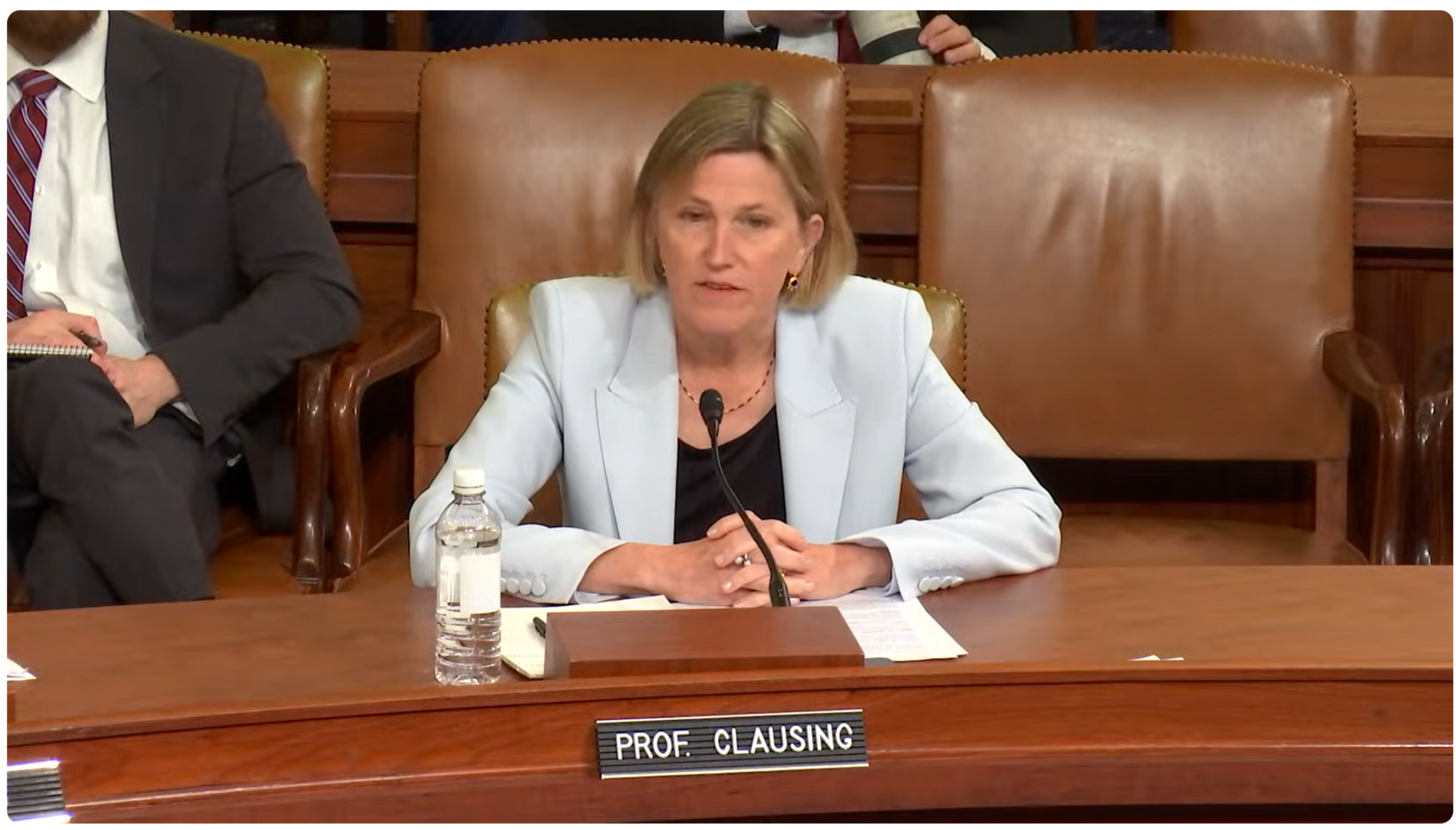
In December, Kimberly Clausing testified at a US House Ways and Means Committee hearing cautioning that tariffs at current levels would be the largest tax increase on US households since 1982 as a share of GDP. She also testified in the United Kingdom at the Hearing of the FISC Sub-Committee on Tax Matters about the implications of the Trump administration’s policies.
In December, Kimberly Clausing testified at a US House Ways and Means Committee hearing cautioning that tariffs at current levels would be the largest tax increase on US households since 1982 as a share of GDP. She also testified in the United Kingdom at the Hearing of the FISC Sub-Committee on Tax Matters about the implications of the Trump administration’s policies.

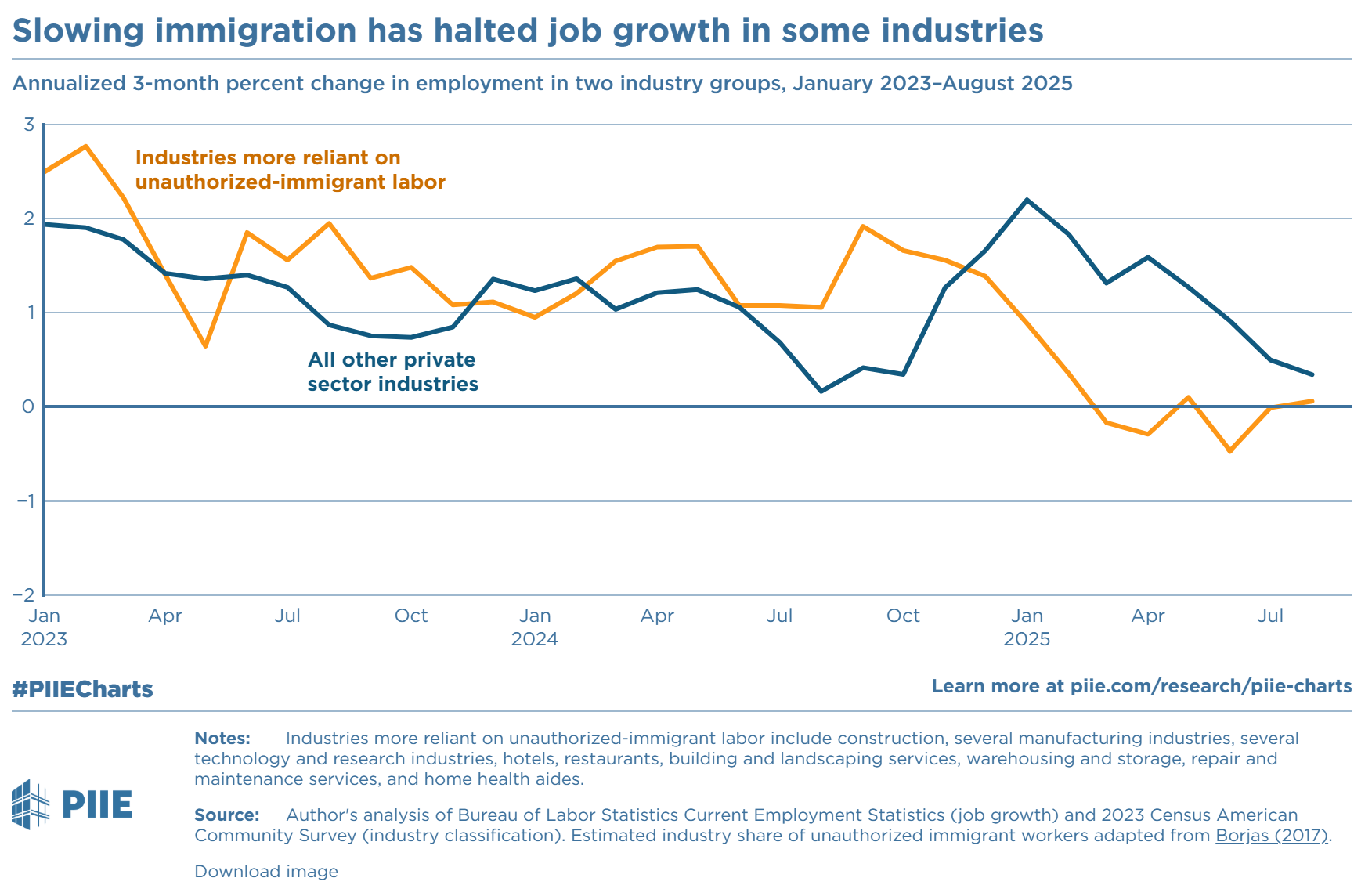
PIIE Chart by Jed Kolko.
PIIE Chart by Jed Kolko.
Providing critical research on monetary policy, inflation, and central bank independence

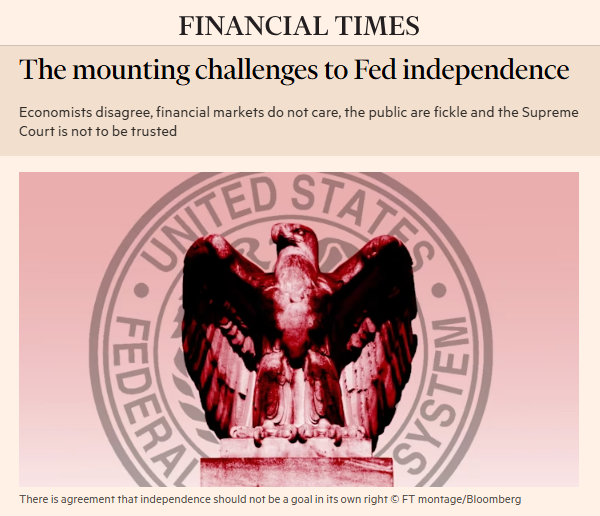
The Financial Times covered PIIE’s conference, Central bank independence in practice.
The Financial Times covered PIIE’s conference, Central bank independence in practice.
Central bank independence
PIIE experts stressed the importance of protecting the Federal Reserve from political interference with a notable high-level conference and writings across outlets. The conference drew over 1,100 attendees, drawing bipartisan participation, the presence of Federal Open Market Committee members, and coverage in the Financial Times, with presentations published in a PIIE Briefing.
David Wilcox published a paper that traced Congress’ efforts in 1935 to rewrite the institutional structure of the Fed, which was cited in several court filings related to Trump’s efforts to fire Federal Reserve governor Lisa Cook. Jason Furman wrote in the New York Times that protecting Fed independence after Cook's firing would require efforts by the Supreme Court, the Senate, and the Fed itself. Maurice Obstfeld spoke on the topic with Central Banking, Patrick Honohan published an op-ed for Economic Sociology & Political Economy, and Wilcox reflected on Jerome Powell's remarks at the Jackson Hole symposium.
Macroeconomics
Olivier Blanchard researched convergence in terms of methodology, architecture, and main mechanisms in macroeconomics. Blanchard also argued that—given the limits on monetary policy—fiscal policy coupled with quasi-automatic stabilizers, like a value-added tax, should play a larger role in economic stabilization policy research and practice.
Pandemic-era inflation
Fellows continue to examine the origins of the pandemic-era inflation surge. Olivier Blanchard’s 2023 paper coauthored with Ben Bernanke entitled “What Caused the US Pandemic-Era Inflation?” was cited in the 2025 Economic Report of the President and published in the American Economic Journal: Macroeconomics. Joseph E. Gagnon found countries with higher inflation in the 2000-2015 period had higher COVID-era inflation, and the effect of long-lagged inflation is both economically and statistically significant—his findings were cited by the Financial Times. Karen Dynan and David Wilcox organized, compiled, and edited the “Understanding COVID-Era Inflation” series. The project, which was published fully in 2026, had 13 substantive papers, including an overview paper on the lessons drawn from the series.
Central bank comparisons
In a blog and corresponding Working Paper, Patrick Honohan argued that comparing central banks' experiences is difficult because of their different accounting practices.
Understanding China’s economy and analyzing US-China relations
Nicholas R. Lardy joined No Spin News with Bill O’Reilly to discuss who has the advantage in the US-China trade war. The video has amassed almost 200,000 views on YouTube.

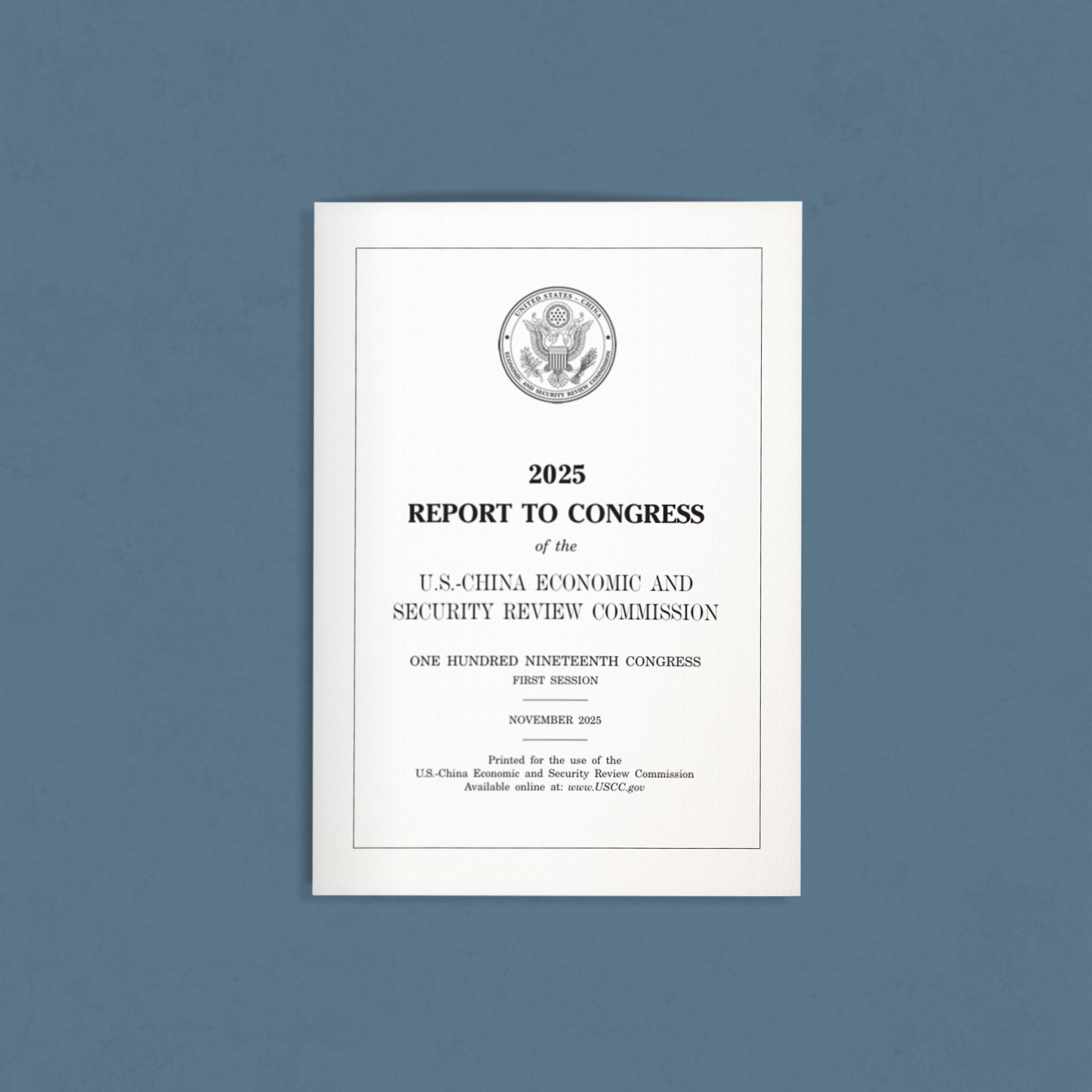
The US-China Economic and Security Review Commission cited PIIE research multiple times, including Martin Chorzempa on sanctions, Nicholas R. Lardy on China’s GDP, Tianlei Huang on China’s fiscal policy, Elina Ribakova on China’s relations with Russia, and Jeffrey J. Schott on the WTO.
The US-China Economic and Security Review Commission cited PIIE research multiple times, including Martin Chorzempa on sanctions, Nicholas R. Lardy on China’s GDP, Tianlei Huang on China’s fiscal policy, Elina Ribakova on China’s relations with Russia, and Jeffrey J. Schott on the WTO.

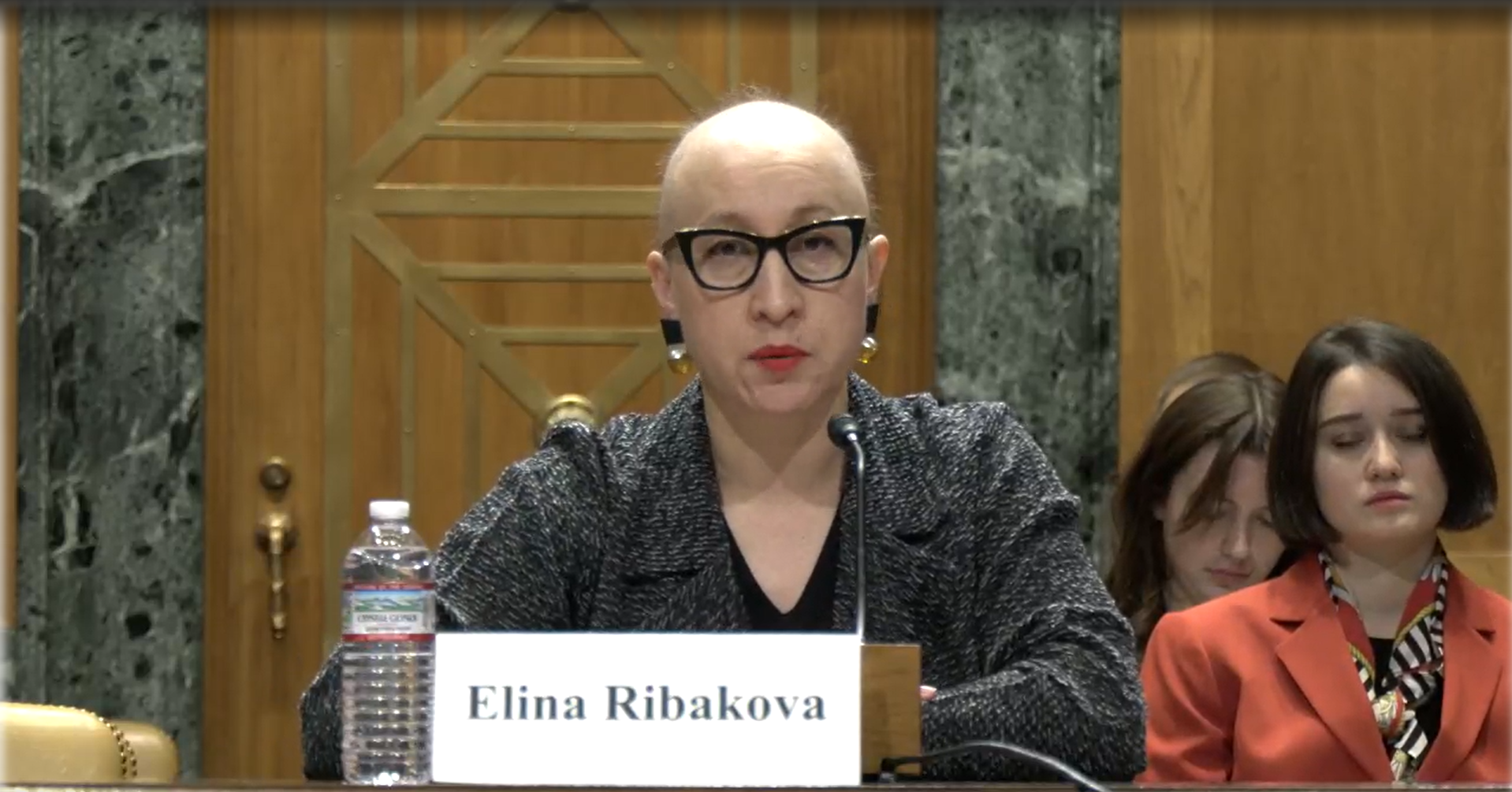
Elina Ribakova testified in February 2025 before the US-China Economic and Security Review Commission hearing on An Axis of Autocracy? China’s Relations with Russia, Iran, and North Korea about the relationship between Russia and China.
Elina Ribakova testified in February 2025 before the US-China Economic and Security Review Commission hearing on An Axis of Autocracy? China’s Relations with Russia, Iran, and North Korea about the relationship between Russia and China.
US-China trade war
Adam S. Posen argued in Foreign Affairs that tariff escalations would undermine trust and faith in the competence of the US. The essay was cited by the Financial Times multiple times and translated and published in China Daily. Tianlei Huang was cited by the Financial Times about China’s response to the tariffs. Yeling Tan pointed out in Project Syndicate that other countries would cultivate networks of diverse partnerships, rather than trading only with the US or China. Mary E. Lovely was featured on CNN, Bloomberg TV, and Bloomberg.
China’s economic growth
Martin Chorzempa, Tianlei Huang, Mary E. Lovely, and Yeling Tan spoke at a PIIE event on China’s economic outlook, and Huang participated in a CSIS event that received over 100,000 views and was cited in the Financial Times. Patrick Honohan found that although China’s GDP, at market prices and exchange rates, is still much lower than that of the US, the opposite is true if the calculation is made at the international purchasing power parity (PPP) prices. Adam S. Posen spoke at the University of California San Diego Economics Roundtable Lecture Series, answering what China’s slower economic growth would mean for the global economy. Nicholas R. Lardy was cited in South China Morning Post, and Lovely was featured on NPR.
Private sector trends
Tianlei Huang and Nicolas Véron’s tracker on the share of China’s state vs. private sector among the country’s largest listed companies found the private sector rebounded throughout 2025, fueled by China’s “new economy” in high-tech manufacturing, decarbonization, and innovation. It was cited by the Washington Post. Huang’s 2021 blog post on ageism in China’s private sector was cited in a March 2025 article in The Economist.
US-China cooperation on fentanyl
The Trump administration has attempted to stem fentanyl flows in the US, including with some tariffs on China. Marcus Noland and coauthors found that cooperation between the first Trump administration and Beijing beginning in May 2019 reduced fentanyl overdose deaths in the US by roughly one-quarter over a three- to five-month period. His work was cited by The Economist and listed in Bloomberg’s newsletter as “need to know research.”
Export and technology controls
Martin Chorzempa argued a new export rule from the Commerce Department’s Bureau of Industry and Security went too far, hurting US interests. In an op-ed for Foreign Policy, Chorzempa asserted that the more the US tries to freeze China with export controls, the more it risks forcing Chinese AI firms to develop their own AI ecosystem. He continued writing about export controls in an op-ed for the University of Pennsylvania and was cited by the New York Times on China’s rare earth restrictions and China’s AI advances.
AI and energy
Following a historic boom in investment in AI, Martin Chorzempa briefed members of Congress on DeepSeek and joined PIIE Insider LIVE with Anjali V. Bhatt to explain the US-China AI race. On an episode of PIIE’s Policy for the Planet podcast, Monica de Bolle explored how China’s electrical grid is better prepared for AI expansion than the US.
Renminbi vs. the dollar
Martin Chorzempa examined Chinese approaches to increasing the renminbi’s role as an international settlement currency and found that Beijing’s efforts fall short of posing a systemic challenge to the dollar or to infrastructures like SWIFT.
Data integrity in China
While most discussion regarding Chinese data questions their reliability and some analysts believe there is widespread outright falsification, Nicholas R. Lardy and Tianlei Huang found some of the most important economic data, including household consumption, fixed asset investment, and trade data, have improved in quality.
Private consumption
Many experts see China’s economy as constrained because of a weak social safety net, resulting in anemic domestic consumption spending. But Nicholas R. Lardy argued recent data indicate that China has expanded many parts of its social safety net and that consumption spending has accelerated.
Chinese overcapacity
Mary E. Lovely explored the different approaches the US and EU have taken in response to concerns about China’s exports and prospects for coordinated action against Chinese overcapacity.
Our leading China Program
Tensions between the US and China reinforced PIIE’s determination to pursue realistic policy research and independent analysis of the issues at stake. PIIE scholars continued to engage with senior officials and leading economists in China on its economic development and global relationships.
CF40
PIIE’s longstanding relationship with the China Finance 40 Forum (CF40), a leading independent think tank in China, led to four jointly sponsored Young Economist Forum seminars, coorganized by Tianlei Huang and featuring Martin Chorzempa, Jeffrey J. Schott, Yeling Tan, and Gary Clyde Hufbauer. Huang helped organize the 8th PIIE-CF40 China Economic Forum, which focused on US-China relations and their economic outlooks.
Bund Summit
Olivier Blanchard, Martin Chorzempa, Patrick Honohan, Mary E. Lovely, Jean Pisani-Ferry, Jeffrey J. Schott, and Nicolas Véron traveled to Shanghai to attend the Bund Summit, a high-profile nongovernment financial conference coorganized by CF40 and Tsinghua University. Adam S. Posen and Jason Furman served on the Summit’s International Advisory Council and joined virtually. At the summit, PIIE cohosted a dinner roundtable titled “Prospects for China-US Economic and Financial Relations,” and Lovely moderated a panel discussion between Schott, Chorzempa, and CF40 Institute’s Executive President Dr. GUO Kai.
US-China Global Economic Order
Together with the Center for Strategic and International Studies, the Chinese Academy of Social Sciences’ Institute of World Economics and Politics, and the Shanghai Institute of International Studies, PIIE continued to coorganize the US-China Global Economic Order (GEO) Dialogue series, which focuses on strengthening dialogue and fostering cooperation around the three pillars of the Bretton Woods system: international trade, finance, and development. The group met twice in 2025 in Shanghai and Washington, DC.
Assessing regional and international issues
Eurobonds
Given geopolitical turmoil, global investors want an alternative to US Treasuries. Olivier Blanchard and Ángel Ubide proposed a pathway for Europe to deliver such an alternative and benefit from it: a deep and liquid Eurobond market. Their blog, one of PIIE’s most popular pieces published in 2025, was cited by European Central Bank (ECB) president Christine Lagarde, ECB executive board member Philip Lane, and Carlos Cuerpo, Spain’s economy, trade and business minister.
NATO defense spending
Cullen S. Hendrix warned that President Trump's call for the North Atlantic Treaty Organization (NATO) to boost military spending to 5 percent of GDP could catalyze an arms race with those near-peer competitors or create incentives for adversaries to strike before potential expenditures go into action. His blog was the seventh most read PIIE publication in 2025 and led to coverage by the European Commission, Deutsche Welle, Fox News, Japan Times, and Reason Magazine.
Argentina in crisis
PIIE fellows were outspoken about US intervention in Argentina’s monetary crisis announced in September. In one of PIIE’s most read pieces, Monica de Bolle wrote if the US supported full dollarization for Argentina, the move would have economic, political, and institutional repercussions. She questioned if the US government knew it would be difficult to disentangle the US and US investors from Argentina. Maurice Obstfeld cautioned even concrete US interventions are unlikely to save Argentina's peso for long unless they go further than so far promised.
After the IMF approved a new loan program for Argentina in April—its 23rd since 1958—Alejandro Werner described what Argentina needed to do to maintain the agreement and added in the Financial Times that international support should be contingent on policy and political reforms. Monica de Bolle warned in an op-ed for the Chatham House that Javier Milei’s so-called chainsaw economics wouldn’t stabilize the economy.
Milei’s challenges
Alejandro Werner explained how Argentine president Javier Milei's administration faced two pivotal challenges in 2025—performing strongly in the 2025 midterm elections and reducing the overvaluation of the Argentine peso. Werner was featured on the Financial Times’ The Economics Show podcast to talk about what Milei got right and wrong in his first year
EU’s changing role in the world
Fellows advised what it would take for Europe to step up and lead global affairs as the US retreats from the international sphere. Adam S. Posen gave the keynote speech at the European Systemic Risk Board’s (ESRB) ninth annual conference, arguing that Europe is well positioned to manage the financial stability risks arising from the Trump administration, but Europe can and should rapidly increase its own self-insurance by supporting a global rise in euro usage. Olivier Blanchard and Jean Pisani-Ferry recommended the EU should take the lead in convening alliances of countries to counteract threats to the global order and learn how to act effectively without the US (Project Syndicate). Elina Ribakova suggested in Foreign Affairs that if Europe wants to lead, it needs to ramp up public investment, coordinate on defense, and pass economic reforms to ensure competitiveness. Jacob Funk Kirkegaard analyzed the trajectory of Europe's accelerating rearmament, focusing on the fiscal implications for national governments and EU institutions.
Climate policy
Fellows continued analyzing the effects of climate change and recommending policy for mitigation. Kimberly Clausing continued research on climate coalitions, US and EU climate policy, and carbon border adjustments, including proposals for a heavy industry climate coalition and organizing the Carbon Pricing and Green Transition Convening in Pretoria, South Africa. Monica de Bolle contributed an essay to the New York Times World Review on green hydrogen in Brazil. Warwick J. McKibbin studied the global economic impacts of antimicrobial resistance, finding significant costs associated with worsening resistance of microbes to antimicrobial medicines due to demographic and climate changes.
Europe and the US
Among the many ways PIIE scholars are engaged across Europe about US relations, Cecilia Malmström argued the trade deal negotiated between the US and the EU is not a good agreement for Europe and was cited by Sydsvenskan and Le Grand Continent. Patrick Honohan explained in the Irish Times why Ireland is more exposed to Trump’s tariff war than the rest of Europe and in the Forum on Financial Supervision the impact of US policies on central banking in Europe.
New EU trade relations
Cecilia Malmström wrote about new trade alliances the EU made with Latin America and recommended alongside Yeo Han-koo, former PIIE fellow and current trade minister for South Korea, that the EU and South Korea should join the Comprehensive and Progressive Agreement for Trans-Pacific Partnership (CPTPP). Malmström was cited by the Financial Times on renewed EU interest in joining CPTPP and on Singapore and the UAE planning to form a new trade group of small and medium-sized nations.
Europe’s monetary policy
Nicolas Véron argued that supervisory integration is the only realistic option to create a foundation for the successful development of competitive capital markets on a European scale. He contributed a report to the European Parliament on banking sector policy and a paper debating that Poland has more to gain from progress towards the EU Savings and Investment Union. Véron’s book, Europe’s Banking Union at Ten: Unfinished Yet Transformative, published in 2024, was reviewed by Barry Eichengreen in Foreign Affairs. Olivier Blanchard testified on fiscal policy to the Cours des Compte in France.
France’s new government
Following the formation of France’s new government, Jacob Funk Kirkegaard explored options for the EU if France approaches a financial crisis and if France would risk losing full control of its nuclear weapons. Nicolas Véron testified in February in a hearing with French Members of Parliaments Charles Rodwell and Sylvie Josserand.
United Kingdom
Nicolas Véron testified in July to the UK Parliament on the growth of private markets in the UK following reforms introduced after 2008.
Ukraine and the EU
In the launch of What Now, Europe?, a new virtual series and podcast hosted by Nicolas Véron, Véron hosted Oleksandra Azarkhina to discuss both the challenges and trade-offs if Ukraine were to join the EU.
Ukraine’s and Russia’s wartime economies
Elina Ribakova explained in the Financial Times how European financing combined with Ukrainian ingenuity is building an effective deterrent against external threats. This combination also shows that in the modern economics of war, size matters—but far less than conventional wisdom suggests. She organized a PIIE event on the subject, was featured on Financial Times’ podcast The Economics Show with Soumaya Keynes, and was interviewed by Bloomberg.
Ukraine’s critical minerals
The potential minerals deal shelved in February by President Trump and Ukrainian president Volodymyr Zelensky hinged on a bullish view of Ukraine's critical mineral wealth, but significant questions remain about Ukraine's mineral endowments and the economic viability of extracting them, Cullen S. Hendrix wrote in Barron’s.
Russian assets and investment
Nicolas Véron discussed considerations of how the EU could use frozen Russian assets to fund Ukraine’s economic reconstruction while respecting international rule of law on CNN International’s Quest. In an op-ed for the Financial Times, Elina Ribakova warned US businesses that investing in Russia remains a risky play even if relations between the two countries normalize.
Ukraine reparations loan
Jacob Funk Kirkegaard asserted in an op-ed for Euractiv that there aren’t any good arguments against a proposed EU “reparations loan” to Ukraine. In an op-ed for Bruegel, Nicolas Véron argued the Ukraine reparations loan was a “clever workaround that would leave Russia’s assets untouched but leverage them to support Ukraine.”
Middle East
Cullen S. Hendrix detailed three fundamental shifts in energy markets that have radically altered the risk premium associated with the crude oil market. Hendrix’s blog led to an appearance on the Lines On Maps Extra podcast, which garnered over 61,000 views on YouTube. Adnan Mazarei wrote a blog about why a debt restructuring in Syria would be difficult and an op-ed in Project Syndicate about Egypt’s economic crisis. Following US airstrikes in Iran in June, Alan Wm. Wolff wrote a blog discussing how the global trading system can help manage the threat of Iran’s nuclear capabilities.
Cross-border payments in Asia
Martin Chorzempa analyzed in a chapter for an Asian Development Bank report the current state of financial inclusion for payments in Asia, critical infrastructure needed to build out better payment systems, and cross-border payments.
North Korea
In a paper for Asia and the Global Economy, Marcus Noland said that if North Korea experiences another food crisis, foreign partners are likely to encounter a state-dominated model resembling the system that existed in the early 1990s at the onset of the famine and the attendant problems that humanitarian-relief agencies confronted at that time.
Japan
With renewed doubt about the scale and scope of the dollar's "exorbitant privilege," Takeshi Tashiro and Kenneth Rogoff analyzed Japan's ability to issue safe government debt at scale. Jacob Funk Kirkegaard pointed out that aging Asian and European economies could learn from Japan, which has mitigated some of the worst economic effects of aging by raising domestic labor utilization and immigration levels. Mary E. Lovely discussed on CNN the US-Japan deal and what it means for the US auto sector.
Australia
In an opinion piece for the Financial Review, Warwick J. McKibbin argued that the Reserve Bank of Australia’s balance sheet could take until the 2040s to recover from the COVID-19 pandemic.
China and developing countries
Arvind Subramanian wrote op-eds in Project Syndicate about how the new “China Shock” is hitting poor countries the hardest, how surging US protectionism and resurgent Chinese mercantilism are affecting the rest of the world, and how the traditional export-led growth model is still a viable path forward for low-income countries.

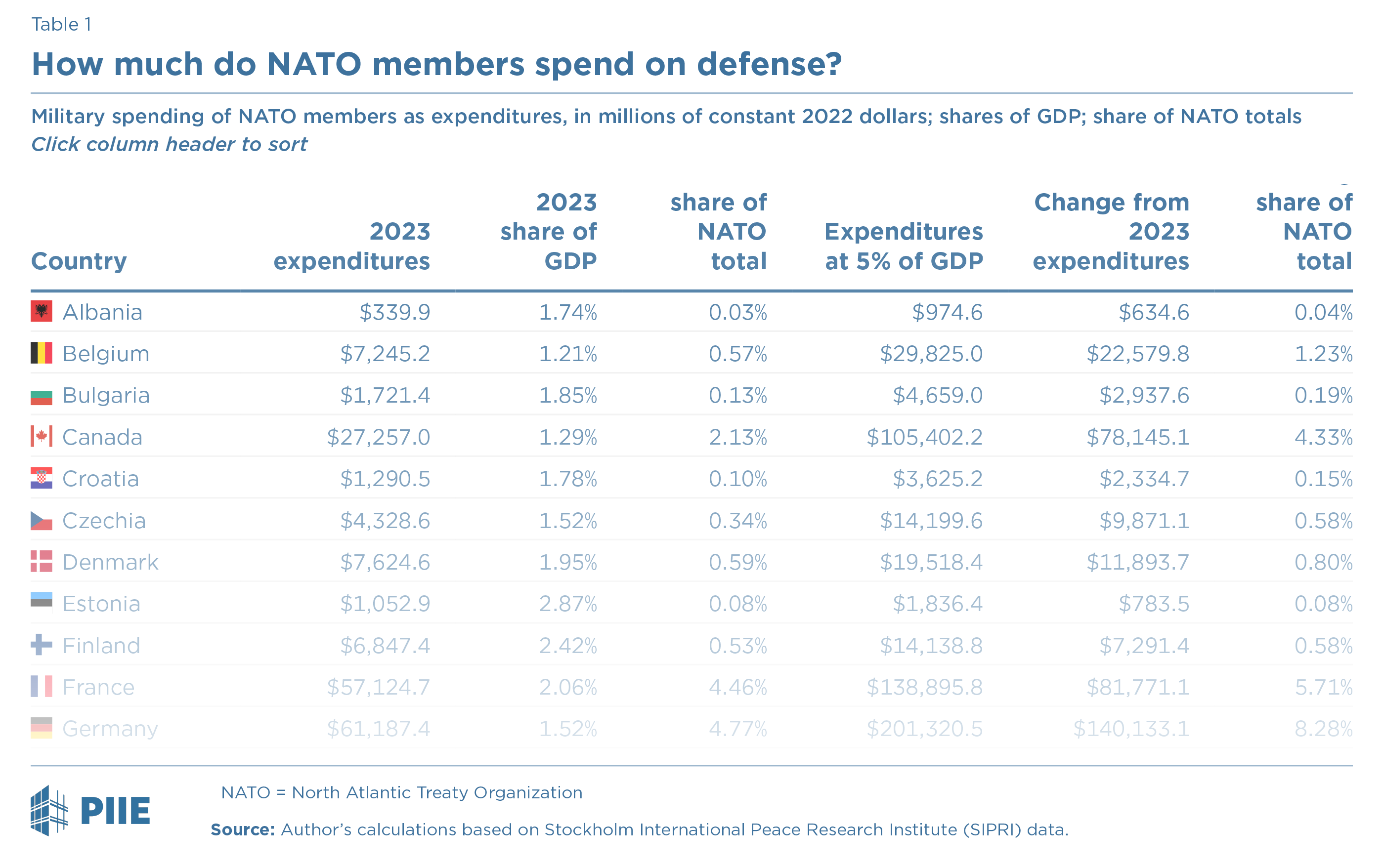
Table from Cullen S. Hendrix’s blog, “Trump's Five Percent Doctrine and NATO Defense Spending”.
Table from Cullen S. Hendrix’s blog, “Trump's Five Percent Doctrine and NATO Defense Spending”.
Alejandro Werner joined the Financial Times’ The Economics Show podcast to talk about what Milei got right and wrong in his first year.
Monica de Bolle was featured in a Wall Street Journal explainer that received 1 million views on how and why the Trump administration is bailing out Argentina.

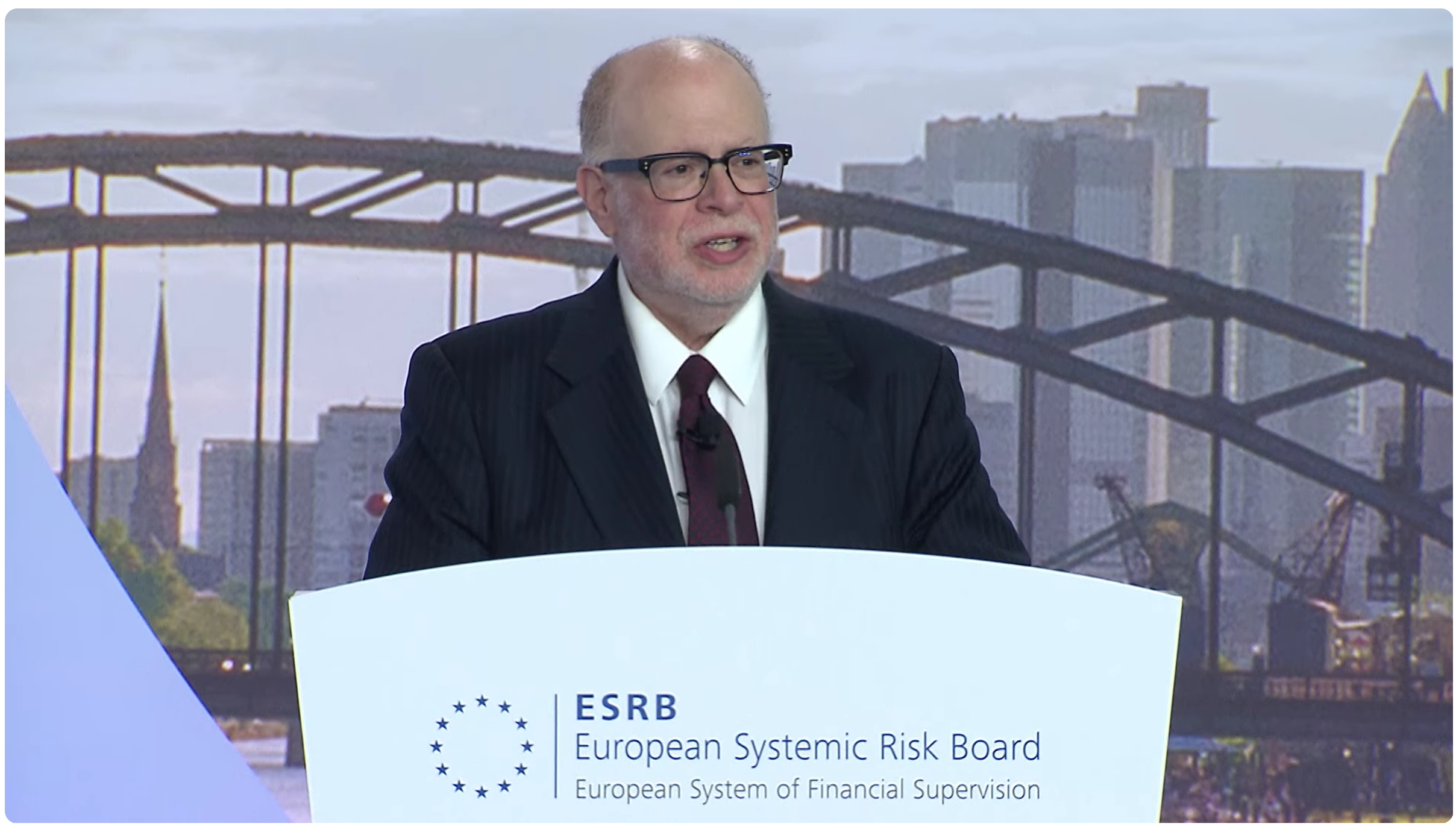
Adam S. Posen gave the keynote speech at the European Systemic Risk Board’s (ESRB) ninth annual conference.
Adam S. Posen gave the keynote speech at the European Systemic Risk Board’s (ESRB) ninth annual conference.

Policy for the Planet, a podcast hosted by Monica de Bolle, aired 17 episodes in 2025. Guests have included Daniel Yergin (S&P Global), Kristina Costa (formerly at the White House and Department of State), and multiple PIIE experts.
Policy for the Planet, a podcast hosted by Monica de Bolle, aired 17 episodes in 2025. Guests have included Daniel Yergin (S&P Global), Kristina Costa (formerly at the White House and Department of State), and multiple PIIE experts.

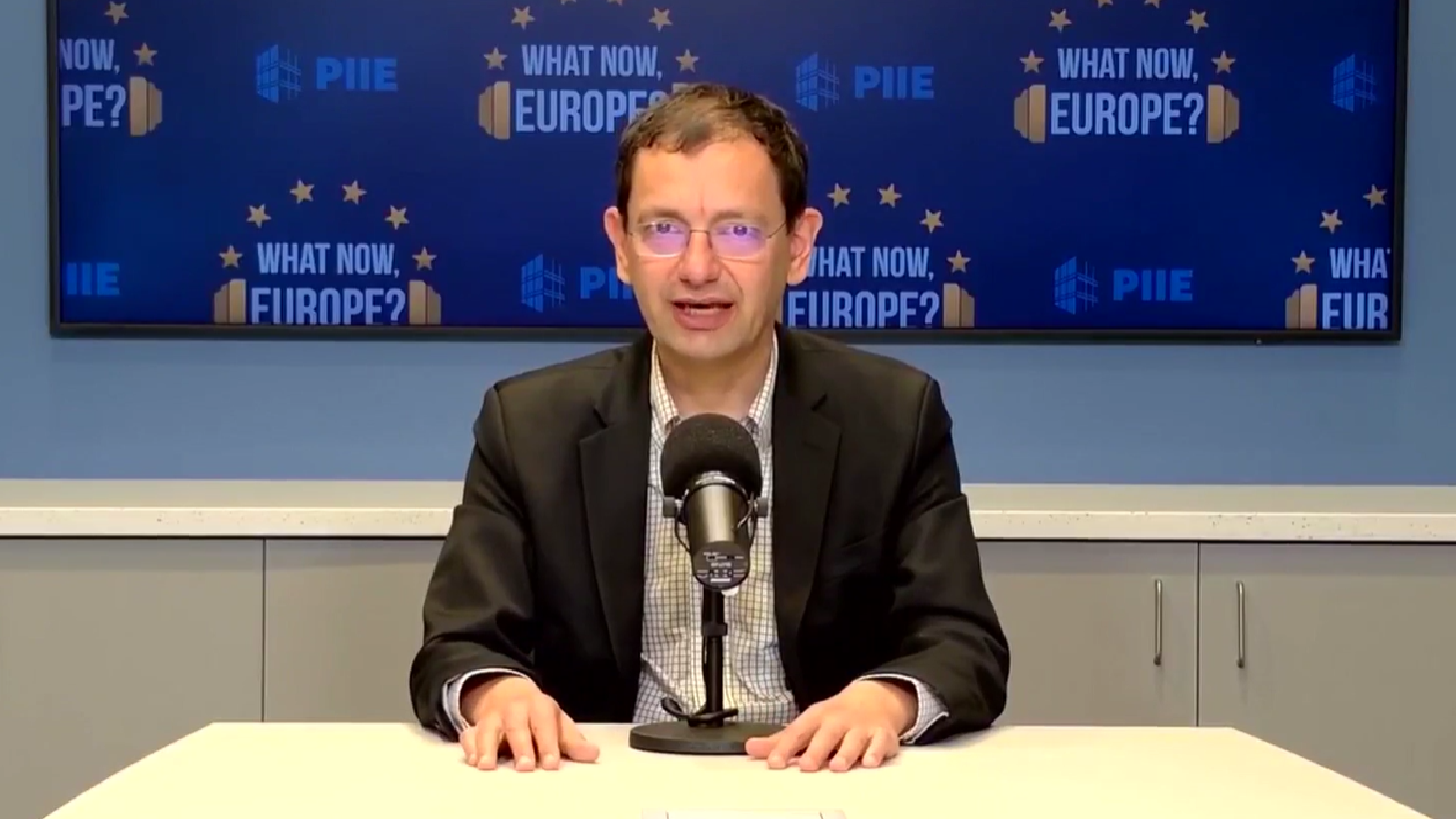
Launched in September 2025, What Now, Europe? is a new PIIE virtual series and podcast bringing on experts and practitioners to dive into Europe's future in a changing world. Host Nicolas Véron has interviewed guests about Ukraine’s status in the EU, the “Brussels effect” in a fragmenting world, and how to make the EU friendlier to high-growth businesses.
Launched in September 2025, What Now, Europe? is a new PIIE virtual series and podcast bringing on experts and practitioners to dive into Europe's future in a changing world. Host Nicolas Véron has interviewed guests about Ukraine’s status in the EU, the “Brussels effect” in a fragmenting world, and how to make the EU friendlier to high-growth businesses.
Elina Ribakova was interviewed by Bloomberg about the prospects of a ceasefire in the war in Ukraine.

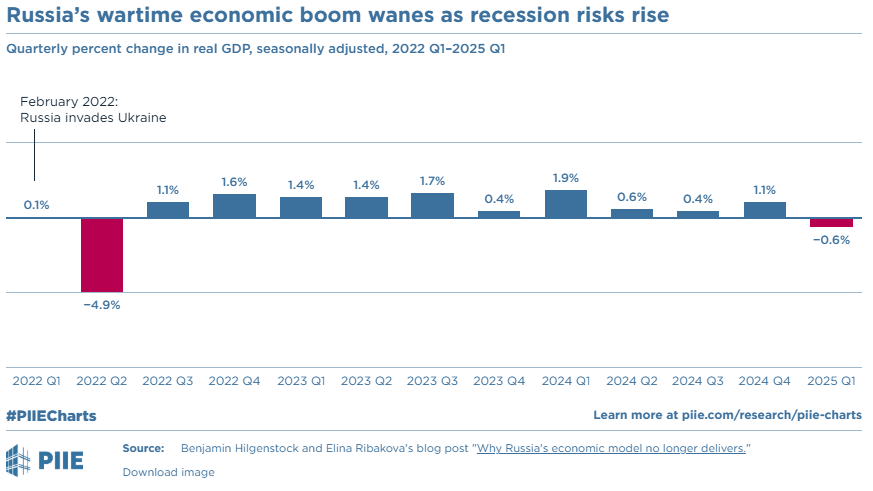
PIIE Chart by Benjamin Hilgenstock (KSE Institute) and Elina Ribakova.
PIIE Chart by Benjamin Hilgenstock (KSE Institute) and Elina Ribakova.
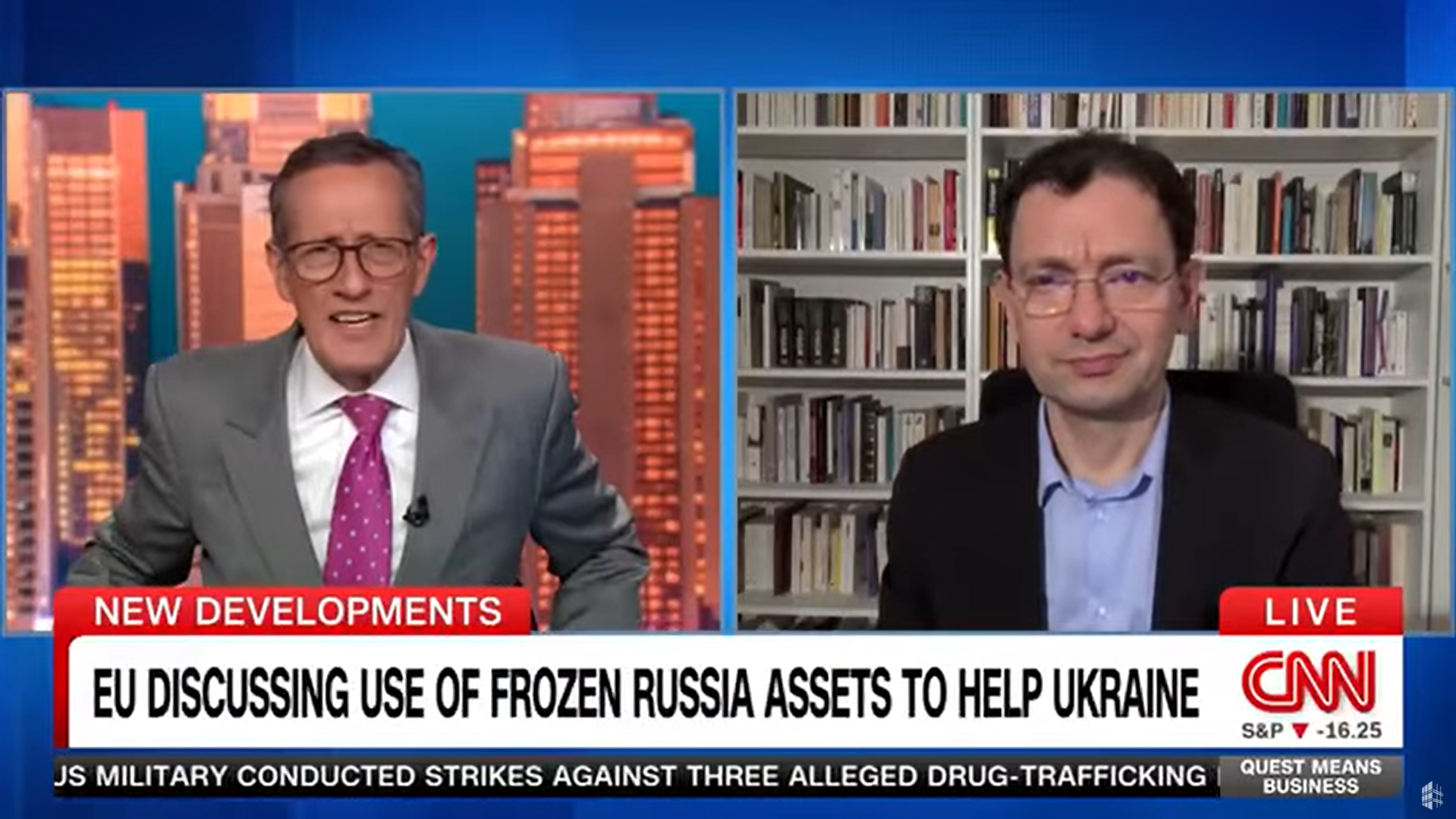
Nicolas Véron joined CNN International’s Quest Means Business to discuss the use frozen Russian assets to fund Ukraine’s economic reconstruction.
Nicolas Véron joined CNN International’s Quest Means Business to discuss the use frozen Russian assets to fund Ukraine’s economic reconstruction.
Mary E. Lovely joined CNN to explain that because of tariffs on imports from Japan, as well as other existing tariffs, auto prices in the US would be higher and the US auto industry would export fewer autos as it loses competitiveness around the world.
New and forthcoming books



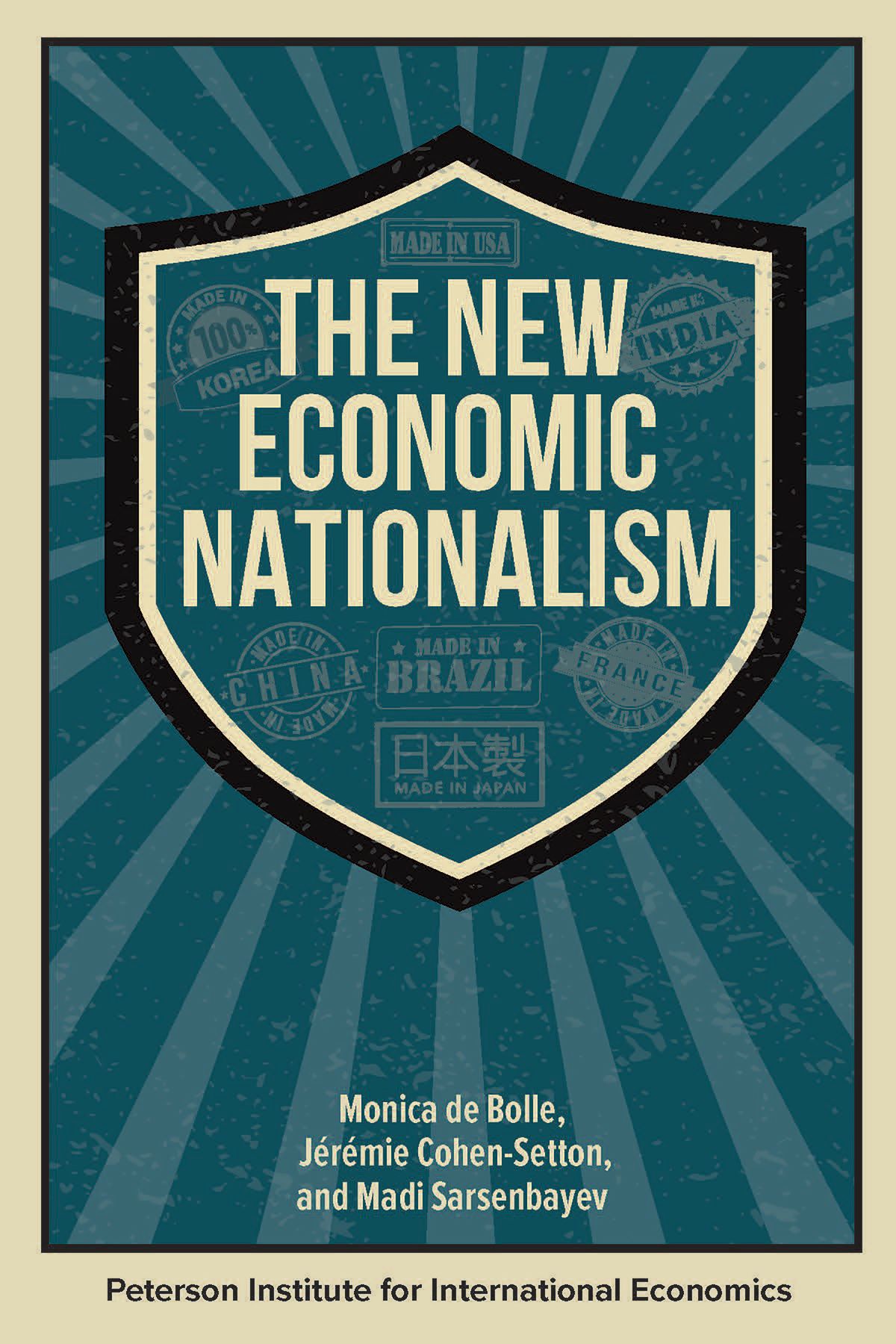
The New Economic Nationalism (PIIE, April 2025) by Monica de Bolle, Jérémie Cohen-Setton, and Madi Sarsenbayev

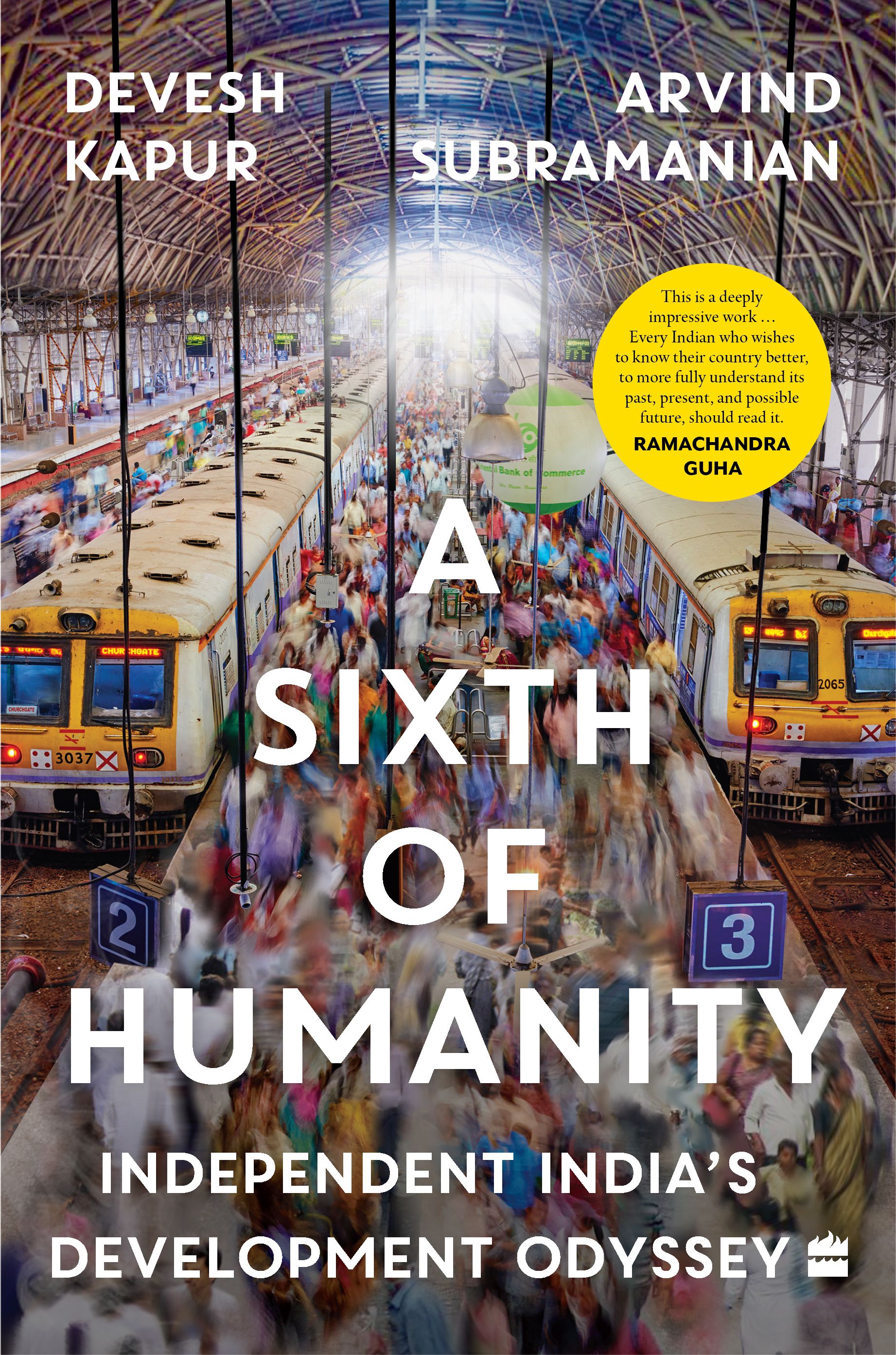
A Sixth Of Humanity: Independent India's Development Odyssey (HarperCollins Publishers India, October 25) by Devesh Kapur and Arvind Subramanian. On the Financial Times’ list of best economics books of the year.

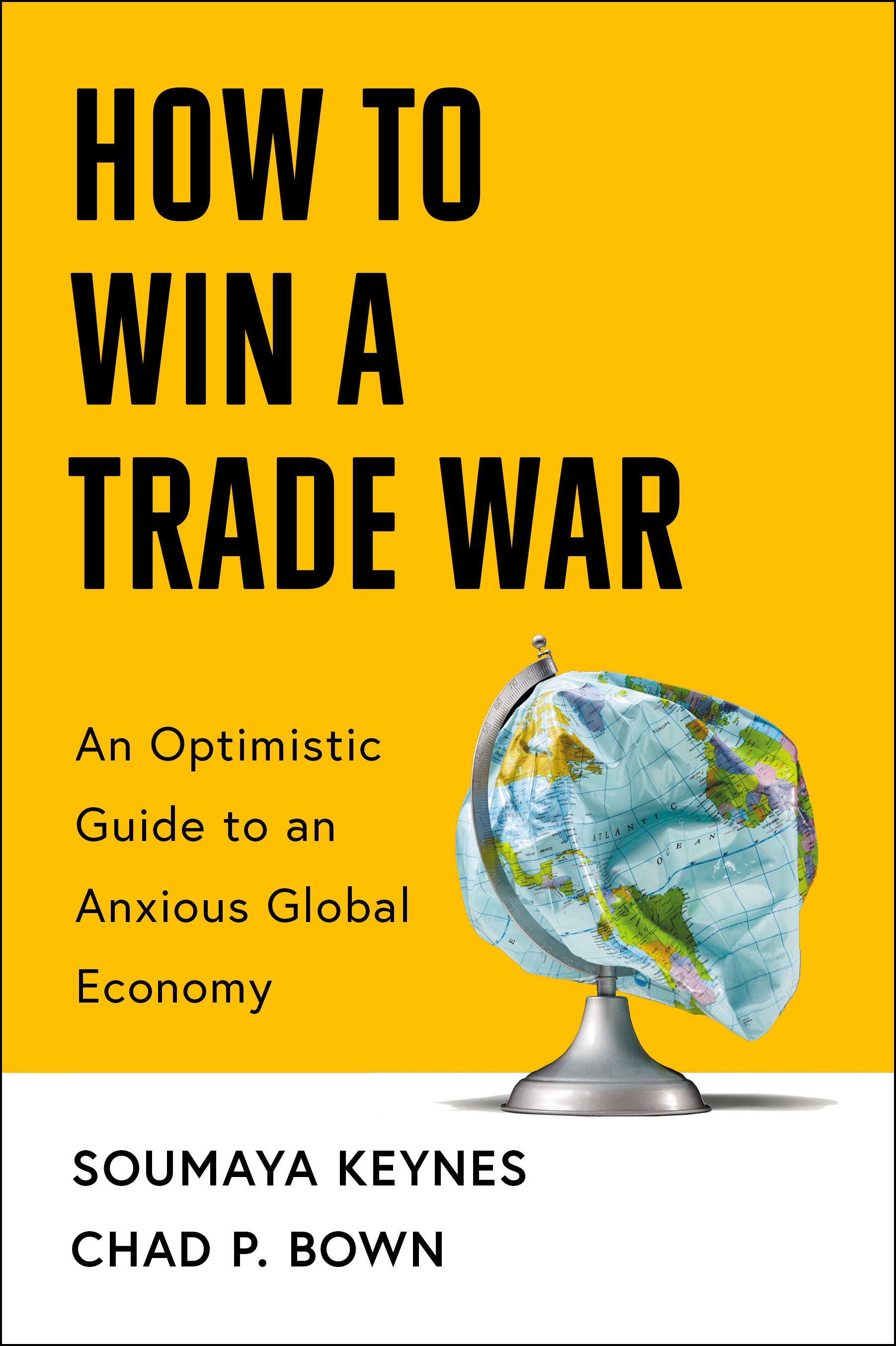
How to Win a Trade War (Simon & Schuster, forthcoming May 2026) by Soumaya Keynes and Chad P. Bown

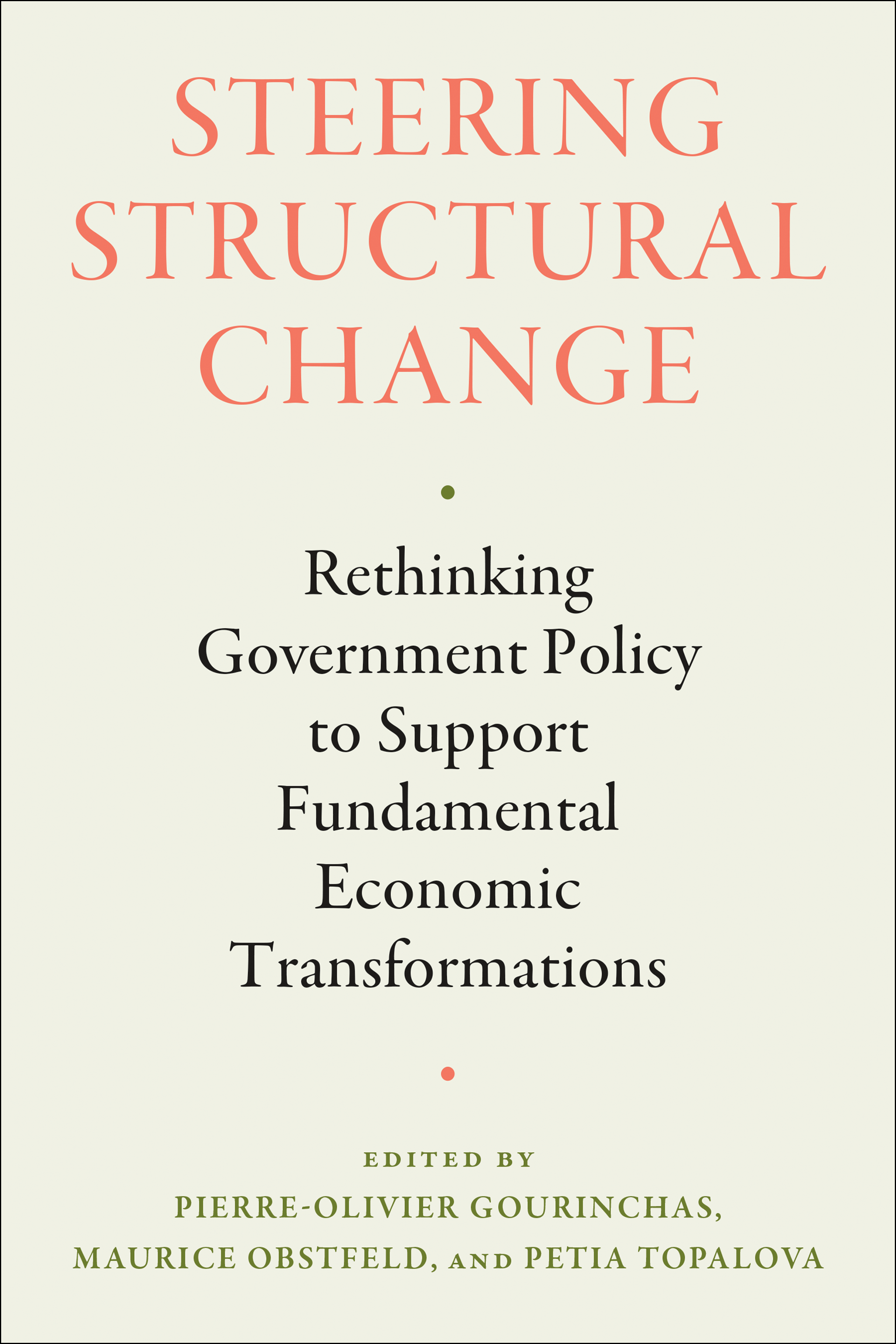
Steering Structural Change: Rethinking Government Policy to Support Fundamental Economic Transformations (MIT Press, forthcoming May 2026) by Pierre-Olivier Gourinchas, Maurice Obstfeld, and Petia Topalova


Detox: China’s Fiscal Reckoning in the Shadow of the Housing Bust (PIIE, forthcoming) by Tianlei Huang
Our Scholars

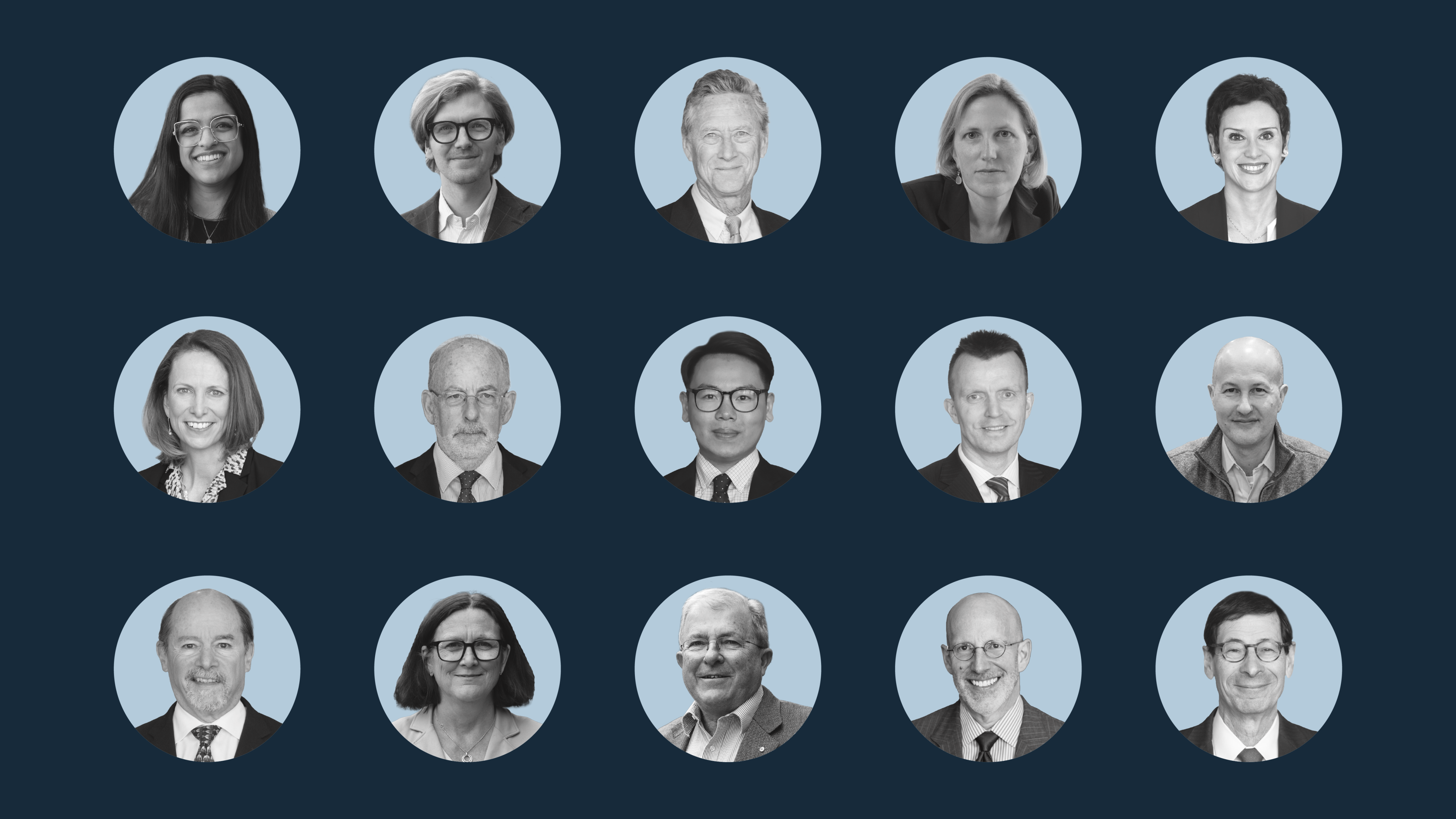
New PIIE scholars
Greg Auclair (Statistician and Quality Control Coordinator) is a former research consultant at the United Nations Conference on Trade and Development (UNCTAD) and studies the evolution of corporate profits, with research that explains how market structure and firm heterogeneity are relevant to macroeconomic outcomes.
Jed Kolko (Senior Fellow) is former undersecretary for economic affairs at the US Department of Commerce with expertise in labor, inequality, economic outlook, technology, industrial policy, and the US.
Anton Korinek (Nonresident Senior Fellow, joined February 2026) is professor of economics at the University of Virginia and faculty director of the Economics of Transformative AI (EconTAI) Initiative with expertise in artificial intelligence, technology, labor, inequality, and globalization.
Awards and achievements
Anjali V. Bhatt was appointed head delegate for the USA delegation to the Y20 2025 in South Africa, the Youth Summit of the G20.
Olivier Blanchard was awarded the Frontiers of Knowledge award from the Banco Bilbao Vizcaya Argentaria. He delivered the keynote at the 100th anniversary of the Bank of Chile and spoke at the National Bureau of Economic Research conference. He coorganized a “conference de consensus” on the French budget for 2026.
Martin Chorzempa spoke at the Stanford Conference on Geopolitics of AI in East Asia, Stanford Workshop on Chinese Open Source AI Models, Harvard Law Program on International Financial Systems, and the WTO Public Forum.
Kimberly Clausing was appointed research fellow at the Centre for Economic Policy Research, elected to the American Economic Association Executive Committee, and joined the Hamilton Project’s Advisory Council. She gave keynote speeches at the Max Planck Institute for Tax Law and Public Finance Conference, Pace Law and American Tax Policy Institute Conference, and the Taiwan Future International Summit.
Monica de Bolle was listed among the top twenty economics influencers in Brazil and gave a book talk on The New Economic Nationalism at Columbia University.
Karen Dynan was honored as a NABE Fellow by the National Association for Business Economics and was elected chair of the Conference on Research in Income and Wealth. She coorganized the Fall 2025 “Advancing Economic Measurement” conference and the Summer Institute 2025 Conference on Research in Income and Wealth. She spoke at the Federal Reserve Bank of Dallas, the 67th Annual Meeting of the National Association for Business Economics, the Federal Reserve Bank of Kansas City’s 2025 Economic Policy Symposium, and the 2025 Annual Meeting of the Allied Social Sciences Associations. She was a discussant for three papers on fiscal sustainability at the 55th Annual Spring Symposium of the National Tax Association in May 2025.
Patrick Honohan was awarded an Honorary Doctorate of Economic Science by the University of Limerick and was appointed as chair of the Chester Beatty Library of Oriental Manuscripts in Dublin. He delivered a keynote lecture at World Bank Treasury Executive Forum.
Tianlei Huang spoke at an Atlantic Council event titled “Is there anyone left to save the global economy” during the fall International Monetary Fund/World Bank Annual Meetings.
Jacob Funk Kirkegaard was a panelist at the European Parliament Hearing on Ways to Finance Ukraine’s War Effort.
Jed Kolko was appointed advisor to the Bipartisan Policy Center’s Data for the Future initiative and joined the American Economic Association’s economic statistics committee.
Robert Z. Lawrence spoke at “The New Trading (Dis)order” with Katherine Tai and the “If Not Free Trade, Then What?” debate with Oren Cass and Katherine Tai.
Cecilia Malmström became the Assar Gabrielson Visiting Professor at the Göteborg School of Economics and Law, Göteborg University. She was awarded a short-term teaching consultancy at Instituto Economico, School of Politics, Economics and Global Affairs, Madrid. She joined as a member of Transatlantic Bridge, a transatlantic academic network working on strengthening transatlantic relations.
Warwick J. McKibbin was appointed emeritus distinguished professor at the Australian National University. He gave a presentation at the 4th Kautilya Economic Conclave and a keynote presentation at the 17th annual George Washington University China Conference.
Marcus Noland helped organize and spoke at the 11th Meeting of the Dialogue on the DPRK Economy, sponsored by the Treasury and the Korean Ministry of Economics and Finance in Seoul.
Luca David Opromolla was reappointed research fellow at the Centre for Economic Policy Research and organized the “Tariffs and Trade Policy: Past, Present, and Future” NC State-National Bureau of Economic Research conference.
Maurice Obstfeld was appointed president of the Western Economic Association International and reappointed as distinguished fellow at the Centre for Economic Policy Research. He also participated in numerous meetings and events, including the Bank for International Settlements Annual Central Bank Governors Meeting, the Group of 20 Financial Stability Conference, and the Hoover Institution DC Conference on the Economic and Security Commons.
Arvind Subramanian was appointed to the Advisory Council of the Chief Minister of the state of Telangana, India.
Yeling Tan was named to Project Syndicate's Forward Thinkers list, which recognizes and spotlights intellectual innovators poised to shape international debates in the years ahead. She gave a keynote at the Frankfurt School Sino-German Center China Colloquium, the EU-China-US Trilateral Dialogue for Peace, and the European Institute for Peace.
Nicolas Véron spoke at the International Monetary Conference and presented at Moody’s Banking Advisory Board; an event hosted by the European Commission; Euroclear Advisory Council; and at the European Commission workshop on banking reform.
Alan Wm. Wolff was appointed a board member of the Friends of Multilateral Trading System, Geneva, and the Trade Negotiations and Investment Forum, Nairobi.
Events





Popular events on Fed independence, tariffs, and Congress
The Institute’s most attended event was its high-level conference to analyze the serious issues concerning central bank independence in practice. The event has nearly 5,000 views on YouTube and brought together numerous notable speakers from academia, policymaking, and finance.
PIIE Insider LIVE, the Institute’s new flagship series, drew nearly 1,500 attendees for its episode with Chad P. Bown on tariffs and the future of global trade.
PIIE hosted Senators Tim Kaine (D-VA) and Rand Paul (R-KY) in a bipartisan conversation on the complex legal, political, and constitutional issues facing Congress in response to President Trump's imposition of tariffs on US trading partners.
Spring and Fall Meetings
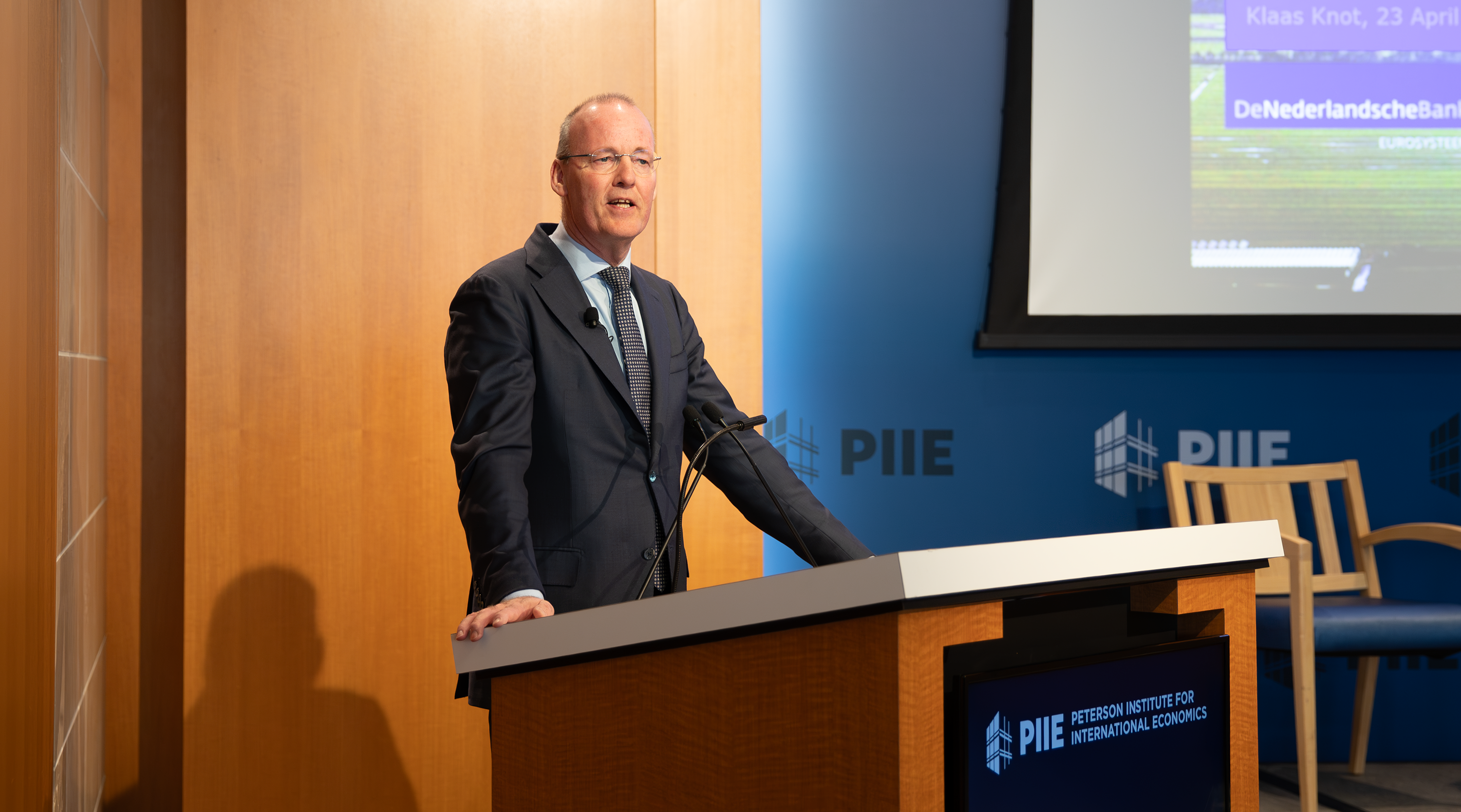
PIIE’s annual Spring and Fall Meetings broke records for attendance, convening influential policymakers and showcasing PIIE scholars for substantive dialogue. Spring meetings averaged 900 attendees per event, and videos gained a cumulative 60,000 views within a week and were listed in Politico’s Morning Money.
Events featured speakers including:
- Agnès Bénassy-Quéré (Banque de France)
- Nadia Calviño (President, European Investment Bank)
- Klaas Knot (Former De Nederlandsche Bank; Financial Stability Board)
- Signe Krogstrup (Danmarks Nationalbank)
- Philip R. Lane (Executive Board, European Central Bank)
- Clare Lombardelli (Bank of England)
- Tiff Macklem (Bank of Canada)
- Olli Rehn (Bank of Finland)
- Anna Seim (Riksbank)
- Moritz Schularick (Kiel Institute)
PIIE organized two events centered on the changing trade regime and the role of the US dollar that have over 11,500 views on YouTube. Speakers included Monica de Bolle, Markus K. Brunnermeier, Joseph E. Gagnon, Warwick J. McKibbin, Maurice Obstfeld, and Adam S. Posen.
PIIE partners with the WTO, Dallas Fed
PIIE partnered with the World Trade Organization and their annual Public Forum. Chad P. Bown and Cecilia Malmström comoderated a panel on business perspectives on trade.
“Most of you are probably familiar with the Peterson Institute for its excellent work on trade, but in case you're not, it is a nonprofit, nonpartisan, Washington-based think tank, routinely recognized as one of the best. Their work is more important than ever, and we are happy to be joining forces with them in this session.”
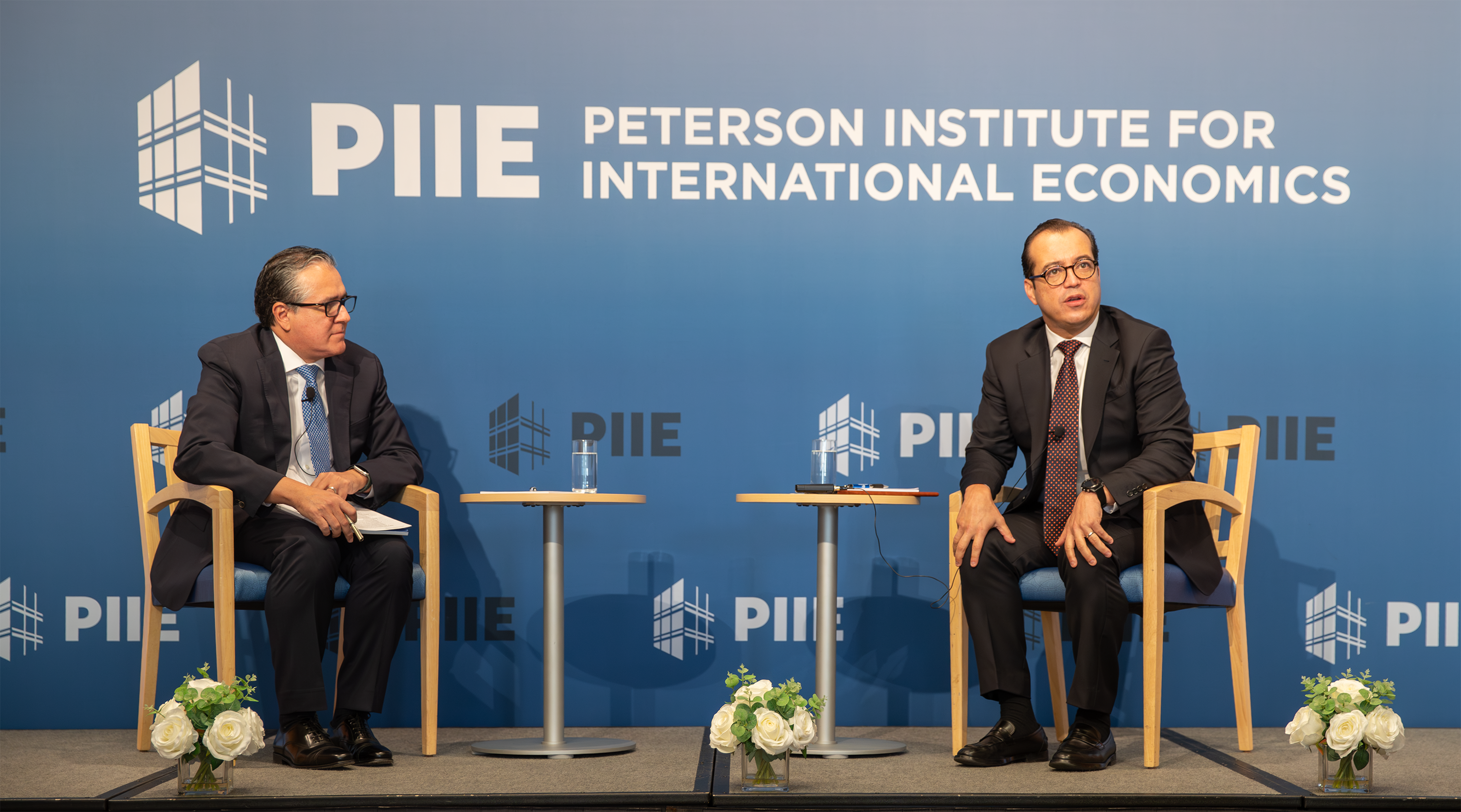
The Institute also partnered and coorganized the North American economic integration conferences with the Dallas Fed in the spring and fall. Speakers from PIIE included Monica de Bolle, Michael A. Clemens, Marcus Noland, Jeffrey J. Schott, and Alejandro Werner. One discussion featured Luis Rosendo Gutiérrez Romano, undersecretary of foreign trade of Mexico.
Global reach with event series
PIIE Insider LIVE, hosted by Anjali V. Bhatt, drew over 4,500 viewers over 11 episodes in 2025 as she interviewed PIIE scholars on topics including immigration and the US economy, trade and the international financial system, and the EU's new era of trade and geopolitical challenges. It celebrated its one-year anniversary in November 2025, featuring Adam S. Posen to discuss how much had changed in the global economy since President Trump took office.
Europe is grappling with a new era of challenges, from building its own defense to pursuing tech independence. It's a good time to ask: What Now, Europe?—the name of PIIE’s new virtual series and podcast hosted by Nicolas Véron, exploring Europe's future in a changing world. Topics have included Ukraine’s future in the EU, the “Brussels Effect” in a fragmented world, and making the EU friendlier to businesses.
Trade Winds, PIIE’s event series hosted by Cecilia Malmström, drew over 2,700 attendees including government officials from the EU, Canada, the UK, and the US. One episode, featuring the WTO’s Director-General Ngozi Okonjo-Iweala, was broadcast live from the World Trade Organization’s Public Forum in Geneva.
Board of Directors
Michael A. Peterson * (Chair of the Board)
Stephen Freidheim * (Chair of the Executive Committee)
Caroline Atkinson*
C. Fred Bergsten
Mark T. Bertolini
Neeti Bhalla Johnson*
Julie Boland
Frank Brosens
Jason Cummins*
Barry Eichengreen
Georges Elhedery
Roger W. Ferguson, Jr.
Peter R. Fisher*
Esther L. George
Evan G. Greenberg
Maurice R. Greenberg
Kelly Grier
Herbjorn Hansson
J. Tomilson Hill
Stephen Howe, Jr.*
Merit E. Janow
Hugh F. Johnston
Michael Klein*
Ramon Laguarta
Charles D. Lake II
David M. Leuschen
Barbara G. Novick
Tetsuo "Ted" Ogawa
Hutham S. Olayan
Peter R. Orszag
James W. Owens
Jonathan Pruzan
Paula R. Reynolds
Ginni M. Rometty
Jin Roy Ryu
Richard E. Salomon*
Dilhan Pillay Sandrasegara
Mostafa Terrab
Mark Tucker
Laura D. Tyson
D. James Umpleby III
Gertjan Vlieghe
William von Mueffling
Ronald A. Williams
Min Zhu
Robert B. Zoellick*
HONORARY DIRECTORS
George David
Alan Greenspan
Carla A. Hills
Frank E. Loy
Jean-Claude Trichet
Ernesto Zedillo
FOUNDING CHAIR
Peter G. Peterson (1926–2018; Institute Chair 1981–2018)
*Indicates Executive Committee member
Funding
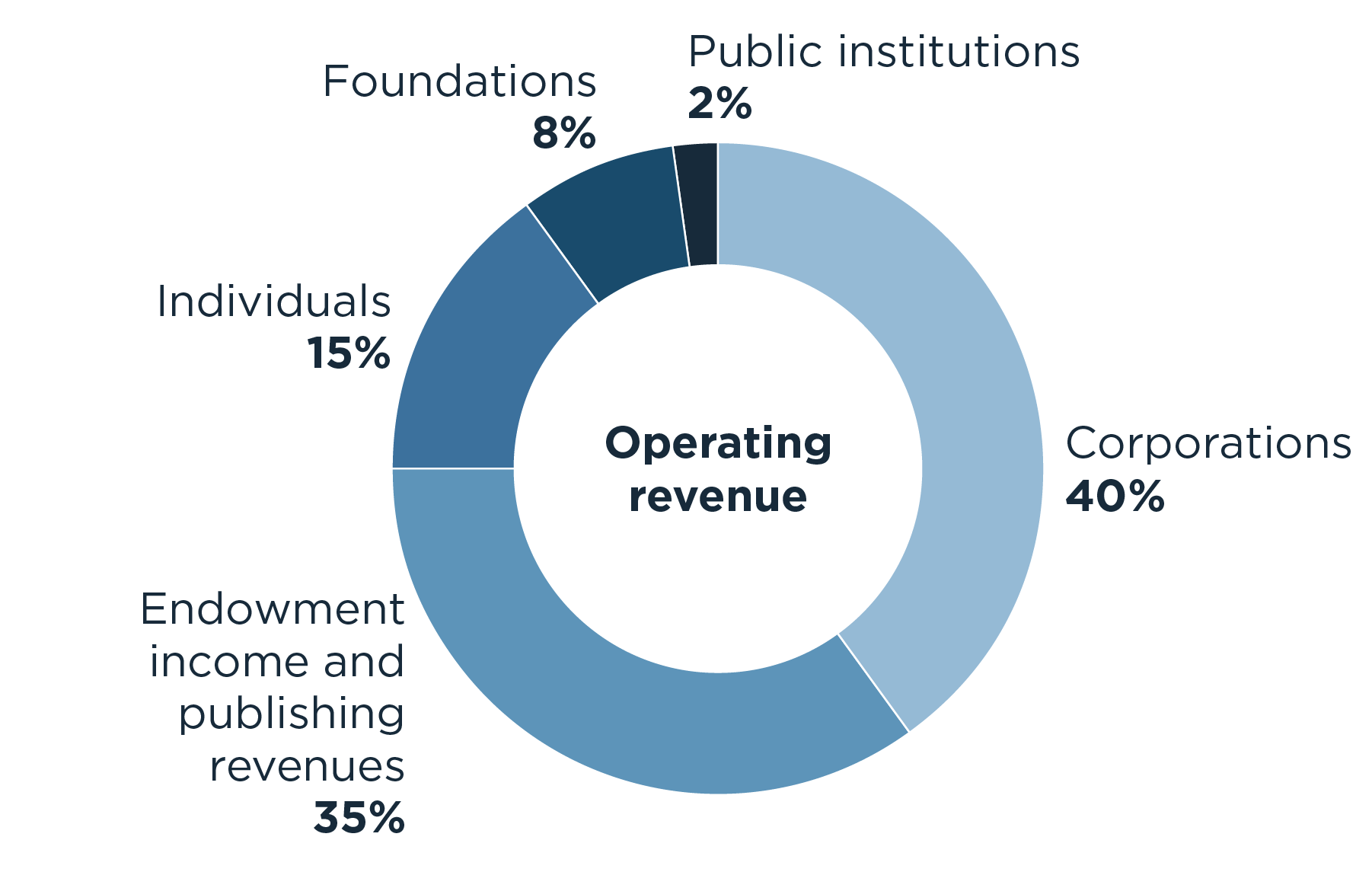
The Peterson Institute’s annual budget of $16 million is funded by donations and grants from corporations, individuals, private foundations, and public institutions, as well as income on the Institute’s endowment. The Institute discloses annually all sources of funding, and donors do not influence the conclusions of or policy implications drawn from Institute research. All research is held to strict standards of replicability and academic integrity.
Operating revenue

Operating expenses

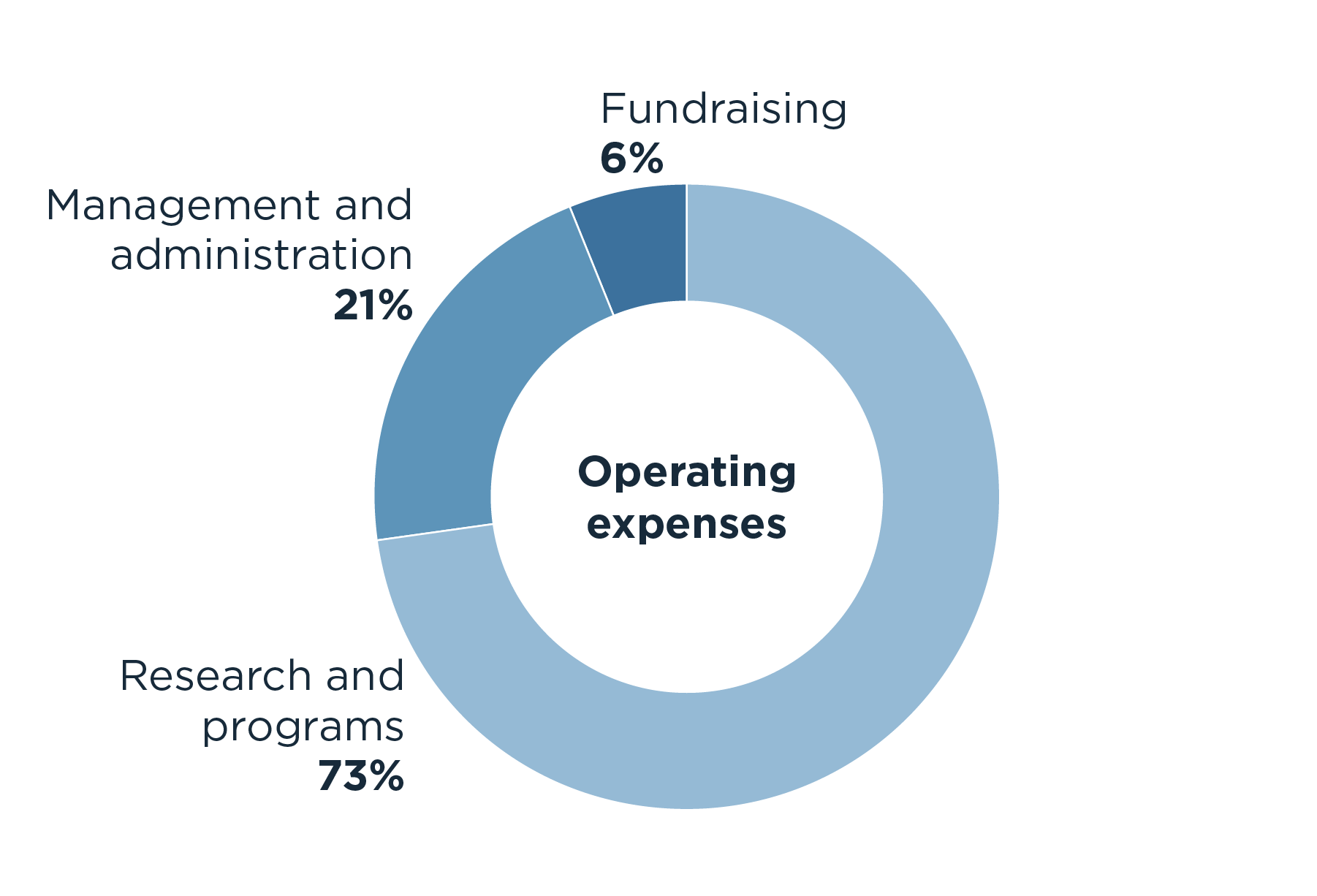
Figures above are based on the PIIE fiscal year, July 1, 2024 - June 30, 2025.
Figures above are based on the PIIE fiscal year, July 1, 2024 - June 30, 2025.




ADDRESS
1750 Massachusetts Ave, NW
Washington, DC 20036
 Built with Shorthand