
Viewers of the movie Oppenheimer will remember that an essential key to making an atom bomb before Nazi Germany succeeded in doing so was to enrich uranium. During World War II, the US government's secret Manhattan Project sought to produce enriched uranium in sufficient concentration and quantify to build an atom bomb. Most of the uranium ore it used came from mines in the Belgian Congo and Canada’s Northwest Territories. That major effort in fact only succeeded in producing enough for two bombs, both forever remembered in world history. It has been calculated that 18.9 million pounds (8.6 million kilos) of uranium ore was required to produce the first atomic bombs, the first of which contained 64 kilos of highly enriched uranium and the second 6.2 kilos of plutonium.
An objective of the recent US airstrikes in Iran was to destroy that country’s capability to produce highly enriched uranium as well as its stock of the material. In late May the International Atomic Energy Agency (IAEA) issued a report that Iran had further increased its stockpile of uranium enriched to near weapons-grade levels. Military uses of uranium require far more processing than civilian uses; weapons-grade uranium has a concentration of around 90 percent. The IAEA estimated that Iran had at the time of the airstrikes a supply of 408kilos (900 pounds) of highly enriched uranium on hand (at about a 60 percent concentration), which, when enriched further, would be enough to make about 10 atom bombs.
Highly enriched uranium (HEU) is defined as containing 20 percent or more of enriched uranium, while low-enriched uranium (LEU) contains less than 20 percent. The former is used in nuclear weapons, the latter as fuel for commercial nuclear reactors. Not all HEU is in the hands of militaries. HEU has medical uses in the production of isotopes. Some types of reactors used for electricity generation use HEU. Other applications include or have included research reactors, naval propulsion, space propulsion, icebreakers (Russia), earth satellites (US and Soviet), and uses in other inaccessible remote locations. It has been estimated by the Nuclear Nonproliferation Center at the Middlebury Institute for International Studies (MIIS) in Monterey, CA, that in 2020 there was enough HEU in civilian hands, some of it in university research facilities, to build 5,000 nuclear weapons, were it to be applied to that end. Many of these civilian uses of HEU are being curtailed.
There have been intensive efforts by the international community for several decades to limit the proliferation of nuclear weapons. Part of this effort is to reduce the amount of HEU that is produced and in existence. It was the stated concern of the George W. Bush administration to counter what it supposed was the attempt by Iraq to build a “weapon of mass destruction” in 2003. Notoriously, with hindsight, then US secretary of state Colin Powell announced to the United Nations, based on the erroneous intelligence he had been given, that Iraq was seeking to purchase from Niger high strength aluminum tubes to build centrifuges in order to enrich uranium to weapons grade.
A landmark instance of cooperation between the United States and Russia during the wind-down of the Cold War was the conversion of HEU from warheads to LEU for commercial power production. The program, completed in 2013, was known as “Megatons to Megawatts,” through which Russia converted 500 metric tons of HEU to 14,446 metric tons of LEU. The LEU was then sold to the United States for use as fuel for commercial reactors. The program successfully eliminated “enough bomb grade material for 20,000 nuclear warheads.”
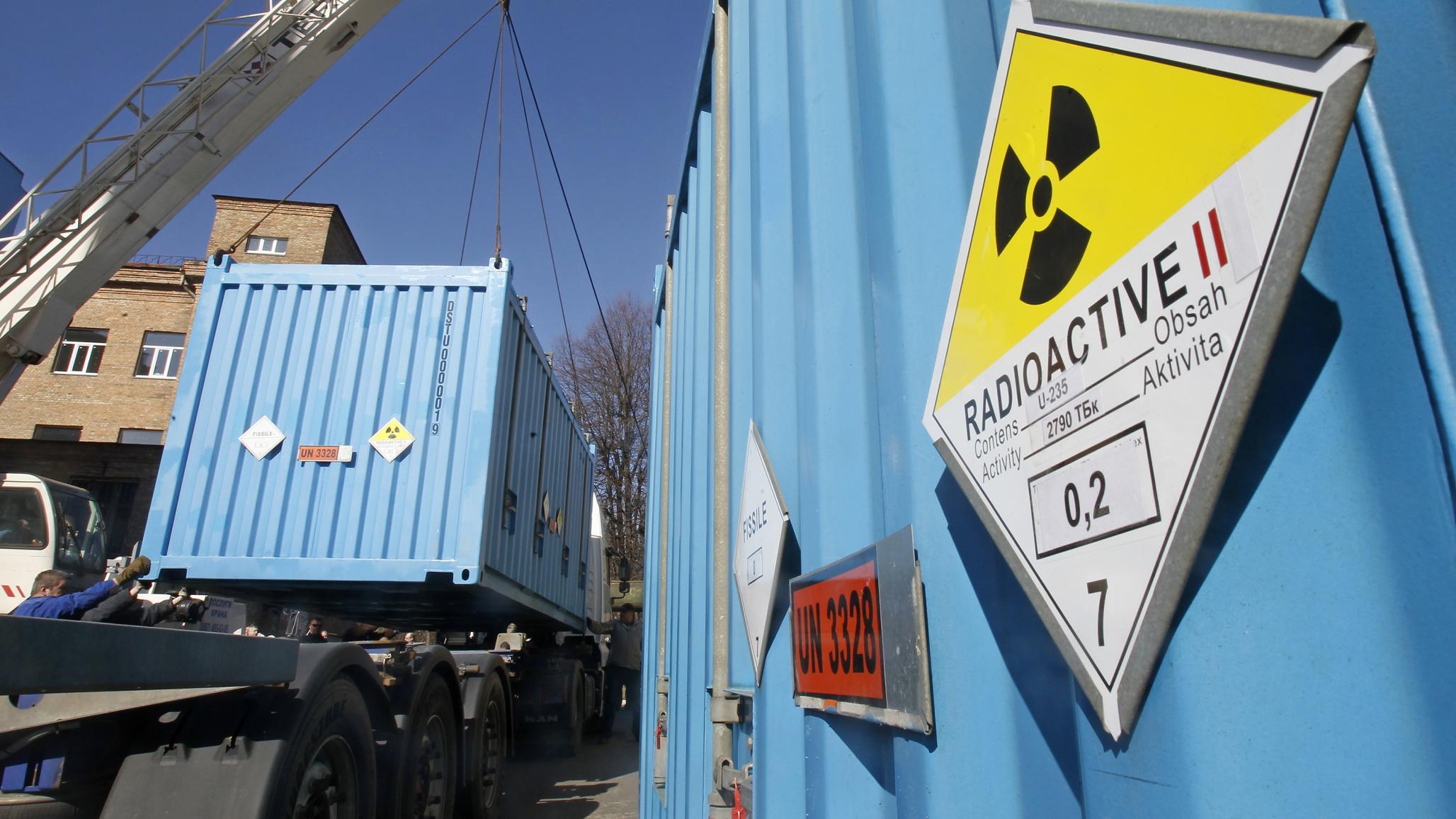
Similarly, the United States and Ukraine, in cooperation with Russia and the IAEA, agreed in 2010 to work together to eliminate Ukraine’s stocks of HEU. There were six sites in Ukraine involved, with a total of 234 kilos removed, much of it downgraded in Russia. The United States provided Ukraine with LEU for research. Recent polls show that a substantial number of Ukrainians believe that ridding the country of its nuclear arsenal was a mistake. Around 73 percent reportedly favor restoring nuclear weapons, and 58 percent support this even if it jeopardizes alliances. The extent to which having nuclear capability is a deterrent to attack is debatable, nor has it to date proved a key to successful conquest. Russia is still among the top three nuclear powers, along with the United States and China. The other nuclear powers are France, the United Kingdom, India, Pakistan, Israel, and North Korea.
Most recently, the United States and Japan concluded an agreement under which Japan eliminated its holdings of HEU. President Joseph R. Biden Jr. and Prime Minister Fumio Kishida announced the agreement in April 2024, calling it a “nonproliferation triumph.” In 2022, Biden and Kishida announced the removal of HEU from three Japanese sites, and the two countries also have removed all HEU from the Kyoto University Critical Assembly and committed to convert the Kindai University Teaching and Research Reactor, Japan’s last remaining HEU-fueled research reactor, to high-assay low-enriched uranium (HALEU) and removed its remaining HEU to the United States. In December 2023, the US Department of Energy’s National Nuclear Security Administration (NNSA); Japan’s Ministry of Education, Culture, Sports, Science and Technology (MEXT); and the Japan Atomic Energy Agency (JAEA) transported the remaining HEU to the United States. The removal of HEU from Japan was seen as a step to thwart potential terrorism. Since 1967, Japan has adhered to the Three Non-Nuclear Principles enunciated by Prime Minister Eisaku Sato of “not possessing, not producing and not permitting the introduction of nuclear weapons, in line with Japan's Peace Constitution.”
In April 2024, reports surfaced that Iran had purchased 300 tons of uranium ore, enough for 30 nuclear weapons according to analysts at the Institute for Science and International Security. IAEA verification and monitoring are not available. A press report in May 2023cited by the authors indicated that Iran sought to import 800,000 tons of phosphate to extract 160 tons of uranium suitable for nuclear weapons. Iran is believed to be temporarily incapable of further enriching its 60 percent enriched current stock of HEU to the weapons-grade level of 90 percent enrichment because of the bombing of its facilities. A simple gun-type weapon, it is estimated, could be enough to produce Hiroshima-size bombs with 25 kilos of that concentration of HEU. It is not known if Iran has the capability to build that bomb or deliver it. Experts state that Iran’s stock could be converted simply in a few weeks with enough weapons-grade uranium to build three bombs, once its facilities are in production again. The degree of the degradation of its capacity is a matter of debate, with IAEA director general Rafael Grossi stating that Iran could resume uranium enrichment within months. Enriched uranium can be used as a weapon even at lower than 90 percent concentration by spreading it through use of conventional explosives in a "dirty bomb.”
Worldwide, uranium ore is plentiful. It is not dangerous. It is mined in over a dozen countries, with most of the world’s production located in Kazakhstan (43 percent), Canada (15 percent), Namibia (11 percent), as well as Australia, Russia, Uzbekistan, and Niger. Australia accounts for about a quarter of global resources of uranium (measured in terms of cost of recovery), followed by Kazakhstan and Canada. Ninety-five percent of the world’s supply is located in 15 countries. While climate change is increasing the demand for uranium, increasing its cost, the major constraint on the production of nuclear weapons is not any inadequacy of known locations of the natural resource, constraints on the mining of ore. nor its cost, but the capability and willingness to produce highly concentrated HEU. There is no exact match between the location of quantities of ore and the capability to become a nuclear power, as Iran has demonstrated.
The proliferation of nuclear weapons capability requires trade, in uranium ore and in the technology and equipment necessary to produce weapons-grade enrichment. Additional resources are needed in the form of enrichment plants, manufacturing and storage facilities used in weapons production, and disposal of nuclear waste including spent fuel, which is comprised of depleted uranium and plutonium which still contains usable energy. Specialized goods and services often need to be imported.
Trade at the same time has played a crucial role in nuclear nonproliferation efforts. This has been demonstrated by the removal of HEU and the supply of LEU in its place for use in commercial power generation. The most notable examples are the cooperative programs effected by the United States during the last 20 years with Russia, Ukraine, and Japan. To be successful as a tool to promote nonproliferation, states that are on the threshold of being capable of producing weapons grade uranium need to decide to be committed to be a nuclear power only for peaceful commercial uses and peaceful scientific research. Iran has repeatedly shown by its actions that it seeks to take enrichment over the threshold from producing uranium for commercial and other peaceful uses to producing weapons.
Some conclusions
In a well-ordered world, Russia and other nuclear and non-nuclear states would still want fewer nuclear-tipped missiles in fewer hands and would work with the United States to that end.
In a well-ordered world, the United States and Russia (and Iran) would not cause other states like Japan and Ukraine to think that they needed to have nuclear weapons for their essential security.
In a well-ordered world, trade in technology and goods capable of producing nuclear weapons would be forbidden and interdicted in the face of rogue states and non-state actors.
In a well-ordered world, peaceful uses of nuclear energy would spread for the general benefit of all.
Data Disclosure
This publication does not include a replication package.

Author's note: My thanks to Jeremy N. Wolff, who holds an MA in nonproliferation and China studies from the Middlebury Institute of International Studies at Monterey.