
The Court of International Trade in late May handed President Donald Trump a first-round defeat by declaring illegal all of his April 2 “Liberation Day” tariffs and some others as well. Within two days, he said he would invoke a different legal trade authority to double the tariff on steel and aluminum imports to 50 percent. However, doing so may have put the higher tariff in legal jeopardy as well.
In both cases, Trump cited legal authority that Congress granted years ago to the president to deal with extreme circumstances. Trump invoked the authority granted under the International Emergency Economic Powers Act (IEEPA) to impose his Liberation Day tariffs. IEEPA is limited to circumstances in which the president determines that a response is needed to meet “an unusual and extraordinary threat . . . to the national security, foreign policy or economy of the United States.” The statute does not specify whether the president’s response should be broad, covering a swath of products, or focused.
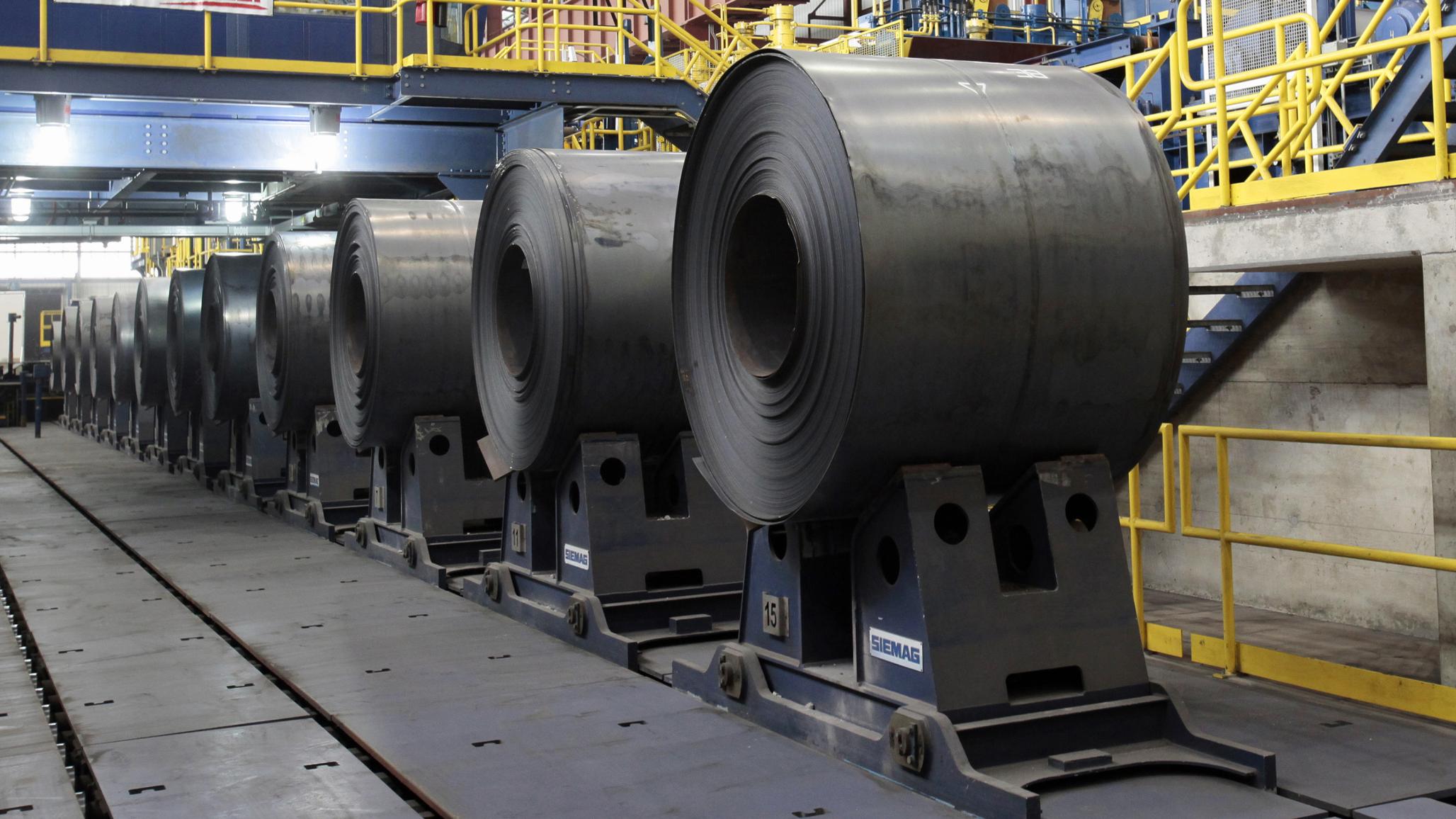
Trump invoked the authority granted under the Section 232 of the 1962 Trade Expansion Act to impose the steel and aluminum tariffs. This authority is designed to be selective, aimed at curbing imports of specific products. To use it, the president must find that an “article is being imported into the United States in such quantities or under such circumstances as to threaten to impair the national security.”
The use of emergency authority
Prior to the Trump administration, a president used emergency authority only once to impose broad tariffs. This was President Richard Nixon’s 1971 use of a World War I statute, the Trading with the Enemy Act (enacted in October 1917) to impose a 10 percent import surcharge to deal with a balance of payments emergency. The courts upheld Nixon’s surcharge. In Trump’s case, in contrast, both the Court of International Trade and the US District Court for the District of Columbia (Court DC) declared that IEEPA (which replaced the 1971 statute) did not justify Trump’s Liberation Day tariffs.
Why was Nixon’s action upheld while Trump’s was not? A few differences stand out. The Nixon tariff was deployed in the face of what appeared to be an international economic emergency—a balance of payments crisis and a shortage of dollars to pay for imports (the dollar was at that time backed by gold)—and the tariff remedy was related to that problem. And in line with the emergency nature of the action, the imposition of the tariff was brief—from August 15 to December 18, 1971. Moreover, Nixon did not put a tariff on any product at a level higher than that which had been set under prior legislative authority. If the product was duty free, it remained duty free, emergency or not.
In contrast, the courts found that neither Trump’s Liberation Day tariffs nor his earlier fentanyl-related tariffs were justified under congressional grants of emergency authority. The courts’ rulings may foretell how they could react to Trump’s pivoting within 48 hours to invoke a different source of authority—Section 232—to justify doubling the US tariff on steel and aluminum.
During his first term, Trump imposed 25 percent steel and aluminum tariffs citing Section 232 of the Trade Expansion Act. His use of this authority was upheld by the Court of International Trade and, on appeal, by the Federal Circuit when challenged by steel importers (American Institute of Imported Steel v. United States). The Supreme Court declined to hear an appeal of that judgment. On February 11, 2025, Trump reinstated the steel and aluminum tariffs in full, terminating the effect of decisions made in the interim to exempt countries and diverse selected products made from these metals.
Does Trump’s doubling of the tariff to 50 percent on June 4 present a different issue from the original action in imposing a 25 percent tariff? A 50 percent tariff may be a near embargo until US prices rise by the level of the new tariff making imports again competitive. The timing of the new tariff may interest a court. What were the facts that led the president to double the tariff? Did he receive a new report from the Commerce and Defense departments that national security was now being impaired or threatened? Was there a recent upsurge of steel and aluminum imports? Not visibly. Steel imports have been relatively flat for years and 10 percent below trend in May. Aluminum imports have fluctuated in recent months but on average are near their longer-term trend. The capacity utilization for the two industries remains below the 80 percent target set by the Section 232 case.
What changed between the president’s February action and his decision implemented on June 4? One answer is that the court rulings against the April 2 tariffs put them under a cloud of legal uncertainty, possibly eroding the president’s ability to use them as leverage in bilateral trade negotiations. America’s trading partners may be paying less attention to those tariff threats. Will the Supreme Court look behind the president’s claim that America’s national security required a doubling of the steel to ask if an unrelated objective might have been in mind?
Usually, the answer is “no.” Courts are very deferential to the president’s foreign affairs power in declarations of national emergencies for trade purposes or assertions that national security required his action. While Section 232 does not have a history of being used very often since it was enacted in 1962, presidential national security determinations have been allowed to stand.
In contrast, international emergency declarations by presidents under IEEPA are far more plentiful, with 70 such declarations from enactment in 1977 up to 2025. None were overturned. The April 2 and fentanyl tariffs are the first instance of the courts deciding that the president was going beyond his delegated authority. Further court interest may well be sparked in upcoming cases. The sparse use of Section 232 is about to change. The Trump administration has now initiated Section 232 investigations into imports of copper and copper-derivative products; timber, lumber, and wood products; pharmaceuticals and pharmaceutical ingredients; and semiconductors and semiconductor manufacturing equipment. Indeed, more products may be added to this list.
When does the president’s action go too far, resulting in a judicial finding that it exceeds Congress’s delegation of emergency authority? A trade court that concluded IEEPA had been misused could likewise find that the latest steel and aluminum tariffs were not justified under Section 232. Having looked closely into whether the use of IEEPA was within the law, a court might look askance at the president’s sudden decision to use another trade authority, with its own specific purposes. A president’s decision to expand use of his delegated trade authorities may be met with an equal expansion by the courts to determine if there is overreach. This will be especially true if the lower court opinions in the IEEPA cases are affirmed on appeal.
The freedom presidents have had in declaring national emergencies and threats to national security to regulate trade may be curtailed if it appears that they are being used in ways that are beyond what Congress intended.
Data Disclosure
This publication does not include a replication package.
