
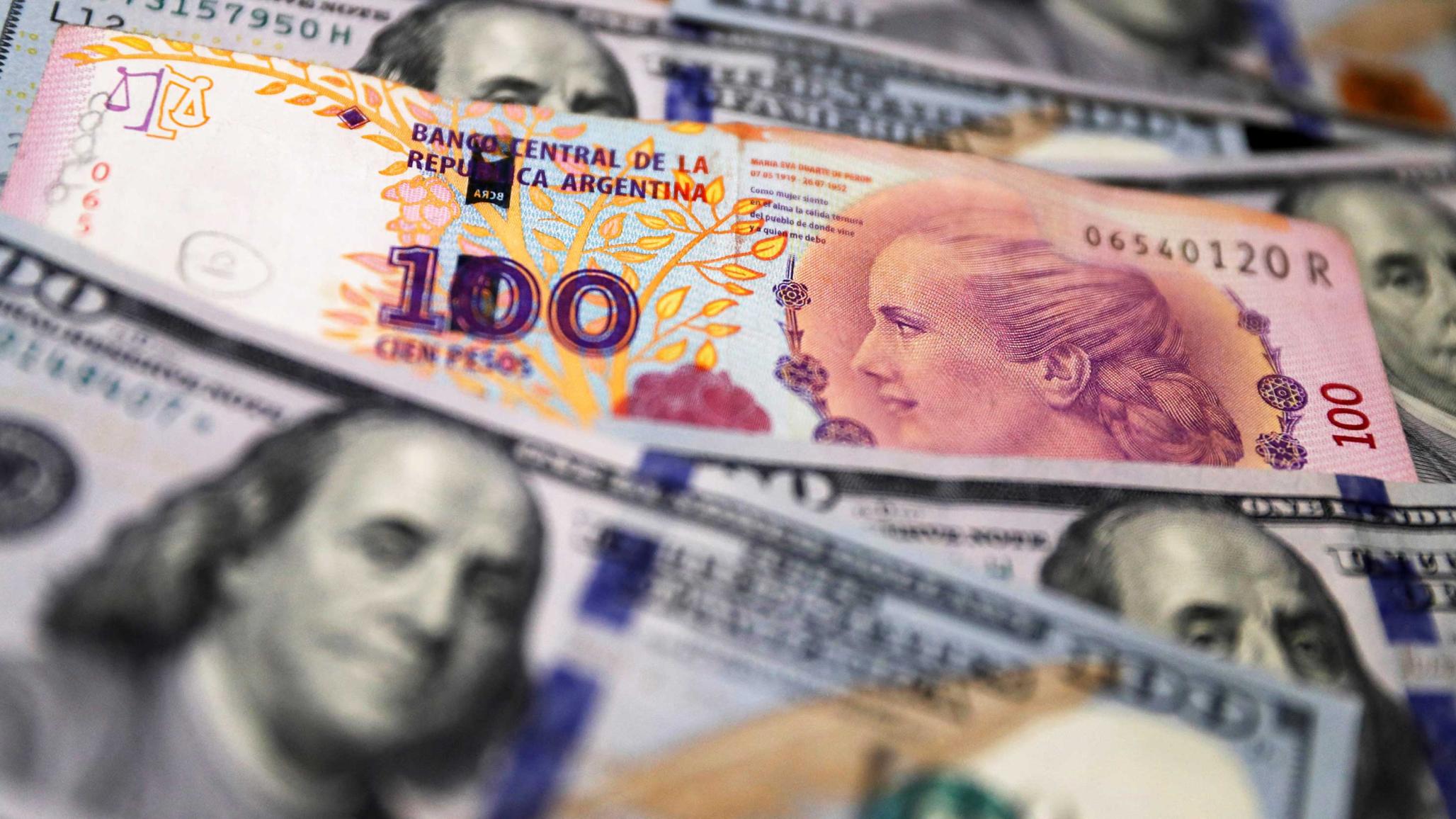
Despite the economic "shock therapy" imposed by libertarian President Javier Milei, Argentina is once again in crisis. The stock market is plummeting, dollars are fleeing, and the government is intervening heavily in exchange rate markets to stem a currency devaluation that could undo much of Milei's attempts to reduce inflation and restore economic growth. In Washington, Treasury Secretary Scott Bessent said the US was considering various lifelines to Argentina, declaring that "all options" were on the table.
Milei has won widespread praise for his efforts to deregulate and reduce Argentina's government spending, laying off tens of thousands of public employees. Inflation has fallen, though it remains high. Nevertheless, the country's latest woes are less of a surprise than it may seem. Despite initial market optimism following Milei's deep fiscal and institutional reforms in 2024, Argentina remains hostage to shifting investor sentiment because of its heavy reliance on the dollar. Its only way out of the current crisis might well depend on the willingness of the United States to help.
Earlier this year I argued that Milei's chainsaw economics would not be enough to stabilize the economy. To be sure, the fiscal measures pursued by Milei's government have been more ambitious than any in recent years. Had it not been for the government's reform program, Argentina would likely be grappling with extremely high inflation today, as well as with the social, political, and economic consequences of hyperinflation.
That fate was averted, but Argentina remained deeply vulnerable to shifts in market sentiment as a result of its dependence on the dollar. Unlike other countries in the region that either skirted dollar dependence by implementing currency reforms (Brazil), or by reducing its dependence intentionally (Uruguay), Argentina has remained a dual currency economy. It functions with two different monetary denominations: the peso, which the central bank controls, and the dollar, which it does not.
Argentina's history of frequent and disruptive financial crises severely undermined the population's trust in their domestic currency. As a result, Argentinians turned to the dollar to preserve their savings from frequent bouts of inflation and exchange rate devaluation. But using the dollar as a protective measure against crises has its limits. Notably, when turmoil hits and causes a substantial dollar shortage, a self-fulfilling cycle takes hold: People can't trust the peso because they believe it can't hold on to its value; as they try to move their dollar funds out of the country in response to the crisis, the peso indeed loses its value. The vicious cycle of dollar outflows resulting from abrupt shifts in market sentiment leads to currency devaluation/inflationary spirals that in turn trigger mistrust in the currency.
Such disruption can happen for various reasons. This time, the crisis was set off by a corruption scandal involving Karina Milei, the president's sister and a prominent figure in his government, who is now accused of receiving kickbacks, and earlier this year was allegedly involved in a cryptocurrency bribery scandal. The allegations helped spook investors.
Luckily for Milei, he has forged a friendship with the Trump administration, which admires his open hostility to government spending and regulation. Although Argentina is subject to the terms of a rescue program by the International Monetary Fund (IMF), approved in April, its conditions and timing for disbursements are proving insufficient to stop the hemorrhaging of Argentina's dollar reserves. Responding to Milei's request for help, Secretary Bessent labeled Argentina a "systemically important ally in Latin America" and stated that "all options remain on the table." US help would come on top of the multilateral support provided by the IMF.
But what does "all options are on the table" mean in practice? For now, it may involve US providing currency swap lines, direct currency purchases, and purchases of US dollar-denominated government debt. The US announcement has stabilized markets, but the situation in Argentina is far from stable, and likely more measures will be needed soon. That's where the possibility of full dollarization comes in.
Dollarization is the term for Argentina's formal adoption of the dollar as legal tender. During the presidential campaign in 2023, Milei supported a full dollarization of the Argentinean economy as a way to avoid the country's recurrent external crises. But after he was elected, economists within his government opposed the idea because it would imply the loss of independent monetary policy, among other issues, and the plan was shelved. Dollarization, after all, is no panacea. When a country adopts a currency like the dollar, it loses control over its own monetary policy and its ability to respond to economic shocks. Dependence on the dollar also means that Argentina would lose the ability to devalue its exchange rate as a useful policy instrument. These reasons explain why most countries in Latin America, as well as other parts of the world, have refrained from full and formal dollar adoption to address crises: They deem the costs of doing this are too high.
But now Argentina and Milei are out of options, not least because his political support has all but disappeared. Enter the United States. Though Secretary Bessent is known to be skeptical of bailouts by the IMF, the United States might gain geopolitically from having a fully dollarized ally in a region that has become greatly dependent on China.
If the United States decides to support formal dollarization in Argentina, the move would have economic, political, and institutional repercussions. To begin with, it would weaken the IMF's hand at a time when the multilateral system is already under duress. Geopolitically, it could create the conditions for a regional confrontation with China. Economically, dollarization is a one-way street: Once a country adopts a currency other than its own, it faces difficulties going back. For example, the eurozone crisis of 2010–11 over Greece's brush with insolvency illustrates the truism that abandoning one's own currency and depending on another currency can serve as a straitjacket forcing excessive austerity on that country. There other examples in the region. After fully dollarizing in 2000, Ecuador has since then been trying to de-dollarize to no avail. The bottom line? Full dollarization in Argentina, if it happens, may solve one immediate problem while inviting further chaos.
Data Disclosure
This publication does not include a replication package.
