
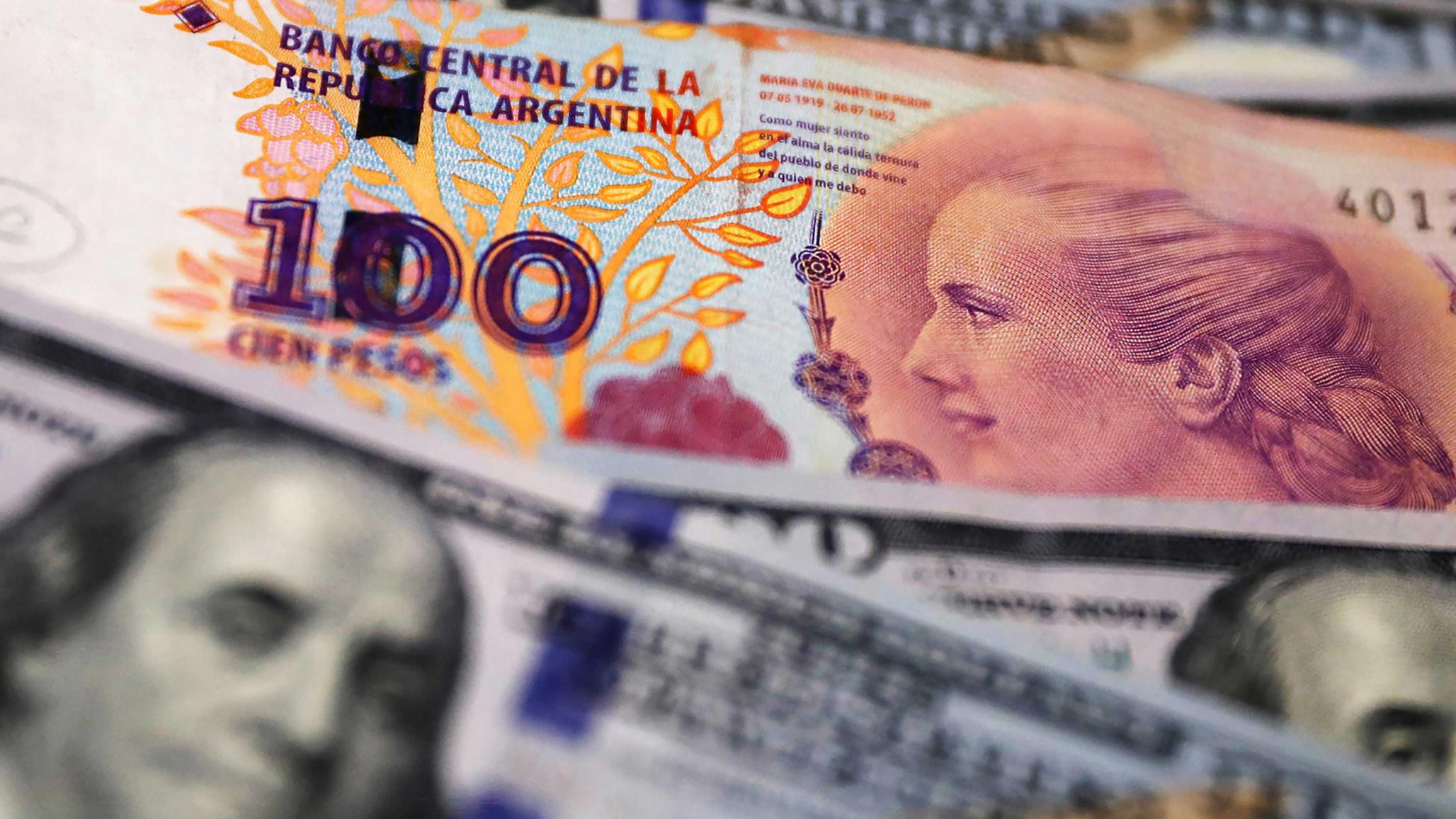
President Donald Trump's move to supply Argentina with a $20 billion swap line, direct purchases of Argentine pesos, and a potential private-sector facility of perhaps another $20 billion makes you wonder. Do Trump and Treasury Secretary Scott Bessent realize that they have embarked on a high-risk proposition from which it will be difficult to disentangle the US and US investors?
One sign that the world's most self-proclaimed dealmaker may be unaware of the implications of his Argentina embrace came this week when his friend, President Javier Milei, visited the White House. Afterwards, Trump explicitly tied US assistance to whether Milei's supporters win the legislative elections at the end of October. No sooner were the words out of his mouth than Bessent, clearly alarmed by the market turbulence in Argentina following Trump's remarks, clarified that US assistance to Argentina would remain in place regardless of the outcome of the elections as long as Milei pursued "good policies."
Milei has won justifiable praise for his success in cutting regulations and government spending to bring inflation down from nearly 200 percent per year on average to about 30 percent in the last two years. But will further US assistance and private sector investments ultimately help Milei and Argentina get out of its financial crises? And will the US get stuck with the bill if Milei fails? Since Bessent helped to line up the banks and sovereign wealth funds to supply Argentina with funds in this emergency, will they not expect the US to keep propping Argentina up, no matter what Argentina does, to protect their investments?
Argentina's history of financial crises is nothing like any other country has experienced. Since the 1950s, the International Monetary Fund (IMF) has had to intervene nearly two dozen times to keep the country solvent. Its current problems stem from its unique monetary system, discussed here, which has become a political and economic safety valve for Argentines but also a straitjacket preventing easy solutions. What Argentina must do to repay its IMF creditors—and now its US government creditors and the lenders lined up by Bessent—is figure out how to build up dollar reserves. And it can only do so by exporting more to its trading partners, a tall order in the current chaotic trading environment foisted on the world by Trump.
For perhaps obvious political reasons, Trump may find it difficult to help Argentina export more by buying more Argentine grains, soybeans, and other farm goods, especially among farmers who are losing markets because of Trump's trade wars. Meanwhile, as US aid to Argentina spirals upward, it is only a matter of time before critics in Congress start to question why the US government is lending Argentina tens of billions of dollars while cutting health care and other domestic priorities at home, the primary source of the government shutdown impasse.
The Argentine monetary system's difficulties stem from its unique dual currency regime, in which dollars and pesos are used interchangeably. Historically, the people of Argentina have basically adopted the dollar informally as a form of protection against acute devaluations of their own currency, the peso. Hence, Argentina needs a steady inflow of dollars for its economy (earned from foreign exchange) to function adequately. But since Argentina cannot issue the US dollar, it is vulnerable to dollar shortages spurred in part by lagging exports.
When these shortages become acute, Argentina tips into crisis, as has been the case in recent months. Although Milei implemented several deep fiscal and institutional reforms, the country's monetary system remained intact, thereby allowing Argentina's dollar vulnerabilities to persist.
Another cause of Argentina's problems, which could aggravate Milei's potential losses in the forthcoming legislative elections, derive from the corruption scandals involving the president's sister, a prominent figure in his government. The loss of provincial elections in Buenos Aires several weeks ago led to a bout of financial stress and substantial dollar outflows from Argentina.
Last week, on October 9, Bessent formally announced that the US would provide a $20 billion swap line to Argentina; he further announced that the US had begun buying the country's currency to shore up its value. On October 15, Bessent also announced that the Treasury was working with private sector investors to set up a facility that would presumably buy Argentine government bonds for a total of $20 billion. It appears that these funds would presumably come from interested market participants rather than the US government.
Since these announcements, the Argentine peso has recovered somewhat, providing limited relief for its economy. Sustaining these trends, however, remains a daunting challenge. To be sure, peso purchases and the $20 billion swap line serve as a useful stopgap during times of financial turmoil. It is even possible that, over the next two weeks, US support could help Milei politically, though it is a tall order to think it might define the outcome.
That said, US assistance does not resolve Argentina's critical underlying vulnerability: its overdependence on the US dollar. If anything, the events of the past few days already suggest how things might play out in the future, when Argentina again faces either a dollar shortage or fears that one might develop again.
Milei has another two years in power, during which the continued adoption of reforms and the "good policies" alluded to by the Treasury Secretary will be the basis for US assistance. Milei has lost considerable traction for his reform efforts because of the recent political turmoil and uncertainty, however. Even if October's legislative elections deliver a favorable result, it remains unclear whether the country will have sufficient political momentum to sustain its ambitious reform agenda.
Presidential elections are due in 2027, when Milei will face increasing pressures to provide greater relief to an embattled population. Such relief could take the form of spending programs that undermine his reform efforts, or ending the country's export tax on food exports, which would aggravate food price increases at home. The Trump administration is therefore almost sure to face the dilemma of whether to continue supporting Argentina, even if it means that it might never be repaid. Leaders of the International Monetary Fund can tell the Trump team what that is like, having experienced throwing good money after bad in Argentina over many decades.
If, at some point in the future, the US decided not to continue supporting Argentina, it would plunge the country into crisis, making the investors encouraged by Bessent to invest extremely unhappy. Hence, the decision to aid Argentina amounts to a Catch-22 situation for both countries: If the US stops providing dollars to the country, it is unlikely that they will be repaid, and Argentines will suffer. If the US decides to help Argentina regardless, it still faces the likelihood of non-payment or endless arrears, while Argentina flounders with its unsustainable currency regime.
The Trump administration's political gamble on Argentina does not have an obvious endgame. Many years ago, a best-selling book about the US sinking further into the Vietnam War was called The Making of a Quagmire. The US keeping Argentina on life support with no way out of its commitment may bring the phrase from that book back into fashion.
The author thanks Maurice Obstfeld and Cullen Hendrix for their helpful suggestions.
Data Disclosure
This publication does not include a replication package.
