
After weeks of struggle, France finally got a new government in October, headed by Prime Minister Sébastien Lecornu, with the tacit backing of the center-left Socialist Party. For President Emmanuel Macron, the bitter pill was the price his centrist coalition had to pay: suspension of his hard-won pension reform, which has sent a strong signal of continuing short- and medium-term fiscal deterioration in France.
France’s embarrassing political turmoil is hardly over, however. The looming question in Europe now is how the European Union (EU) might approach a full-blown fiscal crisis in its second largest economy. France is also the EU’s only nuclear power even as Europe remains under long-term military threat from Russia. Will France have to swallow an even bigger pill—shifting the considerable cost of maintaining its nuclear deterrent to the EU level along with a say in controlling it?
Upon being sworn in, Prime Minister Lecornu announced that the pension reform package of 2023, which raised retirement ages from 62 to 64 years, will be suspended until after the presidential elections in France in 2027. This step will, according to Lecornu, cost the French government €400 million in 2026 and another €1.8 billion in 2027, as the planned gradual increase in retirement age (scheduled to reach 64 years by 2030) is suspended until January 2028, when it will resume unless the next president and parliament decide otherwise.
Having sacrificed this reform, Lecornu has survived two votes of no confidence in the French Parliament. His government has the opportunity to propose and negotiate a 2026 budget just in time for the year-end deadline. The near-term risks of new elections in France have hence declined, now that France has a stable government.
Lecornu's willingness—obviously with Macron's blessing—to at least temporarily abandon Macron's (only) signature domestic economic reform of the French pension system to secure the support of the Socialist Party, rebuffing the far left’s demand for immediate new elections, makes it likely that more fiscal concessions to the Socialists are on the way to secure their backing of the final 2026 budget. It will be in the interest of this leftist coalition to avoid new elections, averting a victory by Marine Le Pen's far-right Rassemblement National (RN) party.
But this improved near-term political stability, which has at least temporarily reassured bond markets, comes at a high fiscal cost, especially as Lecornu acquiesces to Socialist demands to effectively abandon meaningful fiscal consolidation in the 2026 budget. Expected lower French growth rates for 2026 mean that the French fiscal deficit next year should be roughly similar to the 5.4 percent of GDP expected in 2025.
The long-term outlook is even worse. The next president/parliamentary majority elected in 2027 will face difficulties renewing pension reform, thereby increasing annual French public pension expenditures by perhaps half a percent of GDP, relative to a fully implemented reform in the years after 2030. This in turn would drive up potential French medium-term government debt levels to 5 percentage points of GDP per decade. France would quickly reach Italian debt stock levels in this scenario.
France’s fiscal problems, quite simply, cannot be alleviated without addressing the high and rising costs of the pension system, which, as Macron understood, is best addressed precisely by raising the retirement age. The figure below illustrates how France is (almost) unique among OECD countries in terms of the scope of its current public pension expenditure level and the expected number of years the French can currently expect to live in retirement. The latter makes France's public finances particularly prone to longevity risk from life expectancies rising in the future.
Accordingly, France's inability to produce a credible medium-term fiscal plan will likely cause political and communication problems as its deficits violate EU fiscal rules, ushering in future credit downgrades and ultimately a full-blown fiscal crisis in the EU’s second largest economy.
How might the EU deal with a scenario in which financial markets test the ability of the French political system to deliver much overdue fiscal consolidation, as well as pension and other needed structural reforms? France has a governing apparatus capable of implementing required measures, but without an elected government to oversee the process. If elections in 2027 fail to deliver a president and parliamentary majority capable of governing the country, France may in extremis seek assistance from European lending institutions as Greece did starting in 2010.
Fearing contagion from a full-blown crisis in France, the European Central Bank (ECB) could turn to its Transmission Protection Instrument (TPI), which can purchase the bonds of euro area members whose yields are not driven by “national economic fundamentals.” Given Italy’s current political and fiscal stability, Spain’s strong growth, and Germany’s already launched fiscal stimulus, the ECB would likely not face particular challenges in addressing any hypothetical spillovers from a collapse of market confidence in French bonds.
On the other hand, the TPI is not legally available to support a country suffering from terrible fiscal management over many years. Instead, to extend a lifeline to France, the ECB would have to use another instrument known as the Outright Monetary Transactions (OMT) program. That tool would bring in the European Stability Mechanism (ESM), which was created in 2012 to deal with European countries facing financial crises. Under this scenario, a functioning French government would have to negotiate a reform and consolidation program with the ESM first, to provide the conditional policy space for the ECB to intervene.
Will such a government exist in Paris after 2027? That is not clear. More likely, any future French (or any other euro area) government would resist at almost all costs having to suffer the political stigma of working with the ESM to unlock ECB aid. The political reality of the current crisis in France is therefore that the EU and euro area are going to have to come up with a bespoke unique solution to bail out France.
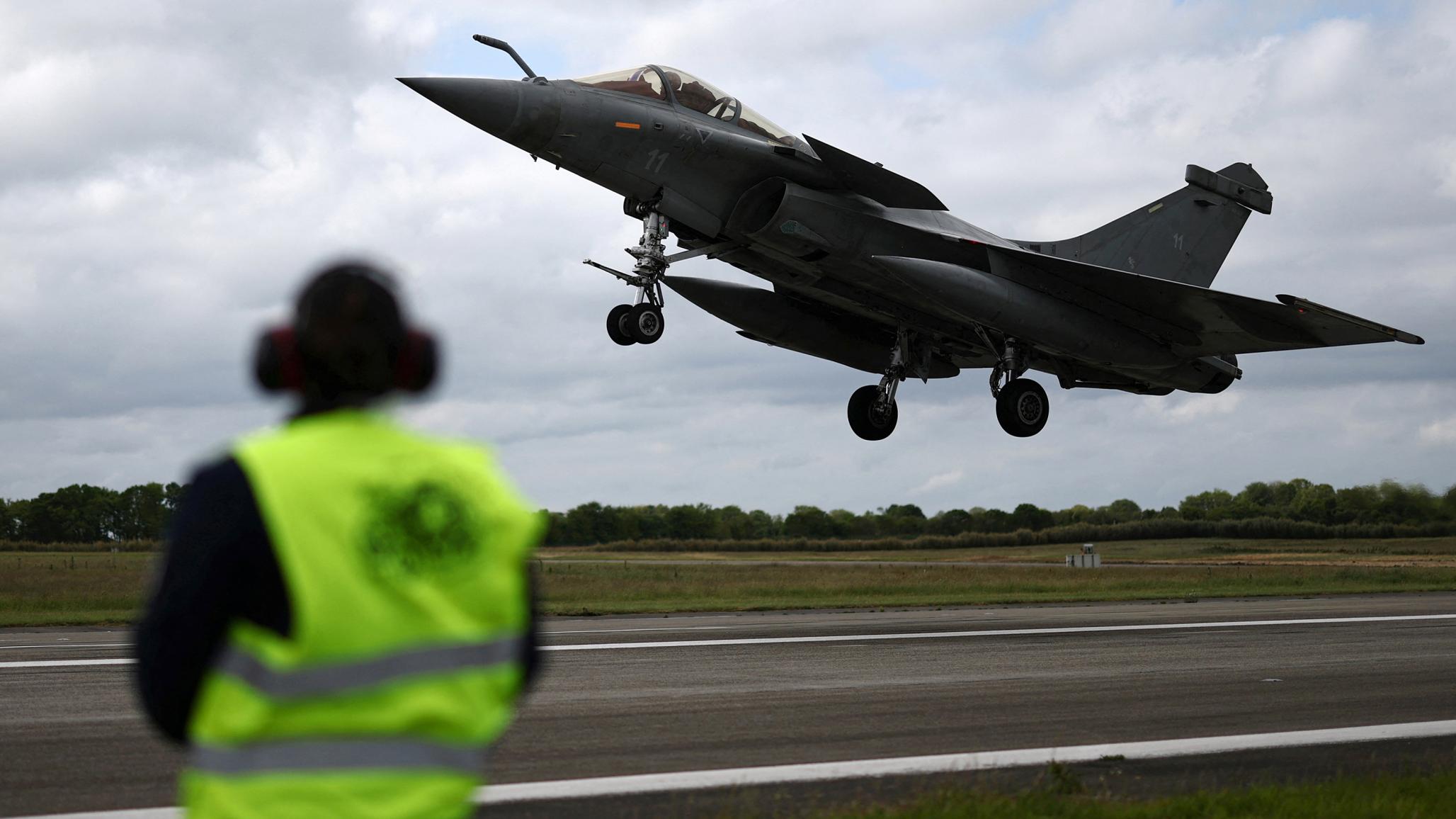
What price will France eventually have to pay to be rescued from its financial crisis? However unthinkable today, France may have to recognize the cost of its status as the euro area’s only nuclear-armed country in a region still threatened by Russia. Much of northern Europe is rapidly rearming in the face of Russia’s persistent military threat, but without a nuclear deterrent. France’s maintaining a nuclear strike force is expensive, costing France a budgeted €37 billion between 2019 and 2025. That cost makes it a candidate for elevation to the EU level as part of a rescue deal. Of course, taking over the cost of managing France’s nuclear strike force would require giving the rest of the euro area or EU a say in its control.
A new nuclear umbrella in Europe may seem a stretch in today’s environment. But the EU and euro area are politically extremely flexible beasts when they have to be. President Macron has already suggested launching a “strategic dialogue” with other European countries earlier this year, implying an extension of the French nuclear umbrella. A French fiscal crisis may well accelerate such talks in unforeseen directions.
In the end, it is not too early to ask: If France cannot bring its fiscal position under control, will it risk losing full control of its nuclear weapons?
Data Disclosure
This publication does not include a replication package.
