It should have been clear on April 2 when President Donald Trump stood in what had been the White House Rose Garden and announced tariffs on everything from everywhere: This would affect the daily lives of the average person in this country. But the announced change was hard to take in and complex: a new base tariff and a range of specifically assigned tariffs to 57 countries. The administration said that the tariffs would be paid by foreigners, not American consumers. The mystery of who bears the cost of the tariffs was finally resolved on November 14, the day that the Trump administration released the welcome news that exemptions are now going into effect on a list of over 200 food items. This confirmed that the president's economic advisors knew that it is the American consumer who bears the "reciprocal" tariffs on imports of food.
My wife pointed out that the tariff relief granted to the American consumer was presented as a welcome benefit from the administration but that the tariff exemptions are from a levy put in place by the administration itself, which the president claimed he had the discretion to impose. Having access to untaxed or lower taxed food is now a privilege afforded by the White House.
I remember when I was very young coming across some ration stamps left over from the Second World War in a drawer in the kitchen of our family home. There must have been a feeling of shared sacrifice in using those stamps, doing something for the common good. Many American families had given much more. Living with the rationing of food at that time was a small price to pay.
Initially, the announced tariffs, mostly not imposed until August, were not felt very much. They were something expert economists wrote about and assigned some numbers to but nothing personal. The president explained in April that the impact of his tariffs might be that a child would have to make do with "two dolls instead of thirty." Wasn't this just like when I was three years old and the country was still on a war footing and steel was rationed, so I could not have a toy automobile to pedal around? Steel products now attract at least a 50 percent national security tariff imposed by the president.
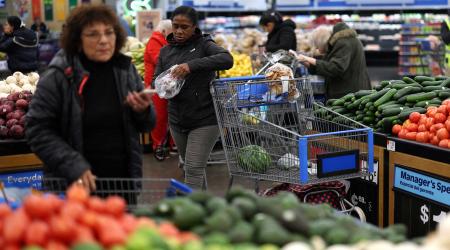
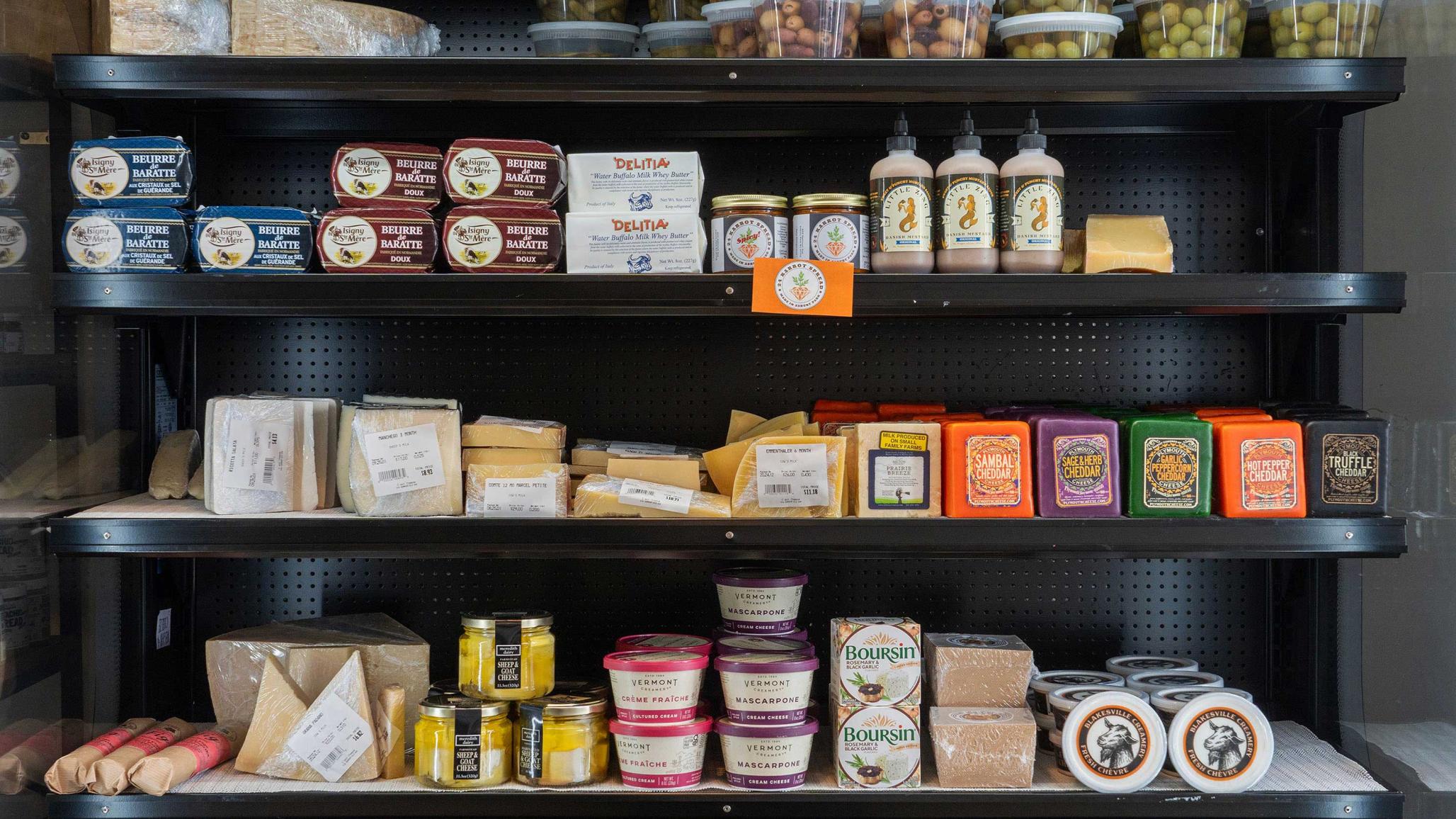
Dolls and toy autos may become an issue during Christmas shopping, but rising food prices are an issue now. The effect of the tariffs is no longer remote. It has become visible and personal. It was not an abstraction when one saw the rising cost of a shopping cart of groceries at check out at the supermarket. Still, unless you were paying close attention, it was hard to relate increases to tariffs. But looking more closely, the tariffs were beginning to play through. A package of Gruyere cheese from Switzerland, just short of a half pound, had a price tag of over $29. How could that be? At home, looking at the same brand in the same packaging bought in August, the price was $11.86. Still a luxury, but far more affordable.
This increase was due in large part to the Trump "reciprocal" tariffs announced in April. The tariff on everything from Switzerland had reached 39 percent in August. The country was penalized for a having a spike in its bilateral trade surplus with the US that was in part because its refiners were responding to increased US demand for gold bullion. Switzerland reached a deal with the US on November 14: The tariff will now be 15 percent. It has now been demonstrated in the supermarket cheese aisle that American consumers are asked to pay the tariff.
It is hard for the average shopper to know which products are subject to extra tariffs and which are not. Duty exemptions are not for all foods. For example, cheeses are not covered on the list of exemptions. Neither is honey. It is also important to know where a imported food is produced. Products from India and China, where a lot of honey and tea come from, bear a 50 percent and a 47 percent tariff, respectively. While coffee is on the duty exemption list, coffee from Brazil is not and appears to be assigned at least a 40 percent tariff. Perhaps it would be best to do one's grocery shopping with a customs broker available and on call.
Who made the decisions on what should be taxed and at what levels? All we know is that a new list of exemptions came out, and some foods are on the list, some not. What happened to all those elaborate procedures embedded in the nation's trade laws before any trade restrictions could be applied? And, for that matter, where did the tariffs come from?
The president declared an emergency, due, he said, to the nation's trade deficit, how other countries treat us in trade, and because of the declining share of the workforce engaged in manufacturing. The statute he invoked, modeled after wartime authority, is the International Emergency Economic Powers Act (IEEPA). Three lower courts have determined that the president does not have the authority under this statute to impose these tariffs. The matter now rests with the Supreme Court.
Ironically, IEEPA was created to restrain presidential power, in part through making any declaration of emergency subject to disapproval by a simple vote of the two houses of Congress. That kind of override by Congress was later found to be unconstitutional. The IEEPA safeguard was nullified: Now a super-majority is needed to override the will of any president intent on using the emergency authority in any way that he or she sees fit.
Oral argument on the legality of the reciprocal tariffs was heard by the Supreme Court on November 5. What emerged from the three hours of presentations and questioning was that some of the justices are concerned that the president can interpret the emergency statute to give him or her full authority to tax imports. The hypothetical example was given of a liberal president imposing a high tariff on carbon-intensive goods to force conversion to more environmentally friendly products.
A lot now hangs in the balance. No procedure is required—no public hearing or opportunity to be heard, no consultation with committees of Congress—before a tariff is now raised or lowered on the goods of any country. The president's power over tariffs appears to be currently absolute. And a lesson in home economics has been taught. The tariffs have become real to all who shop for food, no longer an abstraction. The American people will continue to bear the costs of the tariffs, unless the Supreme Court, some future Congress, or an election provides otherwise.
Data Disclosure
This publication does not include a replication package.