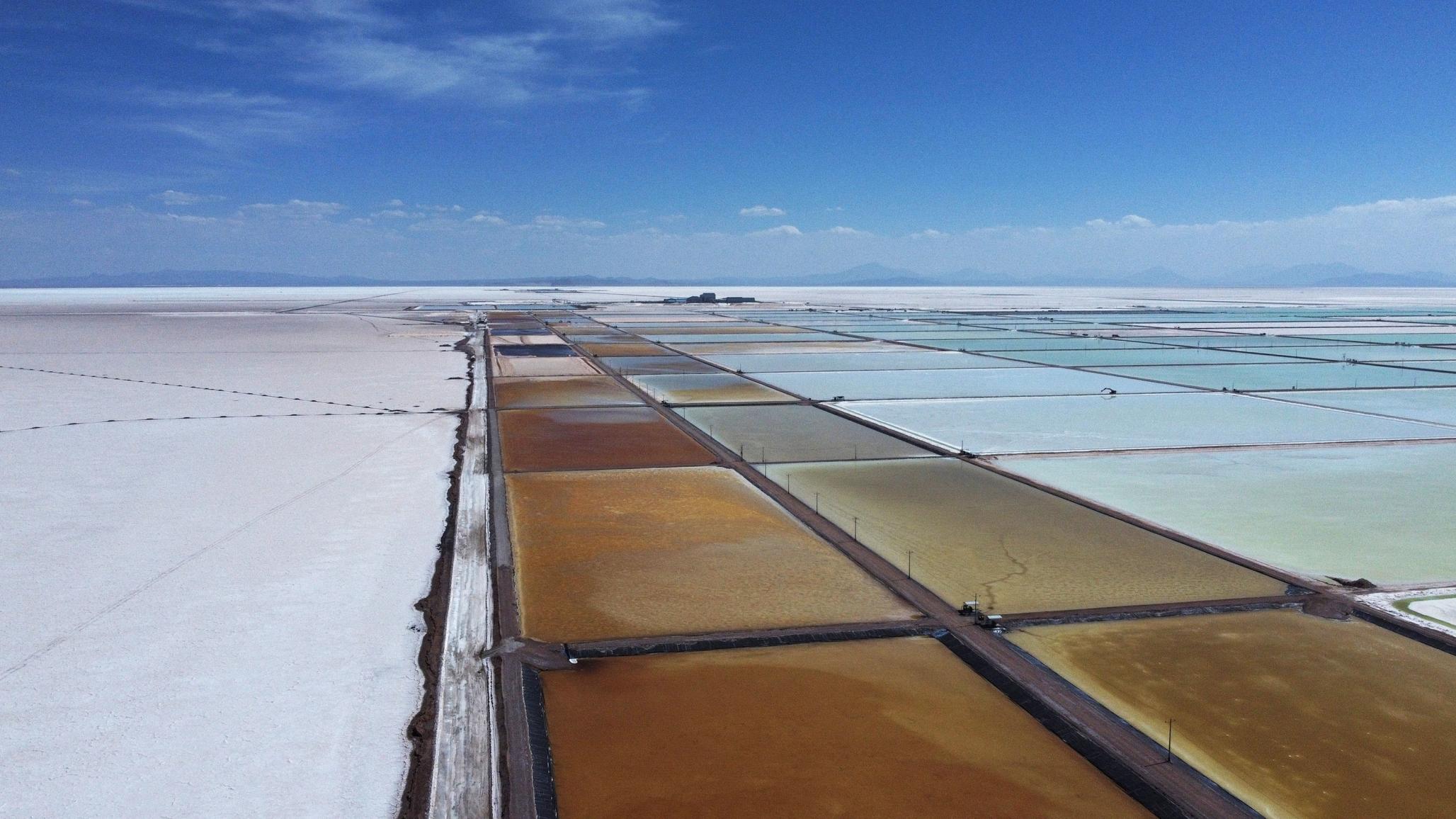
Through equity ownership and trade agreements, President Donald Trump has sought to control minerals extracted abroad. He appears to harbor two goals: first, ensure a guaranteed supply of the minerals at low prices for the US economy; second, enable the United States to deny the minerals to China when circumstances warrant.
Monica de Bolle explains why Trump's quest, with respect to equity in Venezuela's oil and Brazil's critical minerals, rests on shaky legal foundations, both in the United States and the target countries. Trump's aspiration for an agreement giving the United States a measure of control over Canada's oil and critical minerals faces obstacles in Ottawa and possibly the US Congress.
Depending on the outcome of the November midterm elections, and the willingness of Democratic Congress members and senators to accept Trump's national security claims, doubts about US government equity ownership in Venezuela and Brazil might be a major point of contention. Conceivably, US lawmakers might come to accept an agreement that essentially gives the president some control over Canadian minerals, even though bipartisan acceptance of imperial dominance in Canada seems unlikely.
But these deals, and potentially others involving countries in Africa and elsewhere, are so contrary to the economic interests of the target countries, that they ensure their own demise. De Bolle walks through the Pentagon arrangements for controlling 20 percent of Venezuela's oil reserves, and the US government's proposed equity stake in Brazilian critical minerals. US control over Canadian minerals remains subject to agreement by Canadian leaders, an unlikely prospect. But whatever legal arrangement the Trump administration and foreign officials might fashion today, it will almost certainly be shredded by successor governments abroad.
Back in 1971, Raymond Vernon, the acclaimed Harvard author of Sovereignty at Bay:The Multinational Spread of U.S. Enterprises, explained the "obsolescing bargain" at the core of nearly every mineral contract between multinational corporations and host governments. Initially, according to Vernon, the host government welcomes foreign investment with attractive concessions and tax breaks to develop local resources. But once the investment becomes a sunk cost and the venture pays off, the record shows that the host government invariably seeks a larger share of the revenues through higher taxes, forced equity sales, or even nationalization.
That pattern has been the experience of oil ventures in the Middle East and elsewhere, and hard minerals in multiple locales. The record is replete with initial hopes giving way to disappointment and recriminations. Here are prominent examples of the end phase of obsolescing bargains that shook American foreign policy in decades gone by:
- Mexico — oil in 1938
This episode created an early precedent. President Lazaro Cárdenas took the properties of foreign petroleum companies, including Rockefeller interests, later creating Petróleos Mexicanos (PEMEX), the state monopoly. The Roosevelt administration accepted Mexico's sovereign right to expropriate but insisted on compensation. That helped establish the US doctrine that expropriation had to be accepted but should be accompanied by "prompt, adequate and effective" compensation.
- Iran — oil in 1951
Prime Minister Mohammad Mosaddegh, with the support of the Iranian parliament, nationalized the Anglo-Iranian Oil Company and created the National Iranian Oil Company. This action prompted a notorious joint UK-US plan, carried out in 1953, to destabilize the Mosaddegh government and restore Mohammad Reza Shah Pahlavi to power. The political repercussions in Iran were devastating to US interests. Anti-American outrage in Iran mounted, leading to the shah being overthrown in 1979, ushering in decades of hostility between the United States and Iran, and culminating in the Israeli-US war against Tehran this year.
- Peru — oil and hard minerals in 1968 and 1969
Shortly after taking power in a military coup, General Juan Velasco Alvarado seized the La Brea y Pariñas oil fields and Talara refinery owned by the International Petroleum Company (later renamed Standard Oil of New Jersey and again as Exxon). This seizure became one of the defining acts of Peru's nationalist military government. In 1969, Velasco subsequently nationalized major mining interests held by Cerro de Pasco Corporation and other US mining interests.
- Chile — copper in 1971
President Salvador Guillermo Allende Gossens nationalized the huge copper mines operated by the Anaconda Copper Company and Kennecott Copper Corporation, two US firms. Chile calculated that the companies had previously earned approximately $774 million in "excess profits." According to Chilean arithmetic, those amounts wiped out any compensation otherwise due to the two companies. The Nixon administration responded with economic pressure and made compensation for expropriated American property a central issue. In 1973, US sanctions helped overturn the Allende regime. Allende committed suicide in prison that same year, ushering in a long period of bitter relations with the United States.
- Venezuela — oil, especially in 2007
In 1976, President Carlos Andrés Pérez created Petróleos de Venezuela (PDVSA) by nationalizing and partly compensating US oil companies ConocoPhillips and ExxonMobil. In 2007, President Hugo Chávez denied any further compensation and took control of the oil properties. The two firms pursued Venezuela through international arbitration, but satisfactory terms were never agreed. Following the US capture of President Nicolas Maduro in January 2026, the United States established effective control of Venezuelan affairs. The Pentagon designated Chevron with the task of resuscitating Venezuelan oil production.
Now that the US government is forcing its acquisitive intentions on host governments, thereby arousing nationalist sentiments, the honeymoon phase of obsolescing bargains will be short or nonexistent. Any deal that entails extended below market pricing of mineral exports to the United States, or super profits to a US firm, will inevitably be seen as imperial exploitation.
Finally, the Chinese market for minerals is large and growing, and sufficiently attractive that no mineral producer will willingly cede control to Washington of its exports to China. The administration's difficulties in constraining oil exports from Russia and Iran, either directly or through secondary sanctions, illustrate the obstacles.
Not only for its lack of sturdy legal foundations, but more importantly for its stark conflict with the economic interests of mineral producers abroad, the Trump administration's quest for secure control over foreign minerals seems bound to fail.
Data Disclosure
This publication does not include a replication package.