
Among the vulnerabilities exposed by the war in Iran is the fragility of the global supply of helium. Iran-linked attacks on Qatar's energy infrastructure forced shutdowns in March at the Ras Laffan complex—one of the world's key hubs for liquefied natural gas that produces helium as a byproduct. Because helium has unique properties as a coolant and plays a vital role in the production of MRI machines, spectroscopes, particle accelerators, and semiconductors, the consequences are severe. Qatar accounts for roughly one-third of the global helium supply, and the conflict has effectively removed a large share of that capacity. Prices have surged, supply has tightened, and companies across the semiconductor industry are scrambling to secure material. The lesson is stark: Even if flows resume within weeks, restoring Ras Laffan to full capacity could be a three-to-five-year process.
Helium's physical properties make holding precautionary reserves difficult. It cannot simply be stockpiled for a long time in warehouses like metals or magnets. Liquid helium boils off; conventional storage lasts weeks or months at most. Long-term storage requires geological reservoirs, pipelines, and specialized infrastructure—precisely the kind of system the United States once maintained.
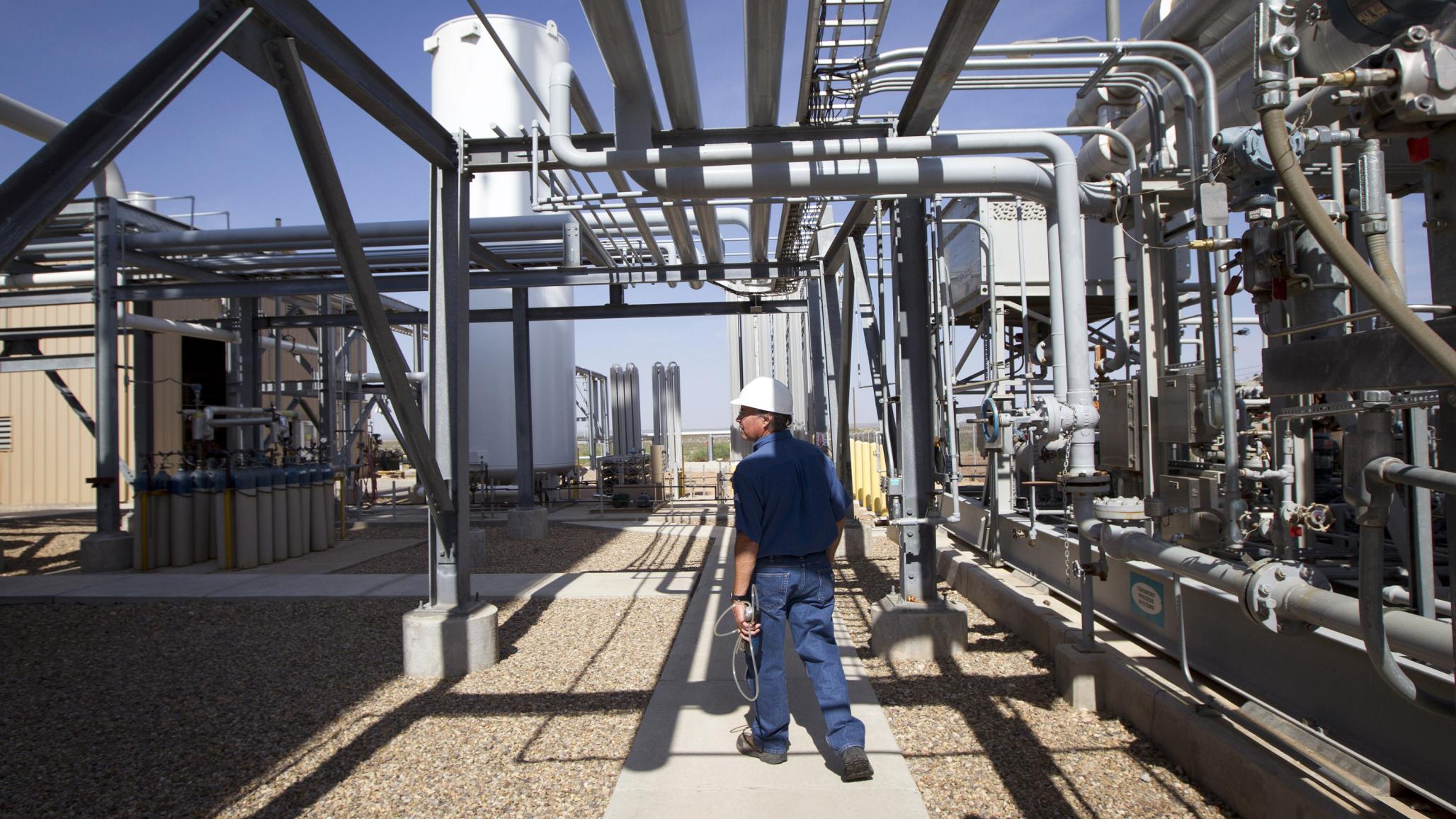
For decades, the Federal Helium Reserve—operated by the Bureau of Land Management (BLM)—provided a buffer against supply disruptions. Centered around the Cliffside Field in the Texas Panhandle, it stored helium underground and released it as needed, stabilizing both supply and prices. But in 1996 the federal government decided to shed its reserve and began to sell most of the contents. Although the process was slowed in 2013, eventually the BLM sold the remaining reserve and its infrastructure to a private company in 2024. What remains is a private system serving commercial needs, not a public instrument designed to insure against severe national or global disruption.
Helium was removed from the US Geological Survey critical minerals list in both 2022 and 2025, because it was viewed as insufficiently vulnerable to (a) import disruptions or (b) a single point of failure in its domestic supply chain. This meant that helium was also not covered in Project Vault, the major US strategic critical minerals program launched in 2026.
But judging helium by these criteria ignores its special features. These include its dependence on the production of natural gas, which makes its supply insensitive to price; the globally concentrated nature of the few facilities that process it; and particularly, the need for specialized long-term storage infrastructure at scale.
Critics will argue that government should not be in the business of managing commodity reserves. Indeed, there is a strong case that for normal commodities, governments should not be holding inventories of materials. This is partly because public stockholding is likely to crowd out private stockholding, and private firms should be trading off the costs of stockholding against the benefits they derive from holding stocks such as the ability to meet unexpected demand.
But helium is not just another commodity. The social costs of failure to hold adequate inventories are far greater than the private costs. Helium is a non-substitutable input into critical technologies, with supply chains that are both concentrated and geopolitically exposed. Shortages that delay or halt the production of chips can cascade with negative impacts that can reverberate throughout the economy. Yet when they make their storage decisions, private stockholders will only consider how they are affected rather than the impacts on other producers along the production supply chain.
Others will point to the cost. Yet the numbers are modest. The global value of helium used in semiconductor production is roughly $1 billion per year, and even a sizable reserve would be small relative to the economic stakes of disruption.
This suggests that government should complement its Project Vault program with a special helium reserve tailored to its unique storage, rotation, and allocation requirements. The helium would need to be held in its crude, purified gaseous, or liquid state, depending on the use case. A workable reserve would likely rotate inventory through commercial users and refill it, rather than simply letting product sit indefinitely. That is especially true for liquid helium, where boil-off and logistics matter, even though bulk gaseous helium can be stored underground much more effectively.
This system would provide strategic insurance. Even a reserve covering a few months of global semiconductor demand could cushion the most damaging disruptions. Compared to the economic cost of a semiconductor supply shock, that is a modest premium.
Finally, it would complement private adaptation. Semiconductor firms are already investing in recycling and diversification, and some maintain limited inventories. But they cannot solve the long-term storage problem on their own. The scale and nature of helium storage make it a natural candidate for shared infrastructure, much like strategic petroleum reserves or electricity grids.
This proposal is obviously too late for the current crisis, but we should learn from the experience. Reviving a modern helium reserve—updated, targeted, and integrated with private industry—would not eliminate risk. But it would ensure that when the next disruption comes, the world is not left scrambling for a gas that, while invisible, underpins the technologies we depend on every day.
Helium may be light. Its strategic importance is anything but.
Data Disclosure
This publication does not include a replication package.

Author's note: I thank Cullen S. Hendrix , Gary Clyde Hufbauer, and Jake Sullivan for excellent comments.