
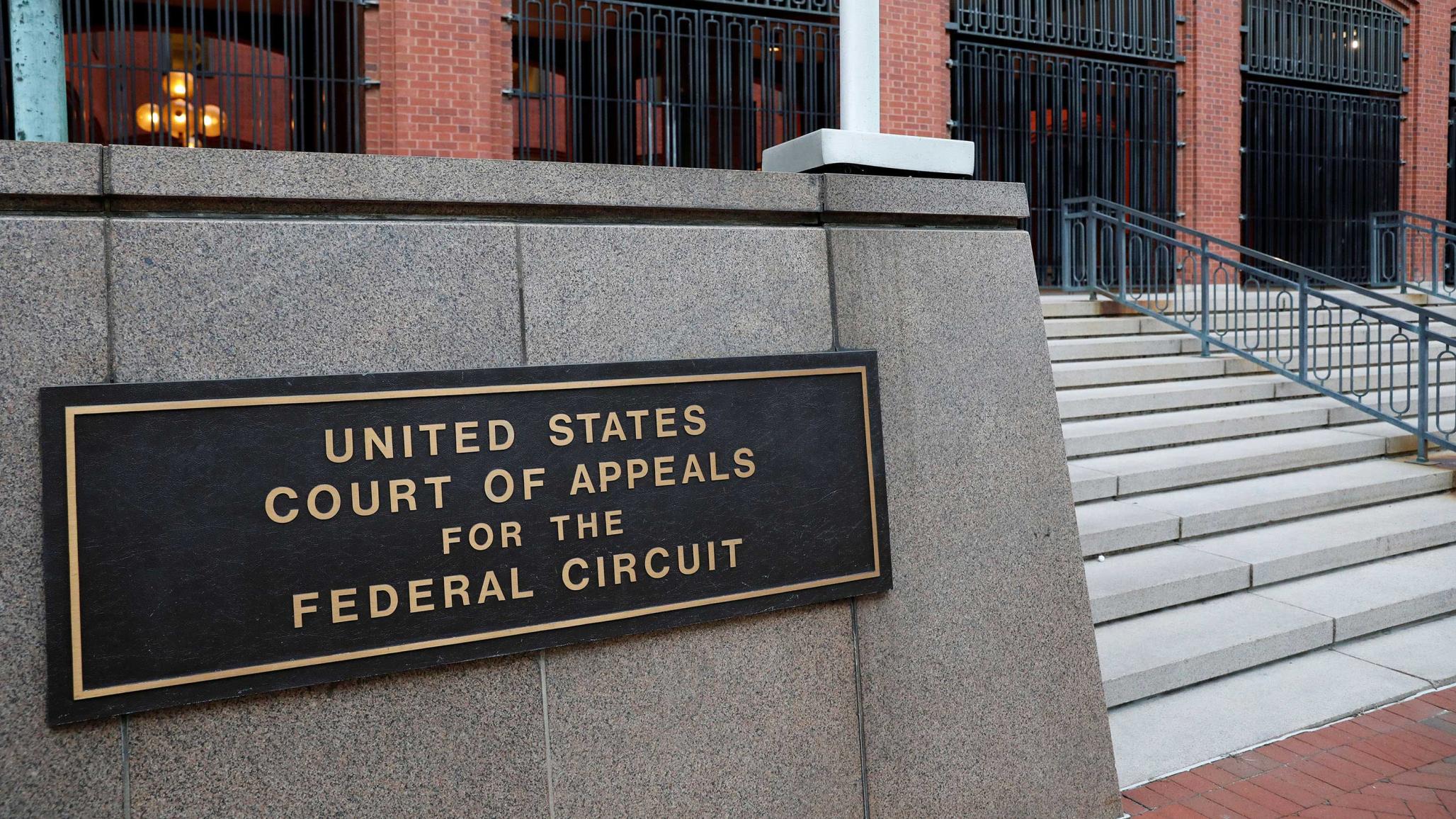
The Federal Circuit Court heard oral arguments today on whether the US president can declare a national emergency and put tariffs on pretty much everything anyone imports into the country. The outcome will be a landmark for the court and could be one for the American people.
The arguments came in an appeal of the Court of International Trade's May 28 ruling against the Trump administration. A three-judge panel of the trade court held that the president had no authority to impose the so-called reciprocal tariffs he announced on April 2, which he dubbed "Liberation Day," nor other tariffs which he said he imposed because of fentanyl imports. The court labeled those the "trafficking tariffs."
The Supreme Court declined a request to intervene early in the matter, so the administration appealed the ruling to the US Court of Appeals for the Federal Circuit, which is likely to issue a decision in August. The Trump administration will likely lose this round too.
To understand US trade law, there is one basic thing to know. The US Constitution vests Congress with the power to apply tariffs. The nation's founders were very clear on this point: "The Congress shall have Power To lay and collect … Duties. . . . To regulate Commerce with foreign Nations." There is no mention in the Constitution of the president having any role over tariffs. The role of the president is to administer the laws that Congress passes. The president exercises delegated authorities governing international trade under whatever terms Congress lays out.
For most of US history, Congress legislated the US tariffs that would be applied. The last time this happened was in 1930. The result was nothing short of disastrous, as House members and senators vied with each other to protect their constituents, enacting the Smoot-Hawley Tariff Act, which deepened and lengthened the Great Depression. In 1934, Congress began to trust the president with trade negotiations to set tariff rates pursuant to reciprocal tariff negotiations (exercised almost exclusively to lower rates). Congress also delegated a series of authorities to the president: authority to impose duties against unfair trade practices, such as dumping and subsidies, and to raise tariffs to respond to serious injury to an industry from imports (section 201)—authorities conditioned on receiving a finding and recommendation of the International Trade Commission; authority to retaliate against foreign unfair trade practices (section 301); national security authority, invoked for tariffs on steel, aluminum, and autos (section 232); authority to act against discrimination against US products (section 338); authority to raise tariffs to defend the balance of payments position of the United States (section 122); and authority to deal with emergencies through the International Emergency Economic Powers Act (IEEPA)—the statute before the Federal Circuit presently. All of these authorities remain in force except the authority to implement trade agreements and commit the United States to apply any given tariff pursuant to an international agreement. That authority lapsed when President Joseph R. Biden Jr. let it expire in July 2021. The absence of this tariff authority is not raised in this case, which pre-dated settlements reached to replace the unilaterally imposed tariffs under the IEEPA.
Since taking office on January 20, the president has issued 23 executive orders, 4 memoranda, and 3 proclamations related to trade and tariffs issues. This certainly gives the appearance that the president has sweeping powers over the setting of tariff rates. The president claims that he has been acting under the IEEPA. That statute, passed in 1977, grants authority to regulate trade to deal with an emergency. Since its enactment, it has been invoked often, with presidents declaring national emergencies some 70 times before January 20 of this year. The declared emergencies have been wide-ranging—to deal with a variety of subjects, including terrorism; transactions involving Iran, Iraq, Russia, and Angola; and even combatting the COVID-19 pandemic. This time, they are trade deficits and unfair trade practices. The remedy applied under this statute has never been increased tariffs, until President Donald Trump's second term.
Importers (joined by a dozen states) contend that there is no emergency, no "unusual or extraordinary threat," which is the only reason the IEEPA authority can be used. The government argues that there can be and is a level of foreign unfair trade and US trade deficits to constitute a threat to the US economy and national security. Economists and political scientists may find that an elevated level of concern over trade deficits or foreign unfair trade practices does not call for emergency action. But the statute does not vest a finding in a board of academics to make this determination. It is vested in the president.
The courts are clearly reluctant to overrule a president's finding that a national emergency exists. Although presidents have declared national emergencies frequently in the 50 years since the IEEPA has been on the books, neither Congress nor the courts have overturned their decisions. It seems that the other two branches of government are deferential to the executive branch when it comes to identifying national emergencies. The IEEPA includes a mechanism for overturning the president's determination, a joint resolution of Congress canceling the national emergency. Legislative vetoes were tried with respect to the declared emergency affecting trade with Canada over imports of fentanyl. It passed in the Senate but was not attempted in the House. In the case of the global "Liberation Day" tariffs, there was a tie vote in the Senate and the resolution was not adopted; it failed as Vice President JD Vance voted to uphold the president's tariff.
Does the IEEPA contain any tariff authority at all? In a parallel case in the District Court for the District of Columbia, the court held that there was no tariff authority under this statute. The Trump administration contends that if it is possible under the statute to embargo or license trade, its historic use, why exactly wouldn't it also be possible to "regulate" (the term used in the statute) the trade by taxing it? The government notes that this court in a prior case in the 1970s involving predecessor emergency authority found that President Richard Nixon was justified in imposing an import surcharge (a tariff) when that authority (the Trading with the Enemy Act, dating from 1917) used the word "regulate" and did not mention tariffs. Will this precedent be dispositive in this case? Courts often apply a principle of judicial economy to avoid deciding matters that are unnecessary to reaching a conclusion about a matter that is before them. Here there is no need to decide whether there might be some instance in which tariffs could be used to regulate trade, if the Federal Circuit finds for other reasons that the president did not have delegated authority for the tariffs at issue.
Why would the Federal Circuit agree with the Court of International Trade that the president had no authority to impose these tariffs? There are several doctrines that the lower court applied that will be considered. The "nondelegation doctrine": Congress cannot delegate nearly the totality of its constitutional tariff authority to the president, even if it were motivated to do so under the sway of a powerful president. Congress must assert an "intelligible principle" for executive action. In addition, there is a "major question" doctrine that calls for Congress to be very clear and unambiguous in its delegations if it appears to be transferring sweeping powers to the executive. Congress cannot inadvertently transfer authority of this magnitude.
The Court of International Trade, which ruled against the president in this case, knows tariffs. Tariffs have been at the heart of its jurisdiction since it was founded in 1890. The same is true of the Federal Circuit, the court hearing oral argument today. Appeals from the trade court's decisions were heard by the Court of Customs and Patent Appeals founded in 1909, until it became the Federal Circuit in 1982. The appellate court is also a specialized court, deeply familiar with the scheme Congress has set out for administering America's tariffs. The two courts are well-equipped to address the extent of congressional delegations of tariff authority to the president. The circuit court will examine closely the one precedent for tariffs imposed by a president under a claim of the existence of a national emergency. It was this court that upheld the Nixon import surcharge, not because Congress had delegated tariff proclamation authority (the authority I personally included explicitly in the proclamation submitted to the president for signature) but due to his declaring a national emergency. The court in that case noted with approval that the president's action was limited to tariff levels previously in place and was temporary, having been lifted in four months well before judicial review took place. The tariffs announced April 2 in contrast are without any limit in time or level.
The president is very likely to lose round 2 in the courts on his ability to maintain the comprehensive tariffs he has imposed. A separate question for another day is whether the president has authority to commit the United States to tariff negotiations without further congressional action. That question may never be litigated as there is a widespread desire and economic interest to find an exit ramp from the uncertainties created by Liberation Day and Trafficking Tariffs.
It is likely that the Federal Circuit decision will not be definitive if the case goes against the president. An appeal will again be taken. The decision will then be in the hands of the Supreme Court in Round 3 of this litigation.
Data Disclosure
This publication does not include a replication package.
