
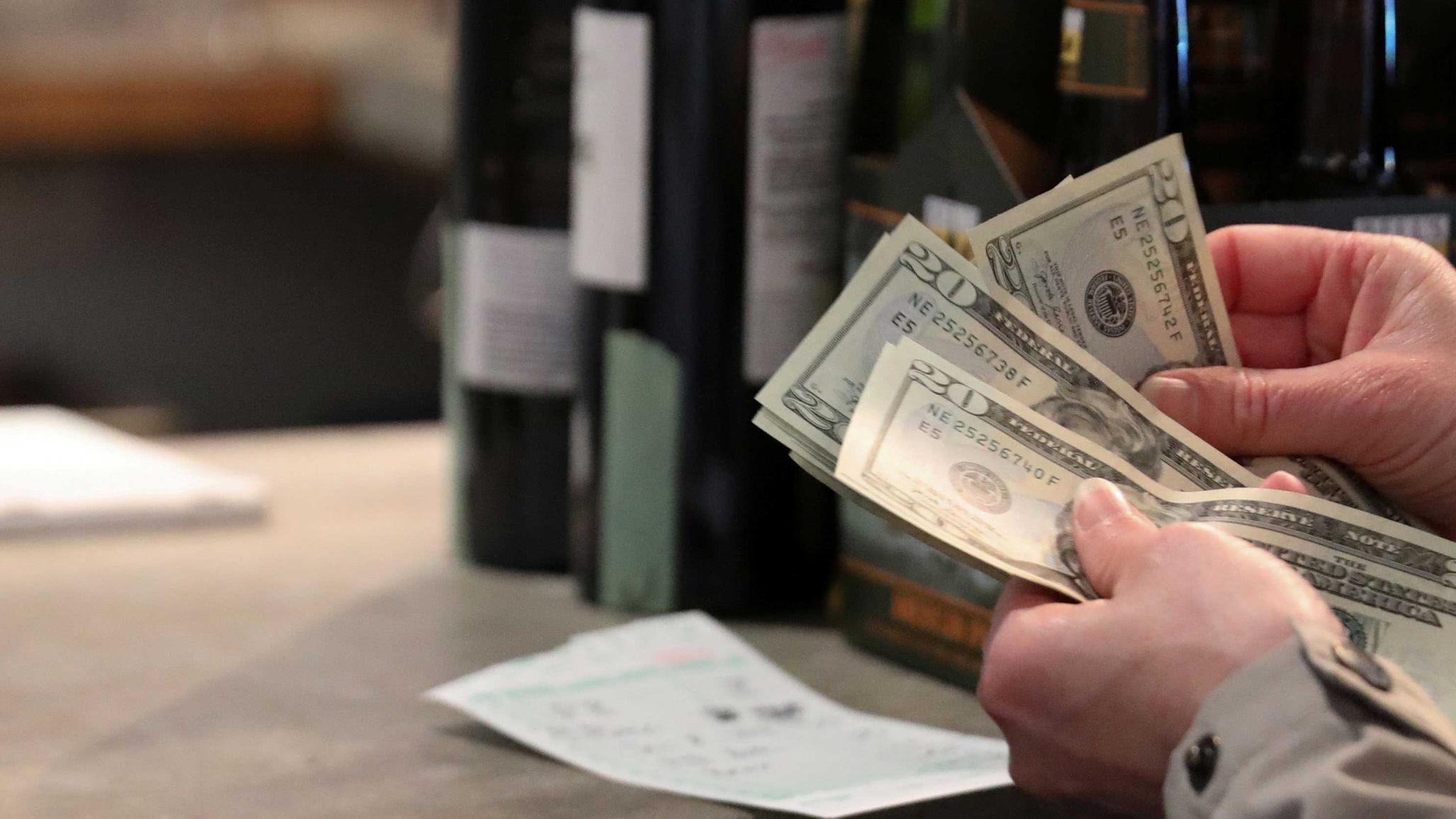
US households could face sharp price increases for certain alcoholic beverages, dairy products, and other select imports from Canada subject to President Donald Trump's new tariffs.
Trump on Monday ordered the 50 percent tariffs on certain Canadian imports to take effect in 30 days. Research to date indicates that his tariffs are paid almost entirely by US households and business consumers, rather than by foreign exporters.
Cast aside by the new tariffs is the US promise and legal obligation of zero tariffs made in 2020 when Trump signed the United States-Mexico-Canada Agreement. Prices for the goods affected by these new tariffs, and others in train, could start rising in the runup to the November 2026 midterm election. Many of the affected goods are currently subject to zero or very low tariffs, under the USMCA, other trade pacts, and the US tariff schedule bound in the World Trade Organization.
Trump imposed the new measures by citing, for the first time, Section 338 from the Tariff Act of 1930 (the Smoot-Hawley Tariff). Section 338 was designed to retaliate against countries that denied US exports something akin to most-favored-nation (MFN) treatment. Trump claimed that Canadian restrictions on US cheese exports, along with the Canadian boycott of US alcoholic beverages, and Canada's retaliation in the automotive sector against earlier US tariffs as grounds for invoking Section 338.
The White House spelled out details of the new tariffs in three supplemental proclamations, one on alcohol, another on dairy, and a third on motor vehicles. The new Section 338 tariffs are accompanied by a larger suite of tariffs ordered by Trump under Section 301 of the Trade Act of 1974, to penalize imports from 60 countries for their alleged failure to effectively prohibit forced labor.
Data Disclosure
This publication does not include a replication package.
