
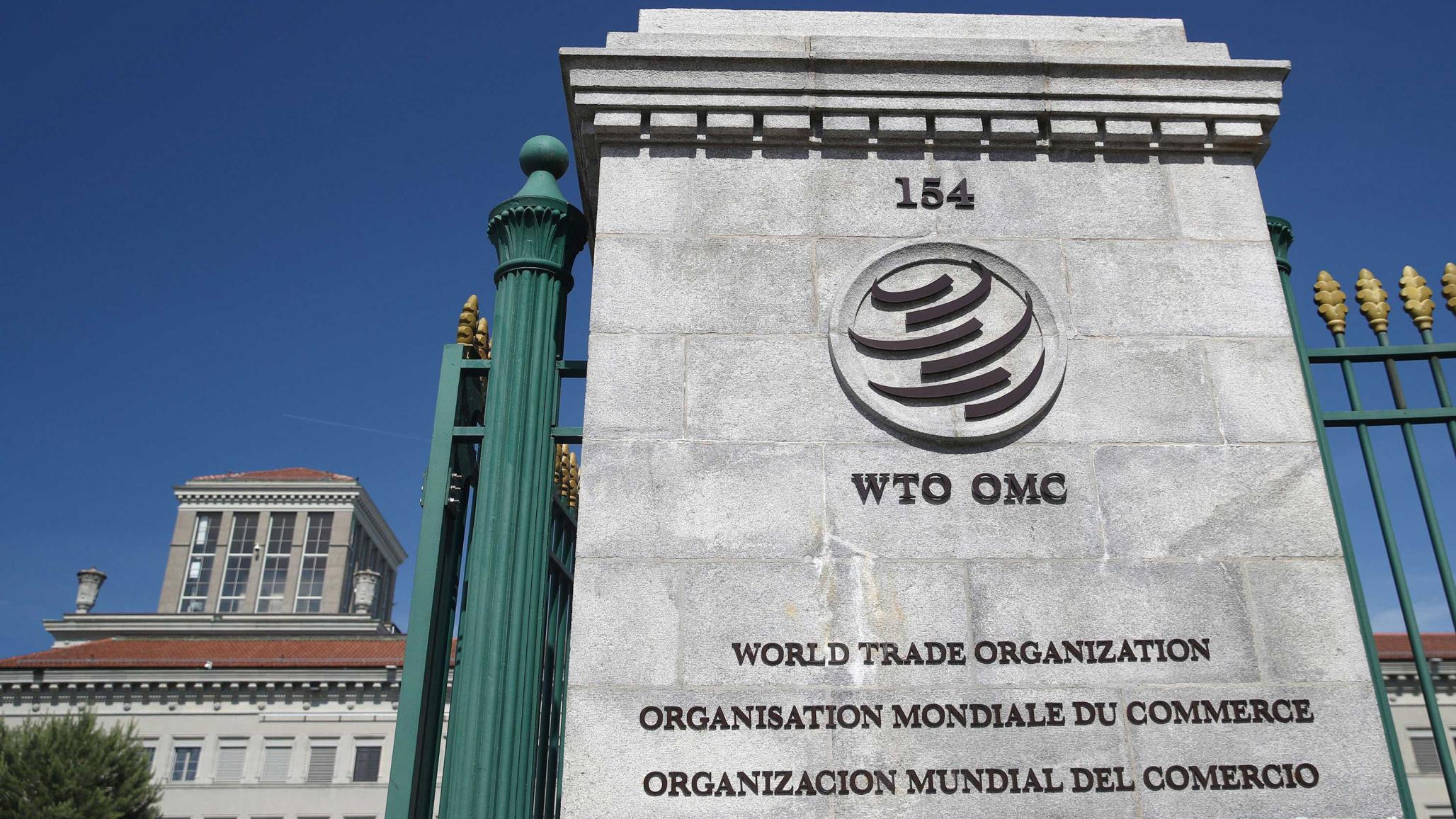
We are at an odd place with respect to the world trading system right now. Two of the founders of the multilateral system are talking about departing from or at least altering a core obligation of the current system: The United States has stated that the era of the World Trade Organization (WTO)'s basic rule of nondiscrimination – called "MFN," standing for "most-favored-nation," is over. The EU Trade Commissioner has called for balance and a rethinking of MFN.
Solely by virtue of its power, the United States has freed itself from the constraints of its most important pledges to the rest of the world's trading nations—not to exceed tariff levels it committed to through eight rounds of multilateral trade negotiations (1947 to 1994) and applying the basic rule of nondiscrimination (MFN). The United States imposes whatever tariffs it wishes—to any country and any product. There is no evidence that the European Union has in mind anything as radical but has called into question a basis for the current trading system.
The existing WTO rules have some limited flexibilities with respect to MFN: If members decide to substantially eliminate their tariffs vis-à-vis each other, they are allowed to do so under an exception for free trade agreements (FTAs). They do not have to accord the same largely duty-free treatment to the products of nonparticipants. Whether or not it was intended, use of this exception is far from uncommon. The US-Mexico-Canada FTA is one example.
The current WTO rules do not allow a wholesale rebalancing of tariffs. On the contrary, a key objective contained in the preamble of the Marrakesh Agreement by which the WTO was founded states that the organization is dedicated to "…entering into reciprocal and mutually advantageous arrangements directed to the substantial reduction of tariffs and other barriers to trade and to the elimination of discriminatory treatment in international trade relations…." (emphasis added). These are the world trading system's two primary anchors: Its members must apply fixed tariffs at agreed levels and without discrimination.
Why would any WTO member wish, as part of reform of the WTO's rules, to jettison these foundations of their agreement? There is a short list of basic situations in which countries may not wish to apply MFN:
- Bilateralism.
- Adversaries. There is a lack of trust between the United States and China. They each maintain higher tariffs against the products of their adversary than the tariffs they accord to others . Whether this departure from MFN would in the future apply only in the case of these two powers can only be speculated about. Indeed, it is not certain that these two adversaries do not find some accommodation that restores MFN to their trade. A basis for the departure from MFN would be the WTO exception for essential security interests.
- Asymmetrical agreements. The United States entered into asymmetrical agreements with other countries, reflecting the United States' superior bargaining power. Parties may apply the result of that negotiation only to each other. However, a system based on relative power is clearly not a system at all and is inherently unstable. No WTO members have attempted to emulate the United States in this regard, nor have they suggested that the world' s trade rules be amended to encompass the Trump administration's trade policy.
- Rebalancing. The competitive strength of a country may have changed dramatically since the original basis for applying MFN to it was determined. Members feeling they are no longer receiving reciprocal benefits for those they provide may seek flexibility to achieve trade relations reflecting current economic reality.
- Treatment of developing countries. The United States and the European Union have indicated that "self-designation" of developing country status will no longer be a blanket approach for special treatment for developing countries. Special and differential treatment will be tailored to the needs of individual developing countries. A modification of MFN could be required to achieve this kind of rebalancing.
- Clubs and plurilateral agreements. An agreement may only apply its benefits to those who take on its obligations. This principle could be expanded to other plurilateral agreements. A precedent is the WTO Agreement on Government Procurement. The following topics have been described as candidates for the club or conditional MFN approach: climate and sustainability (including carbon border adjustment measures), digital trade and data governance, critical supply chains and industrial cooperation, professional and other advanced services, standards and conformity assessment, state-enterprise disciplines, and labor and other social standards.
- Achieving competitive neutrality by product sector. Through use of subsidies, other forms of discriminatory government assistance, buy-national policies, followed by the creation of massive economies of scale, a country is unbeatable in a product area. The WTO trade remedies—safeguards, antidumping, anti-subsidy measures—are deemed insufficient. In the era of the General Agreement on Tariffs and Trade (GATT), the precursor to the WTO, the remedy would have been a gray measure, voluntary restraint. An alternative would be an adjustment of the importing country's tariff. If it is applied on a non-MFN basis, a waiver would be required unless the MFN rule is altered. The clear danger is a proliferation of demands for protection from other product sectors.
The future of MFN
There has been no revision to the WTO since it was founded outside of adding two new agreements—the Trade Facilitation Agreement and Fisheries Subsidies (Part I), and an expansion of the Information Technology Agreement. There was a waiver to the Agreement on Trade Related Property Rights (TRIPS) intended to deal with vaccines for combatting the COVID-19 pandemic. It is no simple matter to achieve fundamental changes to the world's trade rules.
A full revision of the MFN requirement is not going to happen. Bound rates will largely stay in place and will be applied without discrimination (e.g., with the exception of FTAs). MFN remains the general rule for trade for the world, outside of trade with the United States.
Where then are adjustments in MFN most likely?
The United States and China will apply whatever tariffs they wish to each other, by agreement or whatever temporary equilibrium is found. This is the rule for adversaries, especially the Great Powers.
The United States will likely continue to seek bilateral deals applicable only to the parties to the deal.
The largest MFN exception, for free trade agreements, will continue to be exploited. Countries will proceed largely to negotiate FTAs with ever-widening membership with countries they trust and feel comfortable with. This trend, the largest historic exception to MFN, will get larger but will be tolerated, for there is some trade creation along with trade diversion. These preferential agreements are generally not considered problematic, as they operate at the margin between countries' MFN rates and zero tariffs.
Plurilateral agreements may offer conditional MFN. But any discrimination will be moderated by the agreements being open to those accepting the agreement's obligations. It is a matter of urgency for the WTO that this change is made. This is likely to occur as a matter of practice even if not permitted by the formal rules.
Developing countries will receive tailored market access based on need, a form of conditional MFN with respect to preferences will be instituted, again as a matter of practice by some, whether or not permitted by the rules.
MFN will not be scrapped, as this would lead to a proliferation of the situation Canadian prime minister Mark Carney warned of in his January 2026 Davos remarks. He quoted from Thucydides regarding a world where "the strong can do what they can and the weak must suffer what they must." The WTO of the future may even allow immediate retaliation against those who discriminate against a member's products in favor of another member. In other words, MFN would, like antidumping, have a remedy that allows enforcement (that is proportionate) through immediate action rather than going through lengthy dispute settlement proceedings.
While MFN is retained, adjustments will continue to be suggested to it. Some will be applied. Nevertheless, it will remain the rule for most of world trade.
The European Union and like-minded governments, such as the members of the Comprehensive and Progressive Trans-Pacific Partnership (CPTPP), must work for preservation of the multilateral trading system—with a general rule of nondiscrimination, MFN, at its core. The United States should reconsider and join in, sometime in the future.
Data Disclosure
This publication does not include a replication package.
