
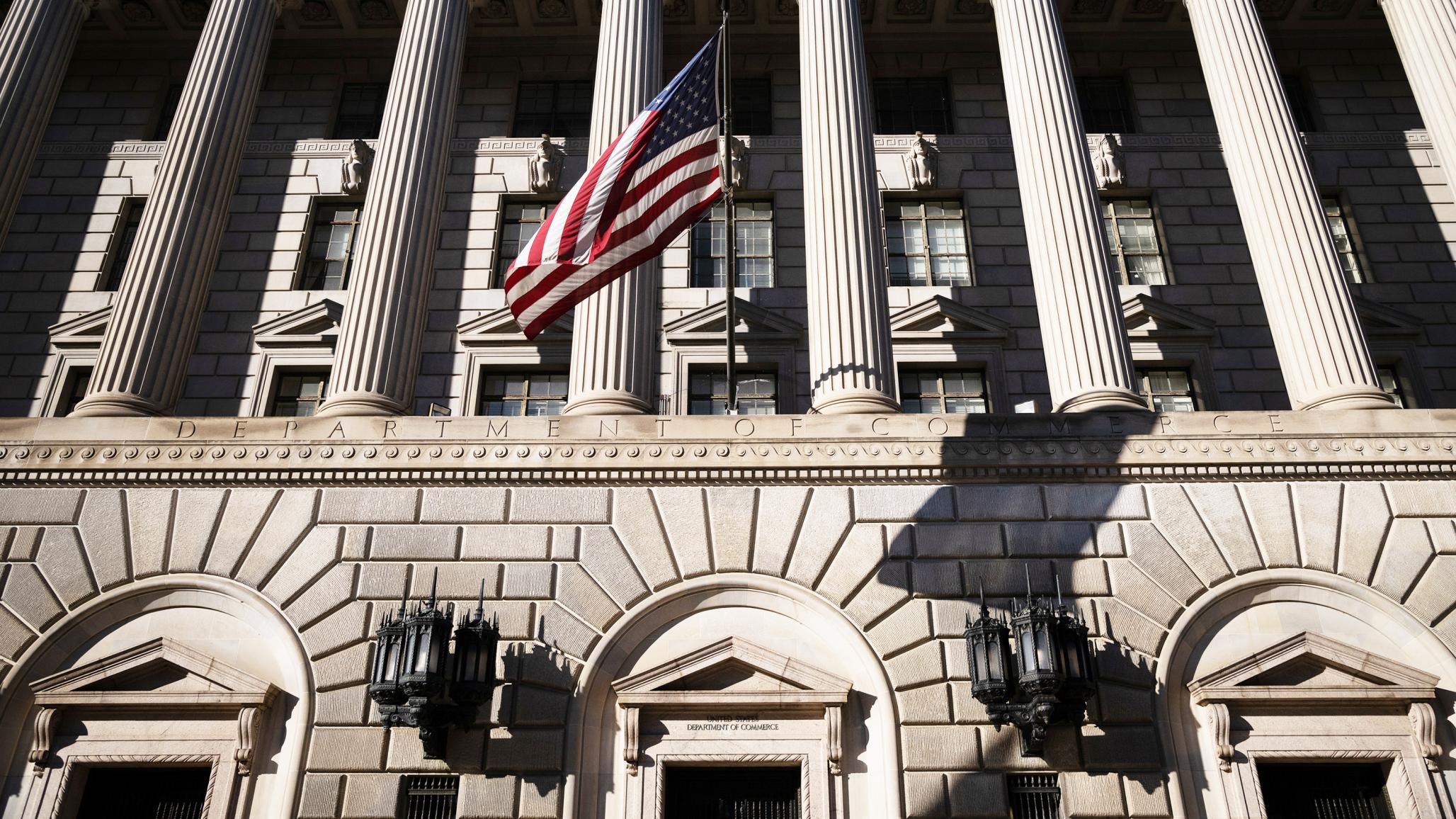
This summer marks the worst period for US statistical integrity since President Donald Trump fired the head of the Bureau of Labor Statistics last August. Two different and seemingly uncoordinated events at the Census Bureau raised alarms about inappropriate political encroachment on the scientific and technical authority of the agency.
I take some comfort that journalists and independent experts spoke up quickly and loudly. I still trust the economic indicators we get from the expert staff at Census and other US government statistical agencies, like inflation data and the jobs report. But I am scrutinizing any technical changes more closely and am quicker to look for political influence.
During this administration, the statistical system has suffered attrition, leadership vacancies, cuts, delays, and political interventions in methods and content. Most of these developments are the result of collateral damage rather than intentional harm. But the examples of deliberate political intervention have grown, including these latest events at Census.
These two events—the publication of a brief on the official Census platform about noncitizen voting that fell far short of Census standards and a political decision about privacy-protection methods—are new harms. The main impact is likely to be on demographic data for voting and redistricting, and on local demographic and economic data. The headline-worthy macroeconomic data that policymakers, financial markets, and the media follow closely were spared this time around. But damage to any part of the statistical system reverberates throughout the system. These events demonstrate that the Census Bureau and other agencies are increasingly vulnerable to political interference that would harm their credibility and the ability of businesses and policymakers to make the data-driven decisions that affect Americans' daily lives.
The noncitizen voting brief
The clearer case of political encroachment was a brief published by the Census Bureau on August 18 that "readily determined with high confidence" that more than 24,000 voter records in the 2020 election represented noncitizens. The brief is formatted like other Census research briefs and reports but—in a departure from standard practice—named no authors and included no acknowledgements or contact information for any staff or team. NPR reported that the analysis was not conducted by career Census civil servants and that the team that generated the brief included individuals affiliated with the Trump-aligned America First Policy Institute.
The analysis linked a commercial voter file containing registration and 2020 turnout records to federal administrative records containing information that can be used to classify people as noncitizens, drawn from multiple sources including Social Security and immigration data. John Abowd, the former head of research and methodology at Census, wrote that previous Census evaluations of its record-linkage system found false-match rates high enough that the true number of noncitizen voters is probably much lower: "[T]he alleged 'noncitizen voters' are therefore much more likely to be data errors than noncitizen voters." Amy O'Hara, who formerly led Census research on administrative data, wrote that the report "lacks methodological rigor, transparency, and accountability, and the results should be discarded. Moreover, the Census Bureau should answer for the process concerns raised by the publication of this unsigned and shoddy report."
This looks bad! All administrations publish data to support their policy goals or political arguments. But authorship and accountability must be clear. Typically, administrations advocate for their views through offices directly led by political appointees. Presenting this report as a traditional Census publication does not make the analysis more credible. Rather, it undermines confidence in the Census Bureau and in the vast majority of Census products that do use appropriate methodologies, rigor, and transparency.
Ending noise infusion
The subtler case of political encroachment surfaced publicly in early June. The Commerce Department issued a department administrative order to prohibit the use of "noise infusion," one of the technical methods statistical agencies use to protect the privacy of individuals, households, and businesses represented in published statistics. From now on, the Census Bureau and the Bureau of Economic Analysis (BEA), which are both part of Commerce, can no longer use noise infusion, which adds random perturbations (or "noise") to data values. Acting Census Director George Cook, a political appointee, explained that using noise infusion "led to concerns that adding noise made the statistics less accurate and less trustworthy" and the administration's "top priority is to provide the public with accurate statistical information." He wrote that the policy was developed by the Commerce Department "with technical guidance from the U.S. Census Bureau." Census and BEA can continue to use other methods of privacy protection such as coarsening (broadening reporting categories, such as states instead of counties, or ten-year age buckets instead of five-year buckets) or suppression (not publishing some data at all).
Noise infusion has advantages over coarsening and suppression: Noise infusion can make it more feasible to publish data for small geographic areas and narrowly defined groups. With coarsening, detail like racial categories, age groups, or small geographic areas could get combined; with suppression, data for small groups might not get published at all. Therefore, with coarsening and suppression, the loss of data detail and availability is more concentrated on particular groups or areas than with noise infusion, which can spread accuracy loss more thinly across many cells rather than eliminating or aggregating particular cells.
Census had long used noise infusion in some economic datasets and expanded its use recently, most prominently though controversially, for the 2020 Census, through an approach called differential privacy, a mathematical framework for measuring and setting a level of privacy protection. With differential privacy, noise can be calibrated to meet the desired privacy standard while preserving as much accuracy as possible in the published data. In the debate over differential privacy, its supporters argue that it provides a measurable privacy guarantee while preserving more detailed data than other privacy protection methods do. Some critics have objected that adding noise degrades accuracy, though in fact all disclosure avoidance methods—including coarsening and suppression—involve a tradeoff between privacy and accuracy, availability, or both. Other critics have objected in recent years to Census setting too stringent a privacy standard, to overstating the risk of disclosure, and to the difficulty data users have in understanding differential privacy.
In response to the Commerce Department order, Census delayed the release of the annual American Community Survey (ACS), due in September, to give itself more time to incorporate alternative privacy protection methods, which could lead to suppressing some statistics or publishing less detailed data. Economic data like County Business Patterns and, eventually, Quarterly Workforce Indicators might get cut back or lose granularity, since Census has used noise infusion for those datasets for many years.
A key issue is whether the choice of privacy protection methods is a policy decision, and therefore appropriate for political appointees at the Commerce Department to make, or a technical decision, and therefore within the authority of career civil servants with relevant technical background to make. I share the view of several participants at a session on disclosure avoidance with Census Bureau leadership at the annual Joint Statistical Meetings, co hosted by the American Statistical Association and other organizations, in August: The balance between privacy protection and data availability and quality should be a policy choice, and appropriate for an administration or Congress to determine, but the choice of tools used to achieve that balance is a technical choice for career civil servants to make, with extensive public consultation. It is not appropriate for political leadership at the Commerce Department to take noise infusion off the table—and certainly not via an administrative order issued without a public notice-and-comment process.
The common threads
Two common threads link the seemingly unrelated cases of the noncitizen voting brief and the department administrative order to end noise infusion: They both involve political encroachment on decisions and processes that have historically been the domain of scientific and technical experts who are career civil servants, and they both appear to support known administration political goals.
During the Trump administration, there has been significant attrition of senior career civil servants at the Census Bureau and many other agencies. Ron Jarmin retired as Census deputy director earlier this year; he worked at the bureau for over 30 years and was in recent years arguably the most influential career official in the US statistical system. The Census chief scientist position is currently vacant, with an acting associate director temporarily in the seat. Other senior leaders have resigned or retired.
As a result, Census has lost important career leadership and institutional knowledge, potentially reducing the agency's capacity to resist inappropriate political pressure. In contrast, career staff pushed back in early 2021 when political appointees pressured them to rush a report on noncitizens, which staff warned could be "statistically indefensible" and potentially harmful to Census's reputation. The two events of 2026 suggest that the agency's capacity to resist inappropriate political pressure has weakened.
The events also align with administration political aims. For the noncitizen voting brief, the connection is direct, as Trump has repeatedly alleged without credible evidence that widespread noncitizen voting occurred in the 2020 election, providing reason to question or deny his loss in the presidential election. On January 6, 2021, President Trump claimed that "over 36,000 ballots were illegally cast by non-citizens" in Arizona. More than five years later, on August 18 on Truth Social, President Trump posted the numbers from the noncitizen voting brief Census published that day and exclaimed "I won the election!"
The connection between Commerce's noise infusion order and administration political goals is less obvious. As noted above, the department said its goal was better data accuracy. But because it is unusual for a methodological decision like banning noise infusion to be made at the political level, it helps to put this order in context of other recent news.
One possible effect of relying on coarsening and suppression instead of noise infusion is less detail about race and ethnicity, especially for small geographic areas, in the redistricting datasets derived from the 2030 Census: This possibility was discussed at the meeting between statisticians and Census leadership.
A recently leaked proposal under discussion makes this speculation plausible. It was reported that the administration has circulated a draft regulation that would bar questions about race, ethnicity, and sexual orientation from the 2030 short-form decennial Census; danah boyd, whose ethnography of the 2020 Census is being published next month, points out that without race and ethnicity data it becomes even harder to challenge potentially discriminatory maps under the narrowed scope for Voting Rights Act redistricting challenges. This proposal and Commerce's order on noise infusion could have similar, reinforcing effects on the collection and publication, respectively, of racial and ethnic data.
There is also a link between the administrative order and long-standing efforts by Trump and allied groups to obtain and use more detailed citizenship data from the decennial census. The Center for Renewing America, the think tank founded by current Office of Management and Budget director Russell Vought, makes the policy link explicit in two documents. First, an August 2025 explainer about differential privacy says, under the heading "citizenship nullification": "Even if the citizenship question is added to the Census, it will be impossible to ascertain the status of individuals so long as differential privacy is used. The algorithm will be able to mask characteristic data, including citizenship status, preventing the ability to determine total voter eligibility or how to draw maps to exclude those populations."[1] Second, the think tank's November 2025 primer on redistricting recommends "eliminating differential privacy," spelling out that differential privacy "undermines the precision necessary for redistricting, especially when drawing citizen-only districts."
Therefore, the think tank describes differential privacy as an obstacle to excluding noncitizens in the post-2030 redistricting process. If a citizenship question is on the 2030 Census, differential privacy could infuse noise into published citizenship data for small geographic areas, making those data less suitable for implementing citizen-only redistricting.
What's the damage?
Neither the noncitizen voting brief nor the Commerce order on noise infusion alters the calculation of headline macroeconomic statistics like job growth, unemployment, inflation, or GDP. These headline macroeconomic data come from the Bureau of Labor Statistics, which is part of the Labor Department, not Commerce, and the BEA, which is part of Commerce but conducts relatively few surveys and relies primarily on inputs from other agencies for its most-watched statistics. Furthermore, most Census economic indicators are already protected primarily through suppression and are not expected to be affected; the administrative order affects demographic surveys more than economic indicators.
And yet there are immediate and real costs from these episodes, which can snowball. Data users will scrutinize official data releases and reports more closely. We need to check more carefully who is credited and who is accountable for statistical agency releases. We need to watch carefully, when the 2025 American Community Survey eventually comes out, whether the ban on noise infusion leads to less data being published and which tables are suppressed. We also need to question seemingly technical methodological changes and scrutinize them for political motivation more closely. It is rational and necessary for data users to be more on guard.
Unfortunately, greater scrutiny by data users creates additional burdens for the statistical agencies themselves. When data users rightly feel that they need to wonder if seemingly technical decisions might have been politically motivated or influenced, the statistical agencies have to explain and defend their decisions more carefully to preserve trust. Twice this year, the BEA has announced changes to how specific components of its inflation measure, the Personal Consumption Expenditures (PCE) Price Index, are calculated. The first change—to legal services prices—resulted in lower inflation than expected when it was incorporated without advance notice in the report for January. A second set of changes to multiple price components are expected on net to lower inflation when they are incorporated in the report for August.
There is no evidence that either change was politically influenced or anything other than a reasonable methodological improvement. But sophisticated data users criticized the lack of transparency around both decisions: The first was "not a good look" according to Omair Sharif, founder of a leading inflation forecasting firm, and the second "raised some eyebrows" according to Matt Grossman's reporting in the Wall Street Journal. In this sense, political interference anywhere in the statistical system raises the burden of proof for the entire statistical system. That data users are more on guard is not the BEA's fault, but it has become its problem. To maintain trust, the statistical agencies now need to telegraph and justify their technical decisions more carefully than before, and that diverts their shrinking resources from other efforts.
These dynamics threaten badly needed modernization and innovation to the statistical system, to deal with declining response rates and to take advantage of richer private and administrative data. Agencies that have to spend resources to defend methodological challenges from general growing suspicion of political influence might, on the margin, decide against making necessary investments that may be fully justified on technical grounds but might happen to result in politically useful statistics or data products. Congress might, on the margin, reduce funding for the agencies if they doubt the integrity and independence of the agencies. Businesses and households might become even less likely to respond to government surveys if the statistical agencies are less trusted. All of this would make the agencies' jobs harder and fuel more attrition—which in turn raises the risk of more political encroachment.
Damage to the integrity of the statistical system is accumulating, with the disappearance of datasets at the start of this administration, last August's firing of Bureau of Labor Statistics commissioner Erika McEntarfer, and the repeated misrepresentation of economic data to support false claims. To repeat: There's no indication that headline economic data can't be trusted. The United States is not falsifying or suppressing macroeconomic statistics in the ways some other countries have done, with disastrous results. There is no evidence we are close to that point. But the list of warning signs has grown, and the need for greater data-user vigilance and scrutiny imposes real costs on the statistical system.
Note
1. Differential privacy doesn't actually prevent Census from knowing an individual's confidential information like citizenship status; it affects what can be publicly inferred from published aggregates.
Data Disclosure
This publication does not include a replication package.

PIIE gratefully acknowledges financial support from the Alfred P. Sloan Foundation for the research presented in this article, and several more to come on the economic statistical system. The research was conducted independently; funders are never given the right to review a publication before its release.