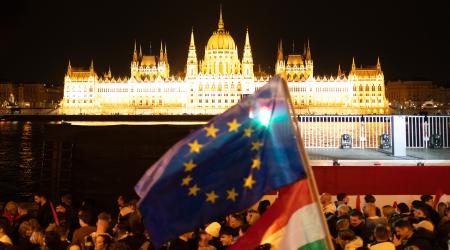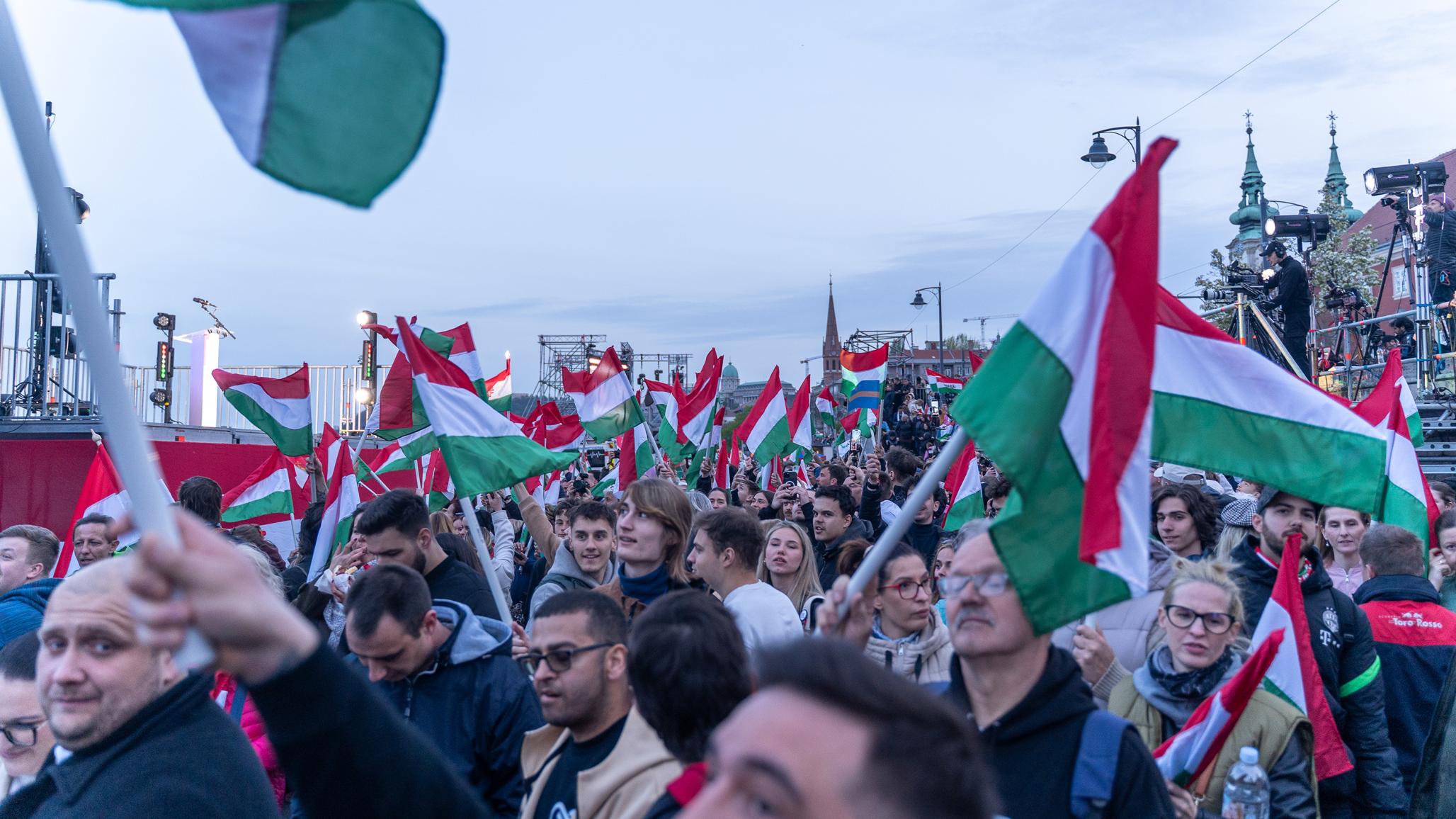
The crushing defeat of Prime Minister Viktor Orbán and his far-right Fidesz Party in Hungary on April 12 was widely interpreted as a victory for liberal democracy. But more than that, voters revolted against his 16 years of corruption and economic mismanagement. Their verdict sends a signal to Brazil and Argentina, where voters have historically shown a much lower tolerance for corruption and economic mismanagement than their Eastern European counterparts.
Both countries face elections this year. In Argentina, President Javier Milei's "shock therapy" has delivered some impressive results in combating inflation but at the enormous cost of raising unemployment and deepening poverty. President Luiz Inácio Lula da Silva of Brazil is polling neck-and-neck with his biggest challenger, Flávio Bolsonaro, the son of the man he defeated last time around, running as his father's proxy after Jair Bolsonaro's electoral ban. Brazilians are less than enthusiastic about either choice because of their mixed economic record.
Why Orbán fell in Hungary
Peter Magyar's Tisza party in Hungary won 138 of 199 parliamentary seats not because Hungarian voters suddenly rediscovered their commitment to European values, as many commentators have suggested, but because years of fiscal deterioration, frozen EU funds, and the highest debt-servicing costs in the bloc had made daily life measurably worse. Add to that his ability to unite the opposition in Hungary—liberals, socialists, young pro-European urban voters. While populist leaders can survive scandals, concentrate power, and degrade institutions for years, the experiences of both Brazil and Argentina suggest that their electorates will render a verdict mainly on economic mismanagement.
Orbán's brand of illiberal governance always rested on a transactional bargain: Hungarians would tolerate democratic erosion in exchange for stability and rising incomes. For years, EU structural funds underwrote that bargain, even as the regime channeled contracts to loyalists. The Elios scandal, in which a company co-owned by Orbán's son-in-law won inflated street-lighting contracts, is only the most emblematic case. But the bargain collapsed once the money dried up. Some €17 billion in EU funds were frozen over rule-of-law disputes starting in 2022.
But beyond these corruption issues, by 2025, GDP growth had slowed to a paltry 0.4 percent. The fiscal deficit ballooned to 4.6 percent, worsening to a projected 5.2 percent in 2026, while debt servicing costs—roughly 5 percent of GDP, the highest in the European Union—crowded out public spending on everything voters cared about: health care, transport, wages.
Hungary's cumulative inflation since 2020 was the worst in the bloc. The forint weakened. Real incomes stagnated. And at the ballot box, the corruption scandals underscored the grinding reality that the economy had stopped working for ordinary people.
Both Argentina and Brazil have a long history of corruption undermining their economies, which helps explain why Orbán's fate may ultimately resonate in those two countries.
Parallels in Argentina
Take Argentina. Its situation is structurally different from Hungary's but is similar in revealing ways. Milei took office promising shock therapy to tame 211 percent annual inflation, and he has delivered impressive, though partial results: Annual inflation fell to roughly 31 percent, and the government achieved a fiscal surplus of some 1.4 percent of GDP. These are not trivial accomplishments. But the costs have been enormous, with about 13 million Argentines in poverty, unemployment at 7.5 percent (the highest since the COVID-19 pandemic), and a slashing of social programs, education, and health spending. The question is how long a population will tolerate austerity in exchange for macroeconomic stabilization cheered on by the Trump administration. That tolerance could be strained, especially when the stabilization itself is stalling. Monthly inflation ticked back up to 2.9 percent in early 2026, and the full-year forecast has been revised upward. Inflationary trends in Argentina are tied to the removal of government price control, an increase in utility bills, as well as expectations that the war in the Middle East will affect energy and food prices in the coming months.
Against the worsening macroeconomic backdrop is the ongoing erosion of Milei's anti-corruption credentials, the one asset that differentiated him from the Peronist establishment he railed against. The $Libra cryptocurrency scandal of 2025, in which Milei promoted a token that crashed 96 percent within 24 hours and wiped out $251 million in investor funds, has metastasized. Phone logs published by the New York Times in April show seven calls between Milei and a key insider on launch night, and court documents reveal a draft $5 million payment agreement to the president. Meanwhile, his sister Karina Milei and senior officials face allegations of taking kickbacks on disability drug contracts. Milei's approval has sunk to 42 percent, with 53 percent disapproval.
The parallel to Orbán is instructive. Corruption alone did not fell Orbán—Hungarians had known about the graft for years. What felled him was corruption plus economic failure, which together destroyed the implicit contract with voters. Milei's midterm triumph in October 2025, when La Libertad Avanza won 40 percent of the vote, showed that Argentines were still willing to give him time. But if inflation re-accelerates, poverty remains entrenched, and the scandals deepen, that patience will evaporate.
Orbán learned that a populist's shelf life is measured in pocketbook outcomes, not slogans. Latin America knows this lesson well: Fernando Collor de Mello, president of Brazil in the early 1990s, fell to corruption amid hyperinflation; President Alberto Fujimori of Peru's authoritarian grip also crumbled in the 1990s once the economy soured and graft became undeniable.
In his previous term in office Lula and his Workers' Party (PT) were severely damaged with the unveiling of the Lava-Jato corruption scandal between 2014 and 2016, and Argentina has had its share of Peronist presidents who fell due to corruption and bad economics, most notably Cristina Kirchner. The pattern is older and sharper in the region than in Eastern Europe, which is why the Orbán parallel should worry Milei.
Parallels in Brazil
Brazil's October election will be the next major indicator of these trends. Lula's approval has come down to roughly 40 percent, with the disapproval rate hovering just over 50 percent. The economy is cooling: GDP growth is projected at just 1.7 percent for 2026, down from 2.2 percent the prior year, and food prices rose roughly 8 percent in 2024, hitting working-class households hardest. Nearly half of Brazilians believe the economy has worsened under Lula.
Compounding matters, neither Argentina nor Brazil has yet absorbed the full economic shock of the war in Iran. The conflict has disrupted global energy markets and, critically for both countries, fertilizer supply chains. Brazil, the world's largest fertilizer importer, is especially exposed: Higher input costs are already filtering through to food prices, and a prolonged disruption could push inflation well above current forecasts while dragging down agricultural output, the backbone of Brazilian GDP growth.
The right senses an opening. Flávio Bolsonaro has proven more resilient than expected, with rallies still drawing many to the streets. Moreover, the movement's populist energy appears to remain relatively intact despite the January 8 convictions of those attempting a coup to keep his father in power and Bolsonaro's imprisonment.
But here, too, the Orbán lesson applies, in reverse. The Bolsonaro family carries its own baggage of corruption, from Flávio's suspicious real estate transactions flagged by financial regulators to the broader network of allegations that dogged the family throughout Jair Bolsonaro's presidency. If the Bolsonarismo movement returns to power on a wave of economic discontent without a credible plan for fiscal management or for navigating the fallout from the Middle East conflict, it will arrive in office already weighed down by the same toxic combination of graft and economic fragility that eventually caught up with Orbán and may now be closing in on Milei as well.
A populist's shelf life is measured in pocketbook outcomes, not slogans
The throughline is not ideology. Orbán governed from the nationalist right, Lula from the redistributive left, Milei from the libertarian fringe. What they share is the vulnerability of any leader whose political survival depends on economic performance and tolerance for corruption, neither of which they can fully control. Orbán lost EU funds and had no Plan B. Milei is running an austerity program whose social costs may outpace its macroeconomic gains. Lula is presiding over a slowdown that undermines his core promise to the poor.
The lesson from Budapest is deceptively simple: When the economy turns in the wake of long-standing corruption scandals, everything else—the culture wars, the institutional capture, the nationalist rhetoric—becomes noise. The voters do the math. And the math, eventually, is unforgiving.
Data Disclosure
This publication does not include a replication package.