
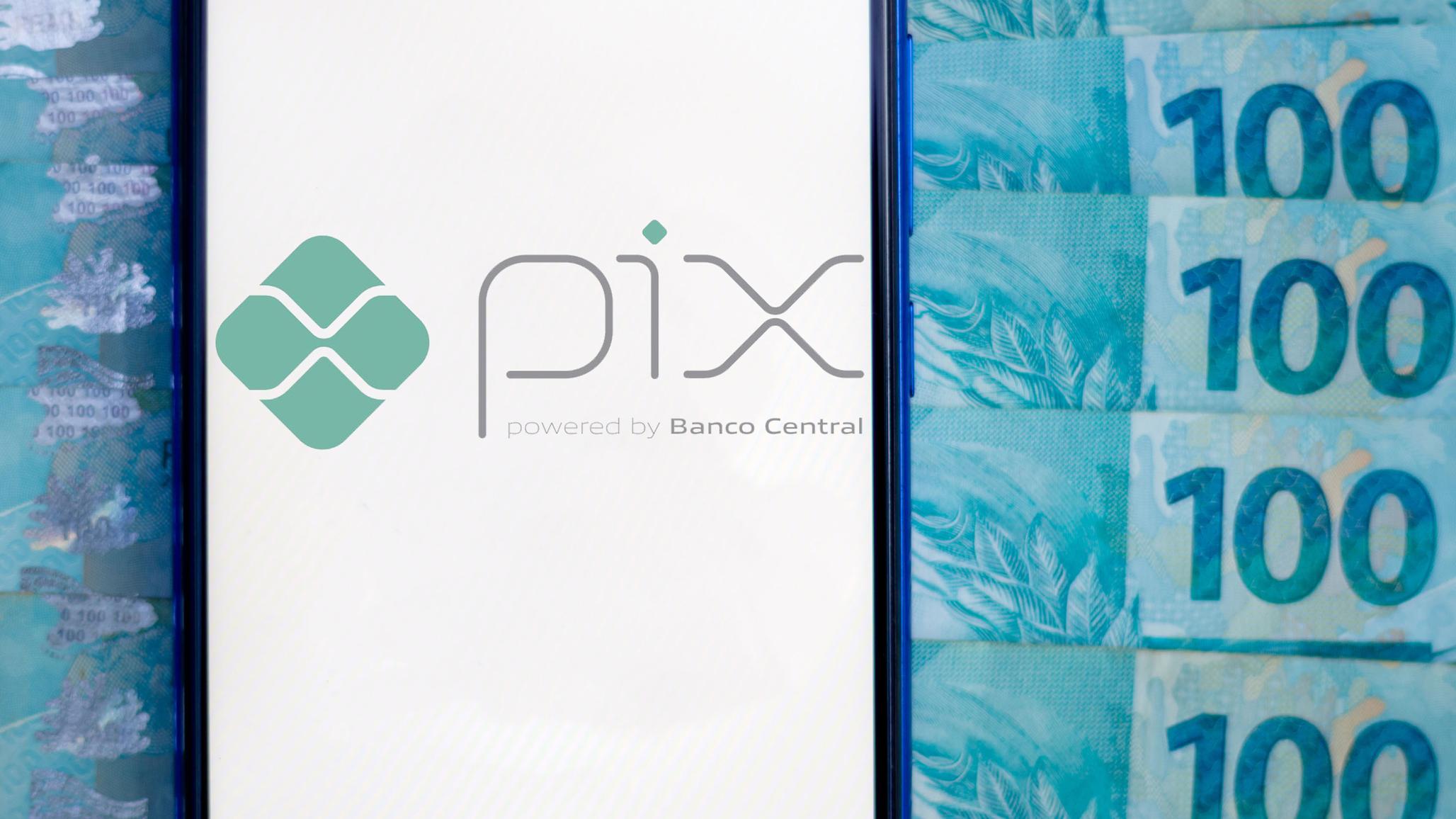
The Trump administration's determination to come up with new rationales for old tariffs has now targeted Brazil. This month, the US Trade Representative (USTR) suddenly concluded that a range of Brazilian policies are "discriminatory," justifying punitive tariffs under Section 301 of the Trade Act of 1974, the president's retaliatory authority. Among the practices singled out is PIX, Brazil's central bank–owned instant payment platform that processes most digital payments for Brazilians.
Many US credit card companies have complained for years that this payment system discriminates against them. But to argue that a government-run payment system is a trade barrier is preposterous.
The PIX case is not the only example of the lengths that the administration will go to justify its tariff war. But the Brazil case is compounded by obvious politics, reflected by President Donald Trump going out of his way to meet with and effectively endorse the candidacy of Flávio Bolsonaro, son of the disgraced former President Jair Bolsonaro, who is serving a prison sentence after trying to carry out a coup d'etat after the last election. The Brazil presidential election is later this year.
The USTR case against PIX faults it for "policies that favor its national champion" over US providers of competing electronic payment services. The USTR recommended the adoption of tariffs of up to 25 percent on most Brazilian goods, with exclusions for beef, coffee, metals, and energy.
But the PIX case is also not the only US attack on Brazil. The USTR announcement came four days before June 5, the date when the State Department's Foreign Terrorist Organization (FTO) designation for two organized crime gangs in Brazil was set to take effect. The groups, identified as Primeiro Comando da Capital (PCC) and Comando Vermelho (CV), were simultaneously named Specially Designated Global Terrorists (SDGTs).
On May 7, when Brazilian president Luiz Inácio Lula da Silva visited the White House, both the Section 301 investigation and the FTO designation were kept off the negotiating table because of their sensitivity. Now Brasília is scrambling to respond to the USTR's decision and the State Department's move, as both are seen as intrusions on Brazilian sovereignty.
US credit card and tech companies' argument against PIX may be valid to a limited extent, but PIX was designed and implemented to facilitate financial operations in the country, benefiting Brazilians—including those who have been historically excluded from financial services—alongside anyone else who does business in Brazil. It is not part of Brazil's trade policies, nor was it intended to harm foreign interests. It has enjoyed great success in Brazil and is extremely popular. Unsurprisingly, the Brazilian press and informed public have deplored the USTR announcement.
The State Department's FTO designation of terrorist groups puts further pressure on PIX
But the USTR attack should not be seen in isolation. Since organized-crime financial flows run through the same payment infrastructure as the rest of the Brazilian economy, the State Department's FTO designation of terrorist groups could also lead to sanctions that could cripple PIX by barring its entities from handling such transactions. To be sure, organized crime, particularly the targets of US action, has tentacles throughout the Brazilian economy. Brazil launched a financial investigation into these groups in 2025 and has uncovered money laundering activities in fintech companies and other financial institutions. Some of these transactions were moved through the system via PIX, which is mandatory for participating banks and financial companies above a certain size.
There is no question that certain entities deserve punishment for their involvement with organized crime, but the actions taken by the US State Department are not necessarily the answer. The counterparties to flows intermediated by Brazilian banks and fintechs are often difficult to adequately identify, as sophisticated groups rely on shell companies and other means of concealing their operations. Because the FTO action jeopardizes a vital part of Brazil's financial infrastructure, some observers have also argued that the FTO designation may hamper law enforcement cooperation between Brazil and the United States through jurisdictional and operational friction.
Two US legal frameworks could lead to sanctions: Under Executive Order 13224, signed in 2001, designating an entity as a terrorist group freezes US jurisdiction assets and bars US persons from transacting with designated entities. Under Section 219 of the Immigration and Nationality Act (8 U.S.C. § 1189), enacted in 1952, foreign terrorist status adds criminal liability for material support or resources—defined broadly as "any property, tangible or intangible, or service," and the list explicitly includes "currency or monetary instruments," "financial securities," and "financial services." Processing payments, and thereby PIX, is squarely within the statute's reach. And with the PIX owned, operated, and regulated by the Central Bank of Brazil, the FTO designation and "material support" threat now hangs over the entire Brazilian financial system.
Both frameworks reach beyond US borders, as any financial institution, whether Brazilian or from a third country, that the Treasury's Office of Foreign Assets Control (OFAC) determines has knowingly facilitated transactions for a designated entity faces secondary sanctions and the loss of US correspondent-banking access.
The effective attack on PIX was not discussed during Lula's visit to Washington in May. Instead the US call for these moves was moved to a working group of US and Brazilian officials overseen by the USTR's Jamieson Greer and Brazil's Commerce and Industry Minister Márcio Elias Rosa. Announcing the June 1 Section 301 determination, Greer said those talks had "accelerated in recent weeks" but that "substantial differences" remained.
On the narrow merits, the claim that PIX amounts to an unfair trade practice against US credit and debit card firms, as well as tech companies like Apple and Google, was always contestable under general trade laws. Accordingly, Brazil would have had a strong argument against the United States at the World Trade Organization (WTO) if the case against it had been presented cleanly. That was not the case. The USTR found PIX actionable but bundled it with five only loosely related grievances, including a US accusation that secret court orders exist against US social media platforms. The 25 percent tariff threat also cited Brazil's ethanol tariffs and its alleged illegal deforestation. That package of throwing everything against the wall to see what sticks is far harder to litigate cleanly at the WTO than a stand-alone payments complaint about PIX. The FTO designation then layers a national security frame on top of the other trade pressure tools.
With the FTO designation in effect, US pressure on PIX gains substantial steam, eroding Brazil's ability to resist it. That's because the terrorist related action includes a demand for foreign provider access, separation of the central bank's PIX ownership from its regulation of the system, stricter know-your-customer requirements on fintech participants, or expanded information sharing with US authorities. These asks are much harder to refuse when packaged as counter-terror-finance compliance than the market-access demands favoring Visa or Apple. Washington has used this playbook before against jurisdictions deemed insufficiently cooperative on anti–money laundering and counter-terrorism financing.
The United States took comparable steps against Mexico in 2025. In February it designated six Mexican cartels as FTOs. In the months that followed, the Justice Department filed criminal material-support charges, and in June the Treasury barred US banks from maintaining accounts for three Mexican financial institutions, cutting off their access to the US financial system. None of the three had been convicted of a crime, but the loss of correspondent banking was enough to render them unviable, sparking the risk of a financial crisis that forced Banxico, Mexico's central bank, to intervene.
If something similar were to happen in Brazil, in addition to exacerbating the risks of major financial turbulence, PIX would be at risk. How? The Brazilian banking system is highly segmented, with only a handful of institutions being squarely responsible for financial transaction flows. If any of these institutions were to be threatened with US sanctions under the FTO designation, liquidity hoarding and counterparty risk would likely freeze the interbank market, much like what happened in the global financial crisis of 2008. Without a properly functioning interbank market, the payment system would collapse, and that system is PIX itself.
Added together, the Section 301 investigations and the FTO designation place significant burdens on Brazil's economy and financial system. Apart from the impact of additional tariffs on Brazil's exports, Brazilian banks and fintechs would face higher compliance costs and pressure from US correspondents to monitor PIX flows. The Central Bank would find itself negotiating structural changes to PIX in the shadow of US Treasury banking enforcement. Any serious pullback by US banks would raise the cost of dollar clearing for Brazilian banks. All these steps would tighten financial conditions at a moment when Brazil's fiscal position is already strained and monetary policy is already tight.
Washington does not have to make any of this explicit, because US sanctions law works by creating costs associated with the threat of exposure that private institutions absorb and pass on. June 5 marks the start, not the end, of a new compliance perimeter around any Brazilian counterparty whose flows touch PIX, and July 15 sets the moment by which the trade track must resolve into action or accommodation. The two dates bracket a narrow, six-week window in which Brazilian regulators must show that their recently tightened rules on fintechs are rigorous enough to address US concerns on their own, before Section 301 and the FTO designation harden into demands Brasília never wanted to negotiate.
Hence the sovereignty question. PIX was built to give Brazil monetary autonomy and a domestic alternative to foreign credit and payment networks. Whether it can remain Brazilian in governance and design, now that a US national-security frame has been layered atop the trade pressure and a tariff threat hovers above both, is the real question. The answer, over the next several weeks, will reveal the contemporary limits of monetary sovereignty.
Data Disclosure
This publication does not include a replication package.
