
Key Takeaways
- US exports to China have fallen sharply, largely due to Trump's trade wars combined with China's economic problems and policies.
- Without Trump’s trade wars since 2017, US exports to China would have been nearly 60 percent higher in 2025, or roughly $90 billion annually.
- China's global imports have also declined since 2021 while its exports have surged, giving the United States a new opportunity to work with others to jointly tackle Beijing's policies.
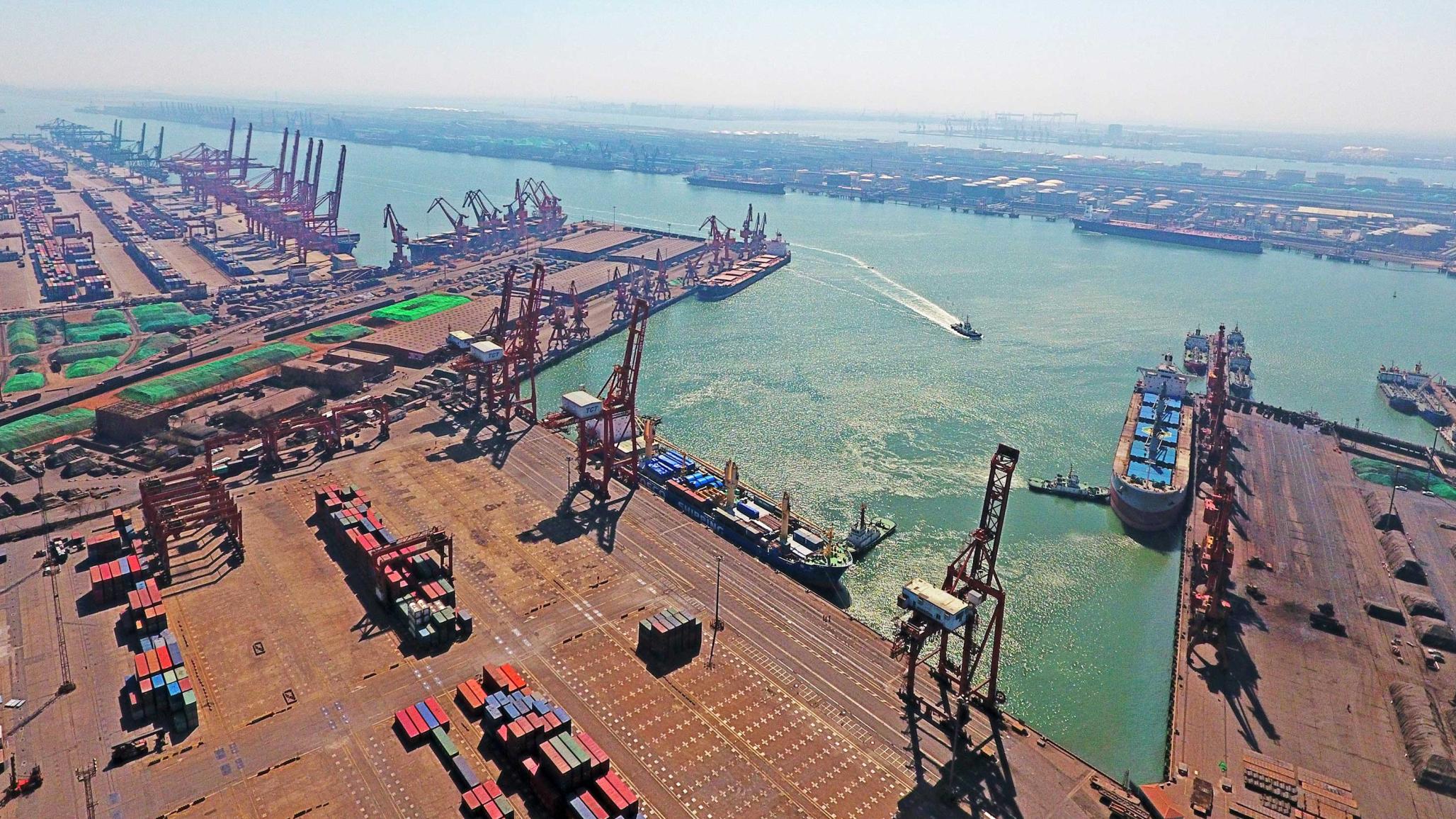
China essentially stopped buying US exports in April 2025. President Donald Trump had started his second term by launching a new trade war that he headlined with steep new tariffs on China. When China retaliated, US goods shipments to the world’s third largest importing economy fell to levels not seen since the global financial crisis of 2008–09. The plunge was even deeper than in 2020, when pandemic lockdowns caused supply chains to snarl and trade to collapse.
Though US exports to China in 2025 did eventually resume, the tally by the year’s end was depressing. In nominal terms, US exports of goods alone were 26 percent lower than in 2024. As a share of total US output, sales of goods and services to China had fallen to nearly half their levels of 2017, on the eve of Trump’s first tariff barrage. By one estimate, US exports to China would have been nearly 60 percent higher in 2025, or roughly $90 billion annually, without Trump’s trade wars.
In October 2025, the Trump administration began a formal Section 301 investigation into how US exports to China had gone so wrong. The causes seemed obvious: Each time Trump raised tariffs—by 145 percentage points in early 2025, as well as during his first trade war of 2018–19—China retaliated with matching tariff increases, accelerating the US export decline.
Less obvious were the host of other Chinese policies that discouraged its imports. Some incentivized Chinese firms to produce too much. Others encouraged Chinese consumers to buy more locally. Most of those Chinese policies also hurt exporters in other countries.
Trump’s investigation won’t help if it merely blames his domestic political rivals. But it could prove useful if it draws lessons from the past and informs Trump’s future trade policy, as well as his highly anticipated meetings with President Xi Jinping of China.
Looking beyond the United States, China’s imports from the rest of the world have also declined. Meanwhile, its global exports have soared. With companies and workers in other countries suffering too, Trump has an unparalleled opening to engage their governments and collectively tackle the underlying problems with China in the trading system. The Supreme Court’s rejection of Trump’s 2025 tariff approach provides the president a fresh opportunity to recalibrate his trade strategy.
Trump is now investigating his 2020 “phase one” agreement with China
Trump’s investigation focuses on China’s implementation of the so-called phase one trade agreement that he struck with Beijing in 2020, during his first term as president. That deal marked his first attempt to restore US export access to the Chinese market that his devastating trade war of 2018–19 had closed off.
By the end of 2019, Trump had increased US tariffs on imports from China from an average of 3 to 21 percent. China retaliated by increasing its average tariff from 8 to 22 percent. US real exports to China plummeted, falling by 13 percent in 2019 compared to pre-trade war-levels. With the US presidential election less than a year away, the two countries declared a truce and signed the phase one agreement in January 2020.
The text of the 2020 agreement contained some potentially transformative elements. China agreed to remove barriers to US farm products, open its market to US financial services, and better protect the intellectual property of American companies. Trump had finally convinced China to sign up to requests pursued by numerous previous US administrations. (The European Union found parts intriguing enough to negotiate its own “Comprehensive Agreement on Investment” with China to completion later that year.)
Trump headlined the deal differently. He touted China’s further commitment to boost its total imports of US goods and services by $200 billion over the next two years. (Election year politicking was likely at play: Trump boasted to a Davos crowd in January 2020 that China’s additional purchases “could be closer to $300 billion when it finishes.”) The legal details found in the agreement’s “Annex 6.1” were clear: China needed to buy more, in both 2020 and 2021, of a specific list of American-made items and by certain amounts.[1]
Yet Trump’s novel deal was oddly silent about tariffs. For American companies and farmers, China’s lingering retaliatory tariffs meant the same good from a competitor in another country would remain more attractive to the Chinese consumer. If US exports were to resume, the two governments would have to do something else to make it happen. (Eventually China’s Ministry of Finance did announce a tariff exclusion process, but it was opaque and only available to Chinese companies.)
Then COVID-19 hit, economic activity contracted, and global trade collapsed. That something else never materialized. Instead, relations between the two countries quickly soured. Trump called COVID-19 the “Chinese virus” and “Kung flu,” even as millions of people were dying. Beijing became openly angry and indignant.
Nearly from the start, China’s goods purchases fell behind. Trump lost the 2020 presidential election and, by the end of the year China was on pace to meet only 59 percent of its commitment. Though US exports to China increased by an additional $22 billion in 2021 (in nominal terms) following the inauguration of President Joseph R. Biden Jr., the purchase obligations were so heavily backloaded into the second year that China was never able to catch up. [2] Overall, China bought only 58 percent of the two-year commitment and none of the additional $200 billion of US exports that Trump had promised. This part of the deal was a failure.
The phase one agreement lived on, as neither country announced its termination. And technically, China had also agreed in 2020 to continue the “trajectory of increases” in buying US exports through 2025.[3]
What has happened to US exports to China since 2021? It’s complicated
US real exports to China of goods and services covered by the phase one agreement were flat between 2021 and the end of 2024, during Biden’s presidency (figure 1). [4] While exports initially fell in 2022 when accounting for peak inflation, they then increased in both 2023 and 2024, ending up 1 percent higher than 2021.
Trump’s return to the White House in January 2025 once again devasted US exports to China. He quickly resumed and escalated his trade war. By April, Trump had announced a tariff increase on imports from China of another 145 percentage points, which China largely matched. Even when the two sides declared another truce, Chinese tariffs remained at levels higher than before.
US real exports to China of these products fell by 19 percent in 2025, to their lowest level in more than a decade. One back-of-the envelope estimate is that total US exports to China would have been nearly 60 percent higher, or roughly $90 billion annually (in 2025 dollars), without Trump’s trade wars. (This assumes, conservatively, that US real export growth to China since 2017 had simply tracked China’s import growth from the world.[5])
US manufacturing exports to China have fewer bright spots
US real manufacturing exports to China fell by 7 percent in 2025 alone (figure 2a). They landed more than 16 percent below 2017 levels. Manufacturing remains economically important: In 2024, the sector made up 42 percent of US exports covered by the purchase commitments in the phase one agreement.
Flagship US products show mixed results. Aircraft exports to China began to suffer in 2019 for reasons initially unrelated to the trade war (figure 2b). Historically the largest US exporter to China, Boeing Co. saw its sales decline following two crashes of its 737 Max, and global regulators temporarily halted the model from flying. (In 2020, Boeing even shut down production for nearly five months.) Chinese regulators were slow to recertify the aircraft amid US-China tensions, and only in 2024 was there a significant uptick in deliveries. While Trump’s 2025 trade war reportedly led China to temporarily halt deliveries again (the Chinese government did not comment), the truce allowed them to resume. Despite the turbulence and exports remaining below 2017 levels, at least planes were flying once more.
American automobiles face a much bleaker story, with 2025 exports to China falling to their lowest level since 2009. (Autos had been the second largest manufacturing export to China before Trump’s first trade war.) Trump’s 2018–19 tariffs on steel, aluminum, and other products raised input costs, making US companies like Ford lose competitiveness, including for their exports to China. China’s retaliatory tariffs in 2018 convinced Tesla and BMW to move production out of the United States to service the Chinese market. Since then, Chinese firms like BYD and Chery have emerged as dominant in the Chinese and global markets, especially with the acceleration of electric vehicle sales. US auto exports to China are unlikely to come back any time soon.
The US semiconductor industry has faced ups and downs. US chip exports to China increased in 2024 and 2025 after bottoming out in 2023. (Global industry revenues fell by 8 percent in 2023.) Given the sector’s supply chain, the export data shows US fabrication plants (or fabs) resuming significant shipments of unfinished chips to facilities in China for assembly, testing, and packaging. (This is not evidence of advanced AI chips from US companies like Nvidia or AMD someday going to China, as those would be recorded elsewhere in the trade statistics.)
On the other hand, exports from US semiconductor equipment companies like Lam, KLA, and Applied Materials have returned to earth, after spiking in 2021. High Chinese demand had been driven in part by the uncertainty over US export controls causing Chinese fabs to stockpile equipment. (The US export controls of 2020–23 would ultimately restrict certain semiconductor companies in China from purchasing US-made tools.)
Immunological products may be one other bright spot, as US exports of biologics to China also grew in 2025. (Despite tensions, since early 2023 China’s regulators had continued to approve American-manufactured products like AstraZeneca’s cancer drug durvalumab, Eli Lilly’s diabetes and weight-loss drug tirzepatide, and the Sanofi/AstraZeneca RSV drug nirsevimab.) This was despite early worries that Beijing’s counter-tariffs of April might cut off access to potentially life-saving pharmaceutical treatments made in the United States.
These few silver linings risk hiding a much bigger trend. Everyone is having a harder time exporting their industrial goods to China. Ignore China’s 2025 response to Trump’s latest tariff barrage. While US exports of manufactured products to China in 2024 remained 3 percent lower than 2021 levels, China’s real manufacturing imports from the world over that same period were 12 percent lower.
China’s declining imports have multiple causes, none of which US policymakers can or should tackle on their own. China’s demand has slowed, with real GDP growth since opening up after COVID-19 falling to 5 percent in 2024 and 4.8 percent in 2025, from an average annual rate of nearly 8 percent in the decade before the pandemic. Deflation has also made it more difficult for foreign companies to compete in China. Chinese producer prices fell by 6.2 percent between January 2023 and December 2025, compared to 1.5 percent in the European Union. For American manufacturers, the US producer price index increased by more than 1 percent over this period.
China’s policies are also at play. And with Chinese companies becoming more competitive in higher-tech industries, longstanding concerns about the country’s excessive, state-led investment model mean its negative spillovers now show up in new sectors. (The Chinese system tends to encourage the build out of production capacity that is untethered to market demand, even when the latter is slowing.) One result is what Chinese policymakers now refer to as “involution.” What the western policymakers are worried about is “overcapacity.”
China has also worked aggressively in recent years to reduce its reliance on imports. Since the phase one agreement, China has implemented local content, subsidy, and preferential procurement policies in sectors ranging from medical devices (Notice 551) to semiconductors (China Integrated Circuit Industry Investment Fund) to electric vehicles (New Energy Vehicle Industry Development Plan (2021–35)).
Even less transparently, Beijing has also made nonpublic requests to local governments and state-owned enterprises to “replace foreign products with domestic alternatives” in sectors like information and communications technology, aerospace, and energy, according to the US-China Business Council. In its 2025 annual survey, the European Chamber stated “a record percentage” of its member companies reported that doing business in China had become “more difficult.”
President Xi signaled this policy shift shortly after Trump signed the phase one agreement. In his famous dual circulation speech of 2020, Xi said, “in order to safeguard China's industrial security and national security, we must focus on building production chains and supply chains that are independently controllable.” Xi’s message to Chinese policymakers was clear: The country cannot be reliant on imports. The trade data suggest that his policymakers have had some success.
Agriculture suffered from Trump’s tariffs in 2025 but looks to reap subsidies in 2026
Trump’s second term trade war also decimated US farm exports to China in 2025 (figure 3a). Real agriculture exports fell to roughly 2018 levels, the last time the two countries were in a tariff fight. The US farm sector is relatively small in economic terms (accounting for just 16 percent of exports covered by the phase one agreement as of 2024), but some products depend heavily on the Chinese market.
Soybeans have long been the largest farm export to China, making up 50 percent of agriculture sales to China in 2024. When normal trade is flowing, “one in three rows of soybeans” grown by US farmers ends up in China. US soybean exports to China fell to $3 billion in 2025, their lowest level since 2018 (figure 3b), despite the agreement Trump and Xi reached in the fall. Furthermore, the industry characterized as “concerning” that the future purchase commitments the Trump administration negotiated with China covering 2026–28 were at levels “below the status quo.” China has also actively reduced its dependence on US farmers by buying more from Brazil and Argentina. In 2025, 80 percent of China’s soybean imports came from those two countries, up from 60 percent in 2017.
Trump’s 2025 trade war devastated other farm exports too (figure 3b). The National Cotton Council offered that while it “appreciates” the Trump administration’s efforts to restore its lost access to the Chinese market following Beijing’s retaliation, “the outcomes to date have yielded no tangible benefits.” Similar grumbling emerged over lost US exports of beef (Meat Institute, National Cattlemen’s Beef Association, US Meat Export Federation), corn (Nebraska Corn Growers Association, National Corn Growers Association), wheat (US Wheat Associates), pork (National Pork Producers Council), and more.
Farmer complaints about losing $15 billion of annual sales may have once again paid off. In December, the Trump administration announced up to $11 billion of subsidies to farmers affected by “temporary trade market disruptions.” (Code for trading partner retaliation for Trump’s tariffs; payments begin February 28, 2026.) Trump had similarly sent $28 billion of subsidies to farmers hurt by retaliation stemming from his tariffs in 2018–19. (US manufacturers hurt by that retaliation did not receive subsidies.)
Services exports plunged with the pandemic and have been flat since
US real services exports to China in 2025 remain well below the peak levels of 2019 (figure 4a). Hopes were high for services export growth at the signing of the 2020 deal. (Services remained more than one third of exports covered by the phase one agreement as of 2024.) China agreed to better protect the intellectual property of American companies, help stop the forced transfer of technology, liberalize markets for financial services, and sometimes even no longer require joint ventures.
COVID-19 dashed some of those hopes. Business travel and tourism have not completely recovered, after plummeting in 2020 with pandemic-related lockdowns (figure 4b). US exports of educational services to China have suffered too, for reasons independent of travel restrictions. (Beginning in the first Trump administration, the environment for foreigners, including those of Chinese descent, to study and work in the United States has become increasingly hostile. The number of visitors from Asia fell an additional 3 percent in 2025.) And one recent study put the 2018 tariffs alone at costing US universities tuition revenue from Chinese students equivalent to 8 percent of educational services exports to China.
The decline of other US services exports is also difficult to blame on the pandemic. Payments have not increased for US companies licensing their intellectual property to Chinese customers, even though China took on additional commitments to protect American intellectual property. US exports of these services remain below 2016 levels in the most recently available data (figure 4b).
A few industry associations have weighed in on the Trump administration’s phase one investigation. The Pharmaceutical Research and Manufacturers of America (PhRMA) indicated “significant issues remain” with China’s progress on patent enforcement for pharmaceuticals. For a range of medical devices, the Advanced Medical Technology Association (AdvaMed) complained that the local content requirements China imposed since the phase one agreement implies “the pressures on U.S. medtech companies to shift technology to China have in fact increased.” While the Motion Picture Association (MPA) offered that China “continues to do a proactive job toward compliance” on protecting copyright holders, it also suggested Beijing could top up its purchases “by increasing its licensing of audiovisual works,” including paying more for streaming content and allowing more Hollywood box office releases than the 28 permitted in 2024. (MPA members include Netflix, Amazon Studios, Paramount, Disney, Warner Bros., Universal, and Sony Pictures.)
US exports of financial services remain below 2016 levels, suggesting that those market liberalization commitments also failed to deliver. In late 2025, Visa reminded US officials that its April 2018 license application to the Chinese government to provide electronic payments “has yet to be approved.” And the Coalition of Services Industries complained about Beijing’s “overly burdensome licensing and operating requirements” in the re-insurance sector especially.
US energy exports to China slid in 2025, with one exception
Finally, US energy exports to China also fell back to pre-2017 levels in 2025 (figure 5a). Exports of crude oil, liquefied natural gas (LNG), and coal dropped precipitously (figure 5b). The lone bright spot was refined energy products. This includes ethane (used as a petrochemical feedstock), as China continued to build out its domestic plastics industry.
Oil, LNG, and coal are globally traded commodities. Of all US exports to China that are currently suffering, these likely require the least policymaker attention, as many can find a home elsewhere. Indeed, Chinese firms reportedly continued to purchase American LNG in 2025. Rather than import it into China (and pay China’s retaliatory tariff), they simply re-sold it on the spot market to European countries.
Trump’s China policies need something new: Allies
Trump’s go-it-alone approach toward China has not worked. But he could score important gains by working with other countries that now recognize they face the same trade challenge.
There are many more such countries today than during his first administration. China’s real goods imports from the world have fallen 1 percent since 2021, while its real goods exports have soared by more than 25 percent. China’s trade surplus ballooned in 2025, worrying even the International Monetary Fund. Industries in Europe and elsewhere increasingly share the US frustration with China’s subsidies, local preferences, and other incentives that lead to its excess production capacity and unwillingness to buy from abroad. The United States could have more success working with other governments than the two Trump administrations have had working alone.
The Supreme Court’s decision to throw out Trump’s “Liberation Day” tariffs has opened a window for the president to reset his second-term trade strategy. This requires a dramatic reorientation of his administration’s treatment of other countries.
First, the president needs to stop alienating potential partners by imposing or threatening steep tariffs to coerce policy concessions—such as selling Greenland, making Canada the “fifty-first state,” or forcing them to invest in the United States where it does not make sense to do so. And when other countries reduce their tariffs on US exports, Trump should reciprocate.
Second, other governments are now eager to forge alliances to address the collective challenge of how the Chinese economic model fits into the global system. Trump’s Treasury Department and US Trade Representative (USTR) will need to engage, including with the other major industrialized economies of the Group of Seven (G7). (Addressing China’s surpluses also requires a good-faith willingness by the United States to acknowledge the role that its own fiscal deficits play in the problem of global imbalances.) One initial step in the right direction was the February 2026 joint press statement between Trump’s USTR, the European Union, and Japan over critical minerals supply chain cooperation.
Third, there is an opportunity to learn from the failures of Trump’s unilaterally waged trade wars against China. Yet the new Section 301 investigation will not enlighten future US policy if it ignores the real roots of US-China trade problems and just blames Trump’s political rivals. (His Treasury Secretary, Scott Bessent, has already said the problem with the phase one deal was “the Biden administration chose not to enforce it.”)
Increasing US exports to China is a laudable goal. But any short-term deals where President Xi orders a few more American soybeans, tankers filled with oil and gas, or even AI chips from Nvidia would fall woefully short of the bigger victory Trump could achieve by leading a cooperative, multinational engagement with China over the most vexing trade issue of our time.
Appendix
The purchase commitments of the 2020 phase one agreement did not cover a list of products that made up 19 percent of total US exports to China in 2017. US exports to China of those products declined by 27 percent in 2025, to their lowest level since 2009 (Appendix figure).
| Appendix table Subsectors and products used to analyze China's phase one purchase commitments |
||
|
US exports as a percent of total covered exports to China |
||
|
2017 |
2024 |
|
| Total covered manufacturing |
44 |
41.6 |
| 1. Aircraft, engines, parts |
10.9 |
7.4 |
| 2. Autos, trucks, and parts |
6.8 |
3.1 |
| 3. Semiconductors |
3.9 |
5.9 |
| 4. Semiconductor equipment |
1.7 |
2.6 |
| 5. Immunological products |
0.1 |
3.3 |
| All other covered manufacturing |
20.5 |
19.4 |
| Total covered agriculture |
13.8 |
15.7 |
| 6. Soybeans |
8.1 |
7.8 |
| 7. Cotton |
0 |
1 |
| 8. Beef |
0 |
1 |
| 9. Corn |
0.1 |
0.2 |
| 10. Wheat |
0.2 |
0.3 |
| 11. Pork |
0.2 |
0.2 |
| 12. Sorghum |
0.6 |
0.8 |
| 13. Raw hides and skins |
0.6 |
0.3 |
| All other covered agriculture |
3.4 |
4.3 |
| Total covered services |
37.1 |
33.9 |
| 14. Business travel |
2.7 |
1.6 |
| 15. Tourism |
6.9 |
4.4 |
| 16. Education-related travel |
10.5 |
9 |
| 17. Charges for use of intellectual property |
4.9 |
4.8 |
| 18. Financial services |
2.6 |
2.7 |
| All other covered services |
9.4 |
11.4 |
| Total covered energy |
5.1 |
8.8 |
| 19. Crude oil |
2.9 |
3.8 |
| 20. Liquefied natural gas |
0.3 |
0.8 |
| 21. Coal |
0.3 |
1 |
| 22. Refined energy products |
1.6 |
3.2 |
| Note: Schedule B and Bureau of Economic Analysis (BEA) codes are reported in the online Excel file accompanying this post and are taken from Annex 6.1 of the Economic and Trade Agreement between the United States of America and the People's Republic of China. | ||
| Sources: Constructed by the author with US export data from US Census and Bureau of Economic Analysis as well as price deflators from Federal Reserve Economic Data (FRED) and US Bureau of Labor Statistics. | ||
Notes
1. One curious part of Trump’s original agreement is that the purchase commitments did not cover all exports to China. See appendix for goods not covered by the purchase commitments.
2. Any inflation during 2020–21 would have helped China reach the legal commitment. (One puzzle is why the Trump administration wrote the phase one agreement in current dollars.) While prices fell early in 2020 when the pandemic hit, both US export prices and Chinese import prices quickly reversed and showed a sharp increase in 2021 especially.
3. China also agreed in 2020 to increase its buying even after the $200 billion purchase commitment ended on December 31, 2021. Article 6.2.3 states, “The Parties project that the trajectory of increases in the amounts of manufactured goods, agricultural goods, energy products, and services purchased and imported into China from the United States will continue in calendar years 2022 through 2025.”
4. For consistent comparison of data, unless stated otherwise, the rest of this blog refers to the goods and services covered by the purchase commitments in the original phase one agreement. Real exports are in 2017 dollars.
5. Total US exports to China also includes the products not covered by the purchase commitments (see appendix).
Data Disclosure
The data underlying this analysis can be downloaded here [zip].
Related Documents
- Document2026-03-03-bown.zip (186.55 KB)


Author's note: Ariyasuren Baldansenge, Yuan Liu, and Ashley Singh provided outstanding data assistance, and Samantha Elbouez assisted with graphics.
With Soumaya Keynes, Bown is coauthor of the book How to Win a Trade War, available for pre-order and to be released on May 26, 2026.