
The global economy needs a rules-based trading system. The minimum elements required are transparency, fixed and contractually bound tariffs, and a binding dispute settlement process. In addition, the system needs reciprocity and nondiscriminatory treatment, two of the key elements of America's trade agreements program from 1934 until the Biden and Trump administrations, which provided the basis upon which the multilateral trading system was founded.
These elements are clearly essential. Without transparency there is no clarity as to the conditions upon which trade can cross borders. Without contractually bound tariffs, there is no certainty that trade can take place at all. Without binding dispute settlement, trade obligations are unenforceable and therefore not fully reliable. Without reciprocity, there is no assurance of trade agreements being mutually beneficial, and therefore more durable. Without requiring nondiscriminatory treatment (historically called "most-favored-nation" treatment"), there is no stability, since whatever is agreed between two countries based on a negotiation today is likely to be considered insufficient compared with what one's trade agreement partner may give to other countries tomorrow.
These are the norms and values embodied in the 30-year-old World Trade Organization (WTO), now agreed to by 166 economies and which another two dozen aspire to join. These values were inherited from the General Agreement on Tariffs and Trade (GATT), founded in 1948 under the leadership of the United States at the dawn of a new economic era following the two world wars that occupied most of the first half of the 20th century. Under the auspices of this trading system, world trade has grown by some 45 times and countries have prospered.
To varying degrees, the first Trump and the Biden administrations initially chose to free themselves of some of the constraints provided by the rules of the system. At present, the United States simply ignores the existence of any rules applicable to its conduct. It has imposed tariffs at will and demanded unreciprocated trade concessions from all, individually and bilaterally. It has not proposed a new set of rules to govern world trade.
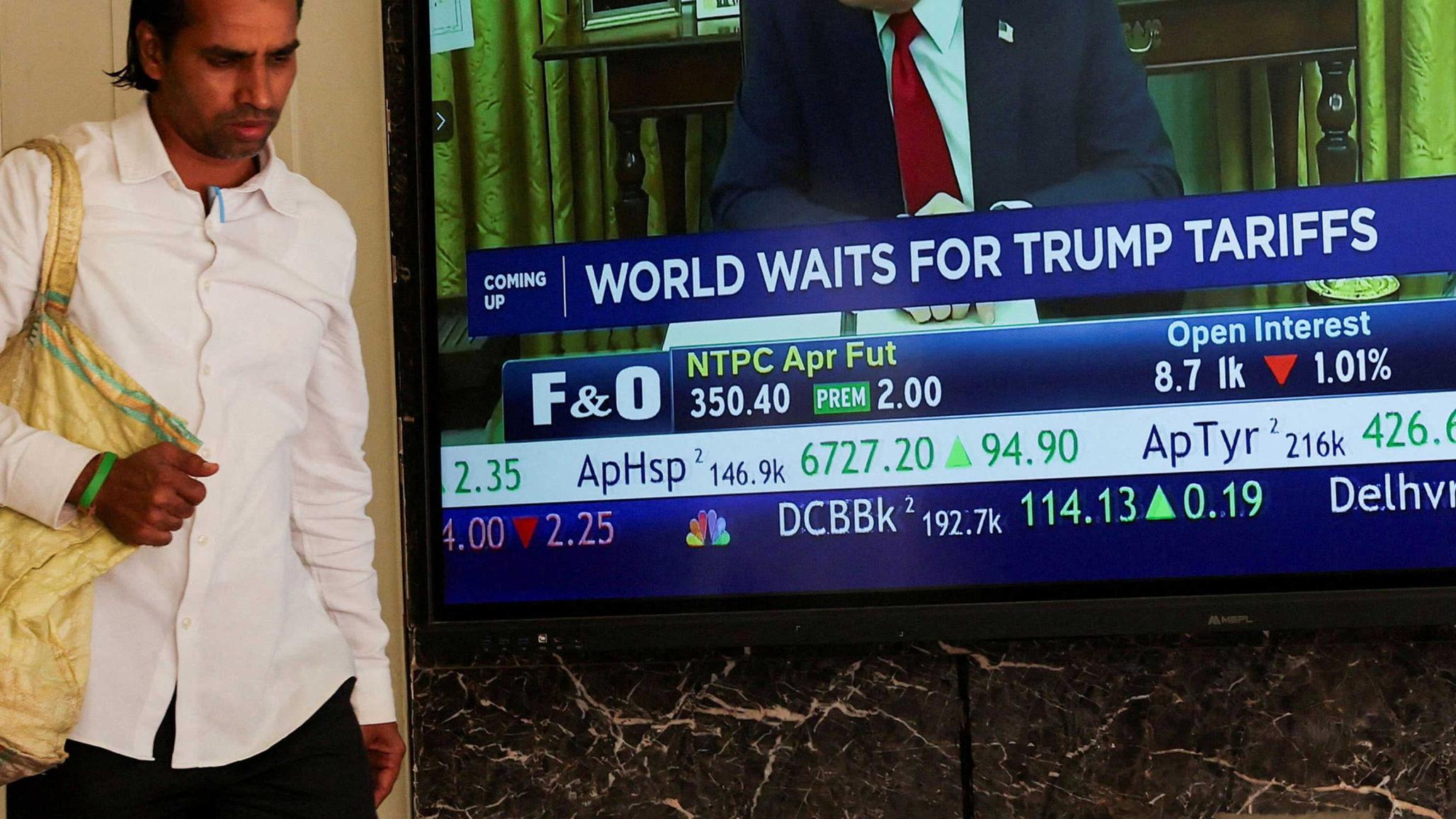
What the US tariffs will be and on which products, either in blanket fashion (President Donald Trump campaigned on having 10 or 20 percent tariffs on all but China, whose products would be tariffed at 60 percent) or by country of origin or product sector is unknown, although the contours of US intentions are becoming clearer. The US president wants a tariff base that is 10 percent or above, and on top of this some sectors are clearly targeted for much higher tariffs. These already include autos, steel, and aluminum, and the list of threatened product sectors keeps growing. Whether there will be negotiated settlements between major US trading partners is still an unknown, but the blanket tariff at 10 percent or above is part of the US negotiating position, with tighter restrictions on named product sectors as varied as semiconductors, lumber, pharmaceuticals, polysilicon, and copper. Adding to the unpredictability, Trump has threatened, and in a few cases has already obtained agreement to the imposition of, much higher across-the-board tariffs for individual countries.
Economists by and large agree that higher tariffs and their uncertainty will have economic costs, but one can only conjecture how soon and to what extent these costs in terms of inflation or availability of products will become apparent. While the tariffs the US president chooses to impose, unilaterally or by forced bilateral agreement, may significantly affect the 13 percent of world trade accounted for by the United States, the rest of the world is adjusting, not by changing the global rules, but by seeing if closer trade relationships can be forged among countries other than the United States. This is very important to the global economy in that the rest of the world accounts for some 87 percent of world trade, excluding the United States.
Major participants in world trade, including Canada and the European Union, speak in favor of diversifying their trade, exploring closer economic cooperation, and ultimately perhaps increasing international economic integration not involving the United States. Sweden and some forward-looking trade experts have suggested tentatively exploring liberalizing international trade more not less, by first forging a closer economic relationship and policy coordination between the European Union and the countries of the Comprehensive and Progressive Trans-Pacific Partnership (CPTPP). This important potential bloc of 39 countries could build on WTO rules while achieving even freer trade. At the same time, the EU is actively pursuing the acceleration and finalization of several key trade agreements, including those with Mexico, the South American trading bloc Mercosur, and the United Kingdom. The EU and Singapore recently concluded a new digital trade agreement. Additionally, the EU is initiating negotiations with the United Arab Emirates, may restart negotiations with Australia, may begin negotiations for an EU-India free trade agreement, and may accelerate trade talks with Indonesia.
In short, perhaps one large impact of US tariff policy on the rest of the world's trade policies is to expand others' efforts at trade liberalization. Under the rules of the WTO, the benefits of free trade agreements are accorded only to signatories. The United States will increasingly face trade discrimination in foreign markets unless it succeeds in pressing for a one-way zero tariff deal, as it reportedly has achieved with Vietnam and Indonesia. However, a forced quick deal with any country is unlikely to assure reliable, unimpaired market access for US goods. This should be a US concern, for example, with the announced US trade deal with Indonesia. Countries can resort to a myriad of nontariff barriers to impede imports. It is unclear that these agreements have detailed protection against the imposition of nontariff barriers.
A second impact on the trade policies of other countries is clearly going to be use of defensive measures against third countries that divert trade from the United States, resulting in increased competitive pressures from other suppliers, especially in product sectors where there have already been complaints of overcapacity. For this reason, Canada has very recently imposed import restrictions on steel products, not just from the United States as part of retaliation. The EU has heightened its monitoring to detect trade diversion. India has stated similar concerns.
None of the world's other trading nations has emulated the United States by broadly threatening to raise its own tariffs. Nor has any abandoned its support of the world trading system administered by the WTO. Leaders and trade ministers have emphasized in their public statements and official communications their support for the multilateral trading system and making improvements in it. Earlier in July, the newly appointed facilitator on WTO reform, Norwegian Ambassador Petter Ølberg, reported on a first round of consultation with WTO members, stating that "All Members affirmed strong commitment to meaningful WTO reform." (JOB/GC/445, July 4, 2025).
Absent a global recession, world trade is likely to continue to grow. The United States will continue to disrupt existing trading pattens, but most prominently its own participation in international trade. Despite the great wealth of the United States, its trading relations and trade may decline relative to what it would have been absent the chaos that has come to characterize its trade policy.
The world trading system will endure. When like-minded countries join in closer coordination of their trade policies, progress toward meeting a range of pressing challenges can re-start. These include climate change, food insecurity, pandemics, industrial and agricultural subsidies, artificial intelligence (AI), the digital economy, and even trade coercion. But all this lies in the future. The next step is for other nations to place their trade relations with each other on a firmer footing, perhaps starting first with the countries of the EU and the CPTPP. Enhanced international cooperation will clearly not stop there. For the best part of a century, the world relied on leadership from the United States to shape the rules of the world trading system. That task, at present, now falls to others.
Data Disclosure
This publication does not include a replication package.
