
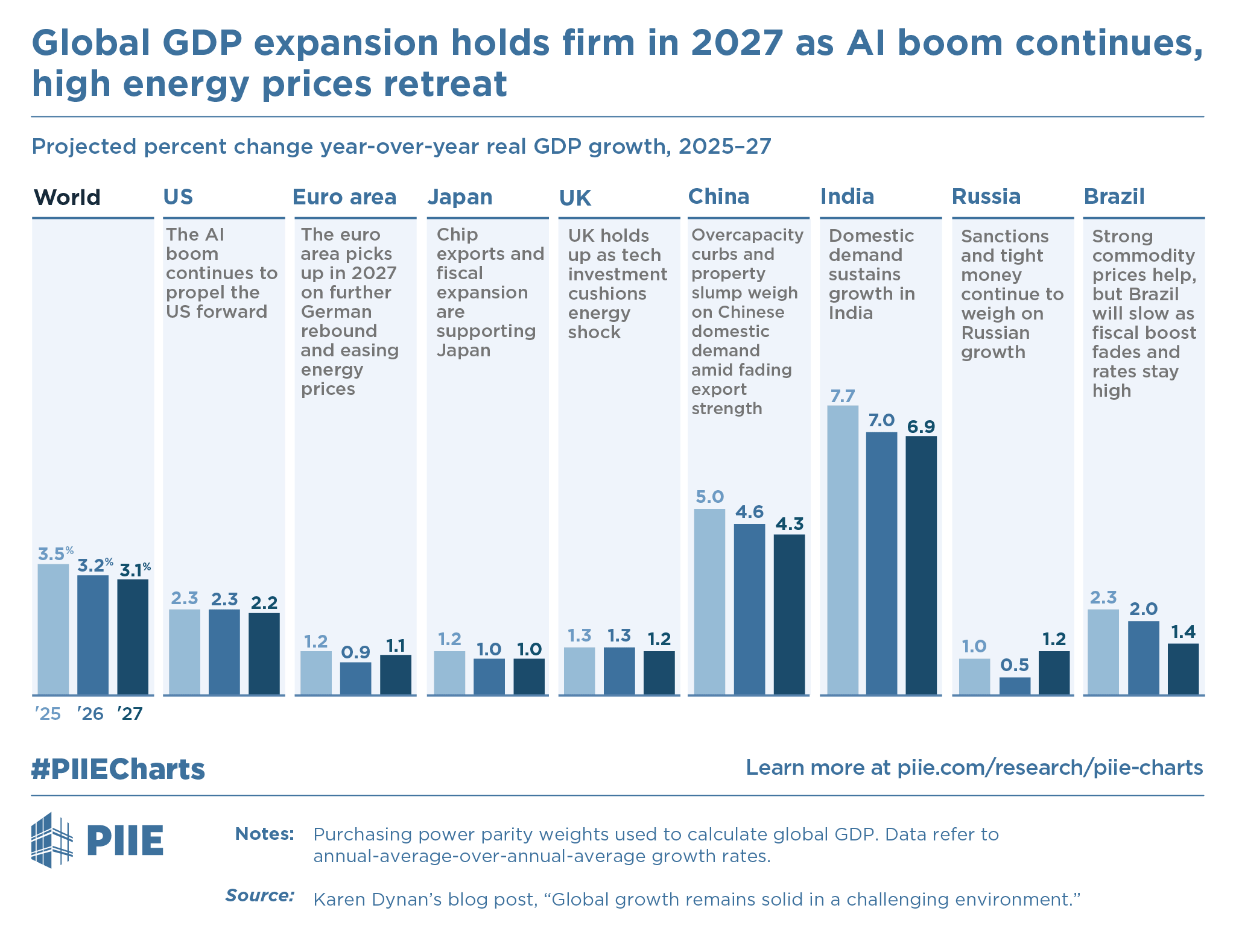
The global economy continues to expand at a solid pace despite a challenging environment, according to analysis presented at the Peterson Institute for International Economics Fall 2026 Global Economic Prospects event. Real global GDP is projected to rise 3.2 percent in 2026 and 3.1 percent in 2027. Energy prices have risen sharply due to the war in Iran, but the effects this year have been cushioned by the artificial intelligence (AI) boom and, in some countries, by fiscal support. Higher interest rates will slow economic growth next year, with the drag tempered by a gradual retreat in energy prices.
The AI boom is expected to keep supporting growth in several economies, particularly the United States, by boosting investment and stock prices. Among the other major advanced economies, the euro area's growth is expected to pick up modestly in 2027, with a further rebound in Germany. Japan is likely to continue its above-trend growth, supported by strong chip exports and fiscal expansion. Economic momentum in the United Kingdom is also holding up, as technology investment helps offset the energy shock.
The outlook for emerging-market economies is more varied. India continues to lead, with strong domestic demand sustaining growth. In contrast, Chinese domestic demand remains weak given overcapacity and an ongoing drag from the property slump, and fading strength in Chinese exports should slow the economy a bit further next year. Russia's economy remains constrained by sanctions and tight monetary policy. Brazil has benefited from strong commodity prices, but growth is likely to slow as this year's fiscal boost fades and interest rates remain high.
This PIIE Chart is adapted from Karen Dynan's blog post "Global growth remains solid in a challenging environment."
Data Disclosure
This publication does not include a replication package.
