
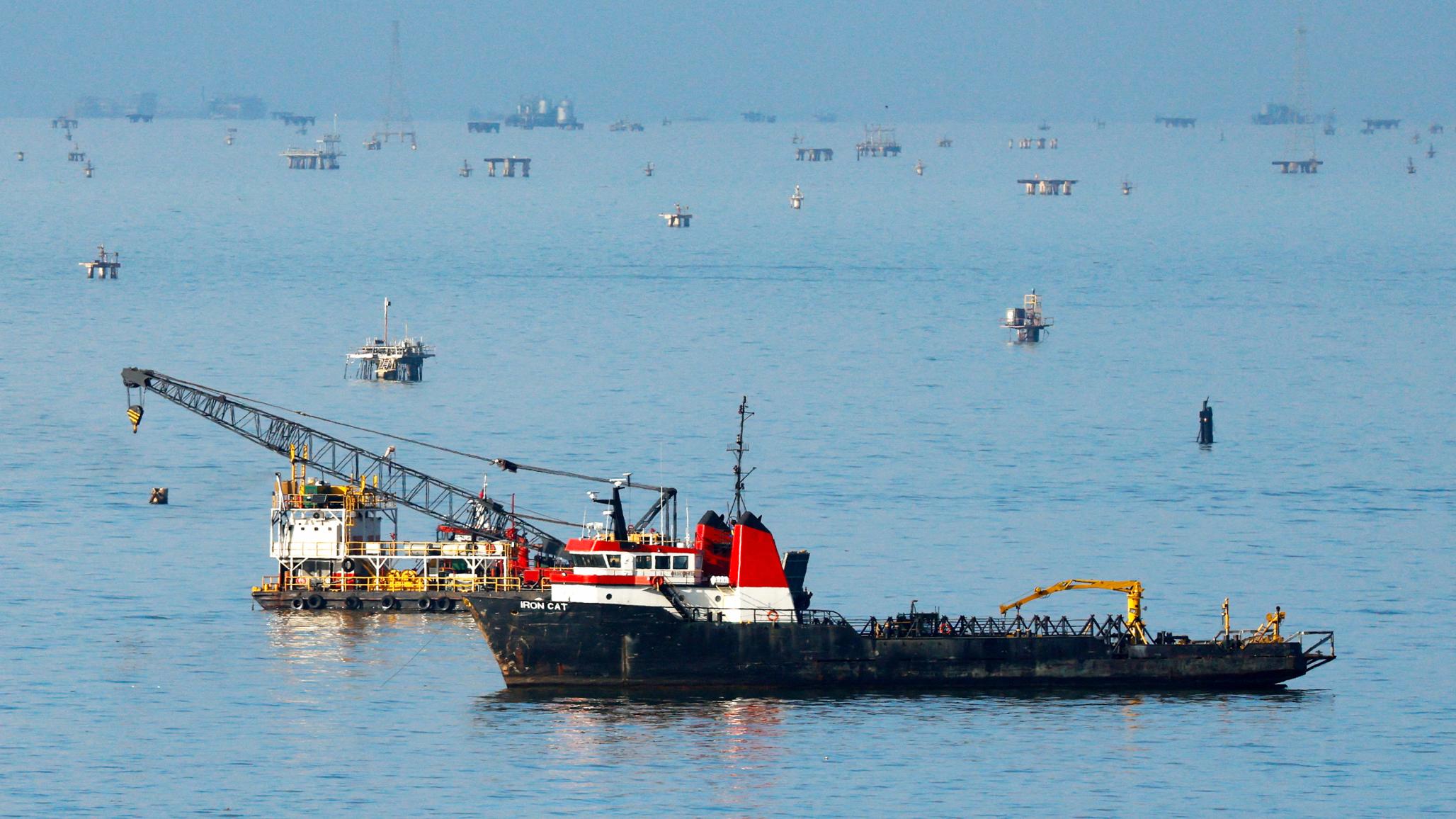
Until recently, the subject of claim priorities in sovereign debt restructuring was mostly confined to academic journals. For better or worse, creditors had acted as if they were equal—or pari passu. No more. Venezuela's creditors are poised for a global asset "grab race" that could make its debt restructuring not only the biggest but also the messiest in history. The defining question is their place in queue: Who gets the marginal dollar from each additional barrel of recovering oil production? Legacy bondholders? Arbitration decision winners? Banks, bilateral lenders, new investors? Or the Venezuelan public?
The answer is anyone's guess. It depends on the claim terms, the creditors who hold them, and the tribunals resolving the inevitable disputes. Much of this information remains a mystery, with no obvious path into the light. Corporate restructurings offer a useful contrast: If an oil company filed for bankruptcy protection, a full map of its liabilities and the assets available to meet them would soon emerge under court supervision.
Sovereign debt has no mechanism for bringing all claims into the light and dealing with them in one consolidated proceeding. The International Monetary Fund (IMF), for all its flaws, has served as a central information hub and offered a semblance of a restructuring framework since the 1980s. Without it, cataloguing claims against Venezuela's government and its various agencies and parastatals is a tall order. Iraq's debt restructuring in 2003 is often cited as precedent, but the context was rather different. The IMF was involved, and the UN Security Council and major financial jurisdictions shielded Iraq's oil revenues, with an independent auditor to keep track of financial flows. No such framework exists in Venezuela. The United States has sought to supply an alternative centralized mechanism; Its elements are still emerging.
On the bright side, most of the information gaps in Venezuela's case belong to the category of known unknowns. Finding an orderly way to manage them can point the way forward for debtors, creditors, and the international community. Getting it wrong will have harmful consequences far beyond Venezuela.
Here is what we know we don't know.
The full list of claims and the creditors
Researchers for the #PublicDebtIsPublic initiative have assembled the most comprehensive public record of the claims against Venezuela from dozens of repositories, registries, and court dockets. These span arbitration awards, court judgments, bonds, bilateral and multilateral loans, and a jumble of guaranteed, collateralized, and quasi-collateralized arrangements. More than US$20 billion in International Centre for Settlement of Investment Disputes (ICSID) awards remain outstanding, including US$8.7 billion for ConocoPhillips, the largest in ICSID history. Claims registered in Delaware alone exceed US$19 billion. Unsecured bondholders hold roughly US$60 billion in face value, alongside roughly US$2 billion in 2020 secured bonds issued by Venezuelan stated-owned oil company Petróleos de Venezuela, S.A. (PDVSA). China is owed at least US$18 billion, Russia US$4 billion, and multilateral lenders, led by the Development Bank of Latin America and the Caribbean (CAF) and the Inter-American Development Bank, US$4 billion. Unpaid and penalty interest could yield a multiple of these numbers.
Creditors do not map neatly onto claims. Over Venezuela's decade in default and under sanctions, many have traded, syndicated, hedged, and secured their exposures. A ticket to the restructuring need not reflect the holder's economic interest in the outcome. Moreover, some creditors will not be at the table even as they hold enforceable claims: Some cannot participate, others may choose not to, and those with direct access to Venezuela's revenues may not need to.
Restructuring perimeters and priorities
Venezuela's restructuring perimeter has yet to be disclosed, but there is already talk of maneuvering around its edges. Some creditors that can get paid directly from export revenues could try to stay outside the restructuring perimeter, leaving those inside to subsidize their exit. Others could try to leverage uncertainty around international recognition to introduce frictions in the restructuring process, building on past legal challenges to Venezuelan government authority.
The IMF has warned, most recently a year ago, that sovereign debt with opaque collateral features undermined trust and inter-creditor equity, delayed crisis resolution, and put sustainable outcomes at risk. Venezuela risks becoming a case study. Its debt to one large state-owned bank is paid out of oil proceeds that flow directly into an account at the bank, with setoff rights. The state-owned oil giant PDVSA has meanwhile converted unpaid bills to service providers into notes with ambiguous seniority.
Creditors have always jockeyed for priority and kept an eye on the exits when a sovereign sinks into distress. A rickety old international coordination architecture kept such efforts to the margins but often failed to achieve durable debt relief. Now more creditors come armed with creative new tools to get paid first, with contract terms and legal rules behind them cloaked in secrecy.
The creativity signals that debtors and creditors are losing faith in legacy architecture and could propel a self-fulfilling prophecy. As hidden claims accumulate, restructuring legitimacy and finality get harder to attain.
Parallel tracks and layered deals
Venezuela launched its restructuring in May without the IMF, relying on a stock estimate and debt sustainability analysis that is yet to be published or independently verified.
Without the IMF's machinery or a credible substitute, bondholders negotiate on one track, bilateral lenders on another, investors on a third, with no central reference frame, not even one to argue against while the courts distribute assets and proceeds across jurisdictions.
At least in theory, a US executive order issued on January 9, 2026, supplies a centralizing framework of sorts: It shields the proceeds of Venezuela's natural resource exports from the US judicial process and limits pathways for debt enforcement. As sanction carveouts expand, more revenues may flow into special accounts established under the January 9 executive order, but tracking these transactions is a challenge. Meanwhile, the August 31 US-Venezuela oil agreement layers a new set of transactions on an already complex and opaque debt stock. Most of the new fields in the agreement had been controlled by Russian and Chinese firms. Which tribunals might resolve the competing claims to oil and oil revenues, under what rules, and to what end, is another question for the not-so-distant future.
A test for international debt architecture?
Tracking the full list of claims against a sovereign is a challenge increasingly common in a sovereign debt ecosystem defined by extreme creditor diversity, resource competition, and a fraying coordination architecture. Hidden debt scandals have become a regular feature of sovereign restructuring, but opacity does not arrive with restructuring. It starts with public debt disclosure practice long before loans are made and side deals are struck. By the time creditors reach the restructuring table, forensic accounting and priority contests cause delays and deadweight losses that harm everyone—here, none more than the Venezuelan citizens, who bear the costs of untangling murky deals signed in their name.
Transparency is a rare point of multilateral consensus. The G7 and the G20 have endorsed debt transparency in communiques for more than a decade. Venezuela shows why acting on this consensus is essential—and urgent.
Robust transparency is indispensable when resources cannot grow without large-scale investment, the claim queue keeps lengthening, and trust is in short supply. More information seeps into the public domain day by day. A durable settlement in Venezuela will need to have broad-based buy-in and rest on published, verifiable data on the claims against it, the claim terms, the creditors who hold them, and the resources available to meet them. Getting it right in Venezuela could give international debt architecture reform a fighting chance.
Data Disclosure
This publication does not include a replication package.

The authors are grateful to Adnan Mazarei, Alejandro Werner, and Ángel Ubide for comments on an earlier version of this post.