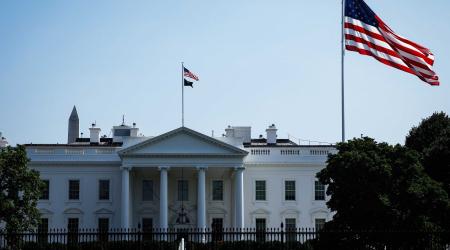
The economically troubled and politically volatile countries of Latin America have long complained about a lack of attention from their neighboring colossus to the north. President Donald Trump’s 2025 National Security Strategy (NSS) document, singling out the region for his new tough-guy approach, may give some of them second thoughts about the advantages of being ignored.
Overlooked in the publicity over the US national security strategy, however, is that China has also issued its own strategic vision for the region, published at the end of 2025. The US and Chinese approaches have striking similarities and even more striking differences.
Ironically, the Chinese document is more reminiscent of past US regional foreign policy approaches, full of talk about mutually beneficial partnerships favored by several former administrations. Unlike the United States, China is not defining the Western Hemisphere as its rightful sphere of domination as first enunciated in the Monroe Doctrine of two centuries ago. But no doubt for China and the United States, economic influence is paramount.
In economic terms, both countries are pursuing the same goals while directing much needed foreign direct investment to Latin America. In political and geopolitical terms, the United States and China differ only in the way economic coercion is presented—overtly or covertly—effectively placing Latin America between the devil and the deep blue sea.
Interestingly, China’s third policy paper on Latin America and the Caribbean echoes the US legacies of the 20th century, namely President Franklin D. Roosevelt’s (FDR) Good Neighbor Policy (1933–45) and President John F. Kennedy’s (JFK) Alliance for Progress (1961–69), while the “Trump Corollary” contained in the NSS reverts to the “big stick” diplomacy of President Theodore Roosevelt (TR) and the “Roosevelt Corollary” of 1904: “In the Western Hemisphere the adherence of the United States to the Monroe Doctrine may force the United States (…) to the exercise of an international police power.” In the current context, the “exercise of an international police power” by the United States aims primarily at pushing China out of the region, to the potential detriment of countries that have come to rely on Chinese investments over the past few decades.
During the 20th century, US policies towards Latin America pivoted from TR’s aggressive “Big Stick” approach in the early 1900s to a rhetorically less interventionist perspective aimed at restoring US–Latin America relations, guiding it away from Soviet influence. Enter China in the 2020s.
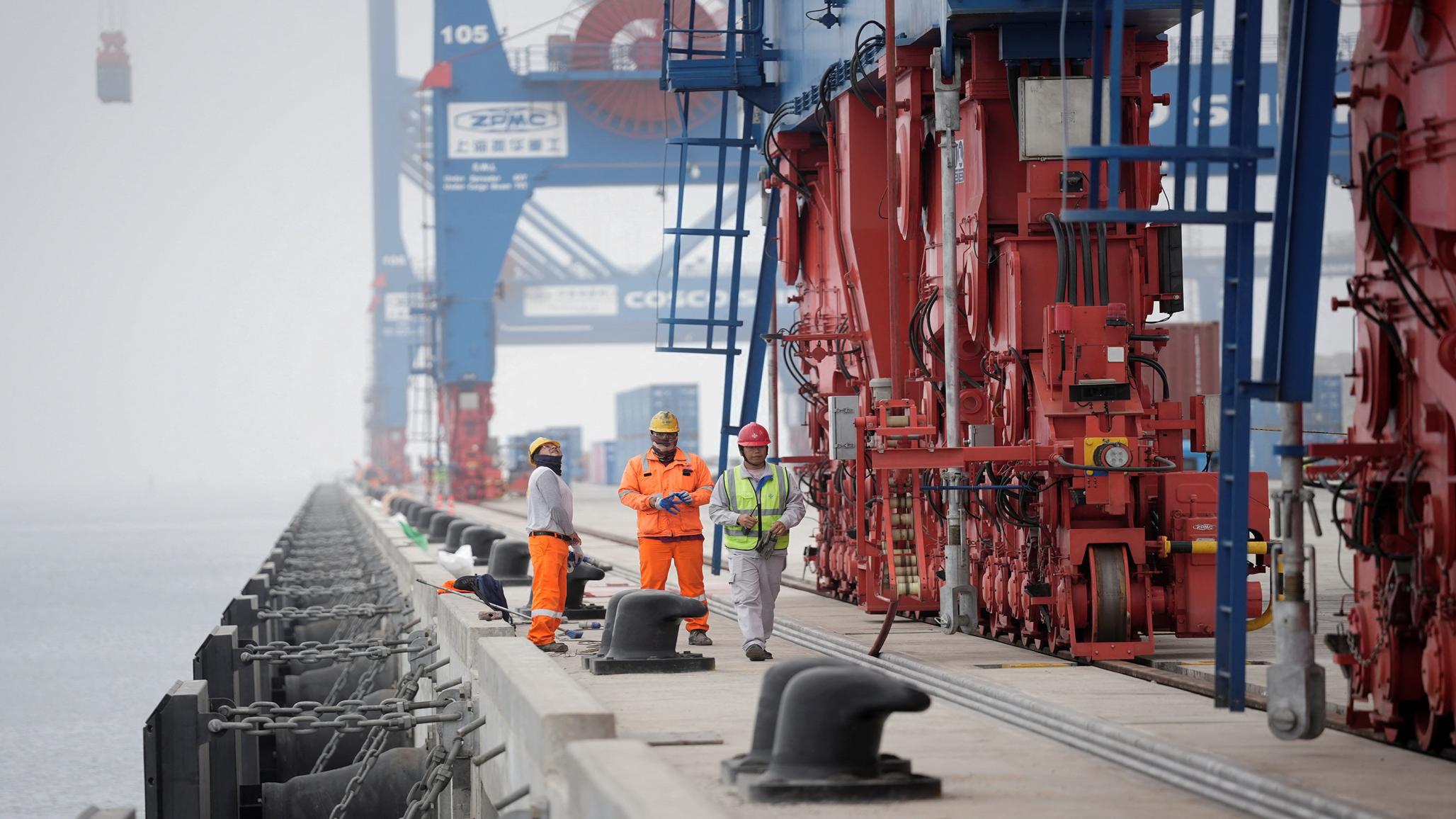
Much like FDR’s Good Neighbor Policy and JFK’s Alliance for Progress, China’s policy intentions in the region, framed in the 2025 Policy Paper, emphasizes partnerships with mutual benefits for China and its regional counterparts by prioritizing large infrastructure projects. The Chinese approach favors economic cooperation across renewable energy, natural resources, and infrastructure development. Notable projects include a $1.3 billion investment in Peru’s Port of Chancay, partly owned and operated by the Chinese shipping company Cosco, as well as commitments totaling $1.9 billion for Bolivian lithium.
As its document states, “China stands ready to expand and deepen China-Latin America cooperation on energy development and utilization across the whole industrial chain…and enhance green development and utilization of mineral resources at various stages.”
By contrast, the US 2025 NSS focuses on strategic national security objectives to entrench US preeminence in the region. In asserting the “Trump Corollary” to the 19th-century Monroe Doctrine, the United States frames the region as a sphere to secure for US economic and national security interests, explicitly denying perceived rivals (namely China) the right to pursue their own goals in Latin America.
Of special concern to the United States are critical mineral supply chains, a sector where Chinese investments have become prominent. Instruments and policy tools include sanctions (as seen recently in Brazil) and diplomatic leverage (as seen in pushing a Chinese firm out of the Panama Canal), as well as security cooperation (i.e., allowing US military vessels in the Caribbean) and investment screening to curb or eliminate Chinese and Russian influence. To make that clear, the NSS emphasizes that “the terms of our alliances, and the terms upon which we provide any kind of aid, must be contingent on winding down adversarial outside influence.”
Theodore Roosevelt famously described his approach as “speak softly but carry a big stick.” He had no trouble backing diplomacy with military threats, blocking European interventions in Hemispheric affairs. TR backed Panama’s independence from Colombia in 1903 to secure rights for the Panama Canal and intervened militarily in Cuba, the Dominican Republic, Nicaragua, Honduras, Haiti, and Venezuela.
Roosevelt’s successor, President William Howard Taft, embraced a different emphasis with his stated “Dollar Diplomacy” in 1909, adding US economic power in the form of investment flows, loans, and commercial ties to secure US interests and stabilize friendly governments.
The “Trump Corollary” of 2025 brings renewed focus on military threats and action, epitomized by the capture of Venezuela's President Nicolás Maduro, boat bombings in the Caribbean, and the effective blockade of Cuba.
China, on the other hand, has not threatened Latin America with military action. Its reliance on direct state-led finance to individual countries, mobilizing public policy banks and state-owned companies to invest in sectors of mutual interest, lays out a different path toward influence, emphasizing respect for the sovereignty of other nations and a policy of noninterference in regional and domestic affairs. It further focuses on “accelerated development,” targeting renewable energy, infrastructure, and what it calls “on development and utilization across the whole industrial chain,” expanding cooperation in oil, gas, clean energy, and “green development and utilization of mineral resources.”
All this high-minded goal identification should not disguise the fact that China has been aggressive in establishing a toehold in Latin America, prompting concern about Chinese influence in the region. The most notable example of local concern has been accusations of bribery and influence peddling by Chinese companies to secure large infrastructure, energy, mining, and telecom projects, and to attain favorable regulatory or judicial outcomes in Peru. Peru’s so-called “Chifa-gate” scandal led to the ouster of President José Jerí in February.
To be sure, while China’s framing of its relationship with Latin America avoids overt notions of coercion and direct intervention, its strategy will inevitably expand its leverage and influence as a counterweight to Washington. Latin America may well benefit from this US-Chinese competition, and some countries looking for alternatives in Europe led to the EU-Mercosur trade deal last year. But the risks of Latin America getting caught in a US-China vise are not insignificant.
Data Disclosure
This publication does not include a replication package.