
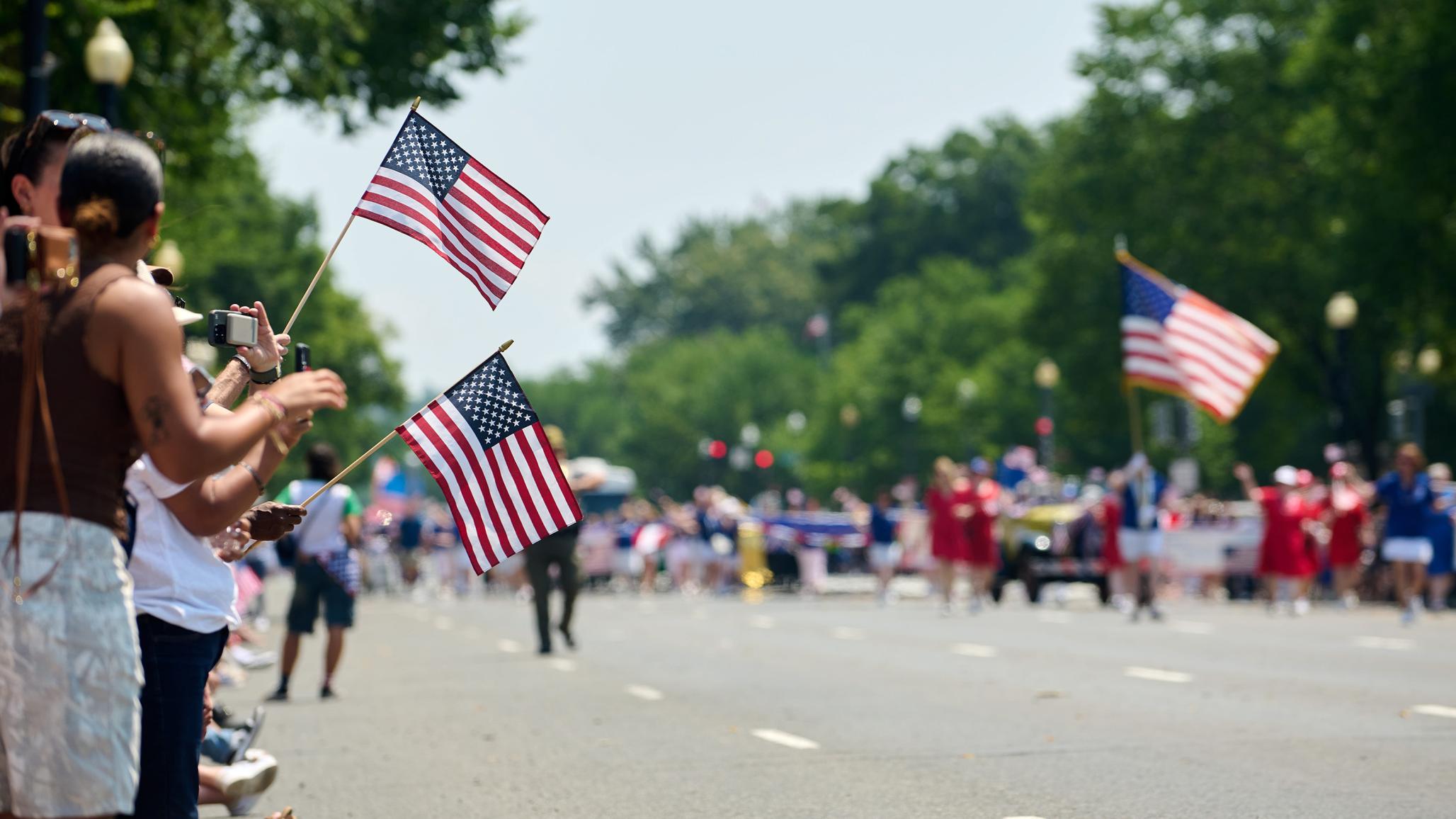
A nation requires a shared narrative. It binds its citizens together by giving them a common understanding of their past and a sense of collective identity. For some countries, national identity is rooted in bloodlines; for most, it is found in shared history. In the case of the United States, national identity rests above all on founding ideals.
The American experiment began with the vision of the Founding Fathers, embodied in two seminal documents: the Declaration of Independence and the Constitution. The national narrative continued over the ensuing centuries through deeds remembered with justifiable pride. Among them was the landing of Allied troops on the beaches of Normandy on D-Day, undertaken to liberate Europe from tyranny. A very small number of those participants remain alive today.
Another chapter in this story was America's role as the "arsenal of democracy" during World War II. Through the Lend-Lease Act, the United States provisioned the United Kingdom during its darkest hour, when Britain stood virtually alone against Nazi Germany. Of Lend-Lease, the British prime minister Winston Churchill observed that it "must be regarded without question as the most unsordid act in the whole of recorded history."
A largely unsung chapter in the American narrative is the founding of the world trading system, an achievement of immense consequence for global prosperity and peace. Today, this accomplishment has too often been forgotten—or even repudiated—by American trade policymakers who no longer value or celebrate this part of their national inheritance. The creation of the world trading system was a cornerstone of the liberal international order that the United States constructed in the latter half of the 1940s. It is a remarkable story, worthy of a place of honor in our school history books. It is central to the nation's well-being, both for its economic benefits and its undergirding of the alliances vital to the country's security.
The creation of the modern multilateral trading system resulted from a unique convergence of historical circumstances. A new internationalism emerged in the United States and Western Europe, largely in reaction to the horrors and devastation wrought by two world wars and the global economic depression that separated them. World War II alone claimed between 70 million and 85 million lives; displaced tens of millions of people; and destroyed cities, industries, and infrastructure on a scale measured in trillions of dollars in current value.
Lasting peace, together with global and national economic expansion, came to be seen as requiring a rules-based international system that was more open and less discriminatory. The United States would not retreat from the world; rather, it would engage with it—and lead it.
In 1948, campaigning for election to the presidency in his own right, Harry Truman told American farmers that their production was central to US foreign policy. By exporting food to Europe, American agriculture would help strengthen societies threatened by the spread of communism and guard against any resurgence of fascism, either of which could once again cast a dark shadow over Europe and Asia.
The United States occupied an unparalleled position in the aftermath of World War II. Much of Europe and Asia lay devastated. America accounted for roughly half of the world's manufacturing capacity in 1946 and an estimated 40 percent of the world's GDP. This unique moment in history made possible something entirely new: the creation of durable international institutions to foster economic cooperation. With its wartime allies, the United States established the multilateral trading system in 1948 through the General Agreement on Tariffs and Trade (GATT), the predecessor to today's World Trade Organization (WTO). The United States and its allies wrote the rules. Their efforts were motivated not only by idealism, though there was a healthy measure of that, but also by enlightened self-interest. Greater international economic cooperation, lower trade barriers, and expanding trade were expected to promote reconstruction, development, and peace—and they largely did. The benefits accrued both at home and abroad.
The postwar trading system was not an accident but a creation contingent on American leadership under extraordinary circumstances. The United States acted as a largely benevolent hegemon. It could have dictated far more self-serving terms. History offered many imperial models: Britain, Spain, Portugal, France, Germany, and the Netherlands had, at various times, imposed asymmetric arrangements on colonies for the benefit of the metropole. Instead, the postwar order was built on principles of reciprocity, nondiscrimination, and rules.
The system functioned remarkably well through the end of the 20th century. World trade expanded dramatically; by volume it has expanded by 45 times since the beginning of the last century. During the 20th century, tariffs were bound and generally reduced, nontariff barriers became subject to discipline, and even trade-distorting agricultural policies increasingly fell within an agreed framework of rules. In the 21st century, however, the system has begun to lose momentum, achieving less through cooperation than it had in its formative decades.
It is too often said by those who make trade policy that the postwar trading order is over. They are mistaken. It is true that the United States has declared itself free of international obligations with respect to the level and direction of its tariffs. Global imbalances remain a serious concern, and Chinese trade practices are widely criticized. As this is being written, headlines in the Japanese press report that China has curtailed exports of critical minerals to Japan. Given that China and the United States are the world's two largest trading nations, it is entirely appropriate to question the soundness of the system, particularly as meaningful new disciplines have too rarely been achieved in this century. Yet the system still governs most of world trade and continues to be observed by nearly all WTO members. No other country has fully emulated either the United States' retreat from tariff commitments or China's state-directed economic model.
What, then, is the outlook? The world trading system that the United States was instrumental in creating has proved remarkably durable. Despite current US trade policy, most-favored-nation treatment—a cornerstone of the Franklin Roosevelt administration's trade policy—remains the default rule governing tariffs, except where countries grant more favorable treatment through free trade agreements. In the absence of leadership from either the United States or China, middle powers and the European Union—still behaving in many respects like a middle power in trade diplomacy—continue to uphold a system that the United States helped create.
The United States at 250 behaves very differently in global trade from the way that it did when it was at its Bicentennial in 1976 when Gerald Ford was president. History moves in cycles. A unique convergence of circumstances in the late 1940s allowed the United States to lead: It acted in accordance with some of its finest instincts, while facing no effective rival. The Soviet Union had largely absented itself from the construction of the postwar economic order, and America's wartime allies, however they felt, lacked the capacity to challenge US designs. With America's leadership, the world trading system progressed through eight major rounds of trade negotiations of liberalization and rulemaking that included the founding of the WTO in 1995.
US officials promote a trade policy that is very different today. The restoration of US tariff levels last applied since before World War II is seen by them as a positive development and overdue. The economic harm due to higher and unpredictable levels of US tariffs is discounted. At home and abroad there is dismay. Independent analysis shows that the costs of the tariffs are largely borne by the US consumer, and public sentiment indicates that this is well understood by a majority of Americans.
There is little reason to believe that the rest of the world will abandon a system that has served the world so well for eight decades, including especially the United States and China. Neither country has at present a different approach to international economic relations to offer its trading partners that others could find attractive or beneficial. The sound rationale for a fair rules-based and generally open system will become apparent to all. Coerced agreements regarded by others as humiliating will not prove durable. History suggests that unequal treaties create long-lived grievances, whatever short-term advantages they confer on the stronger party.
There is no superior alternative to the principles that America, at its postwar peak, helped establish: most-favored-nation treatment, binding commitments, and national treatment. Abandoning them would mean a trading system based on power rather than rules and a world of unending uncertainty.
Data Disclosure
This publication does not include a replication package.
