The US government has recently enacted the largest shift in immigration policy since 1924. As officials restrict unauthorized immigration, they face a stark choice: create offsetting lawful channels for immigrants or shut the door to lawful immigrants as well.
So far, Trump administration officials have chosen maximalist restrictions on lawful immigration. They have cut, penalized, or suspended lawful admissions of refugees, students, high-skill workers, and self-sponsored workers. They have barred most or all visas for 39 countries. They have cut authorized immigration by more than unauthorized immigration.
Yet Americans' economic demand for immigrant labor remains strong, particularly in key sectors like construction, care work, and food production. Lawful immigrant workers thus increase the supply of key services, sparking economic growth and reducing inflation.
That observation raises a question the government rarely answers: If the US opens more lawful immigration channels for such low-skill labor, what happens to Americans who already hold jobs in the same industries?
We can offer an unusually clean answer: More Americans gain jobs. We know this because the US government has, in effect, been running a massive randomized experiment for several years, a random lottery to pick which firms can hire workers using the largest US visa for nonfarm, low-skill labor. In a new paper, we use data generated by that lottery to measure the effects of immigrant hires on US workers at the same firms. We find that at the margin, firms that can hire low-skill immigrant workers through this lottery expand their operations, including their employment of Americans. Conversely, restricting foreign labor in low-skill jobs shrinks the firms that use it without protecting the workers already there.
A lottery for the right to hire
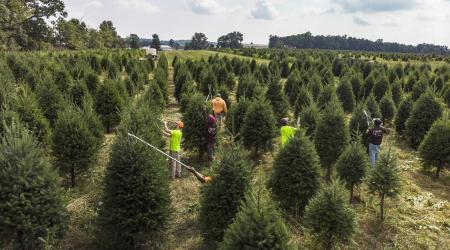
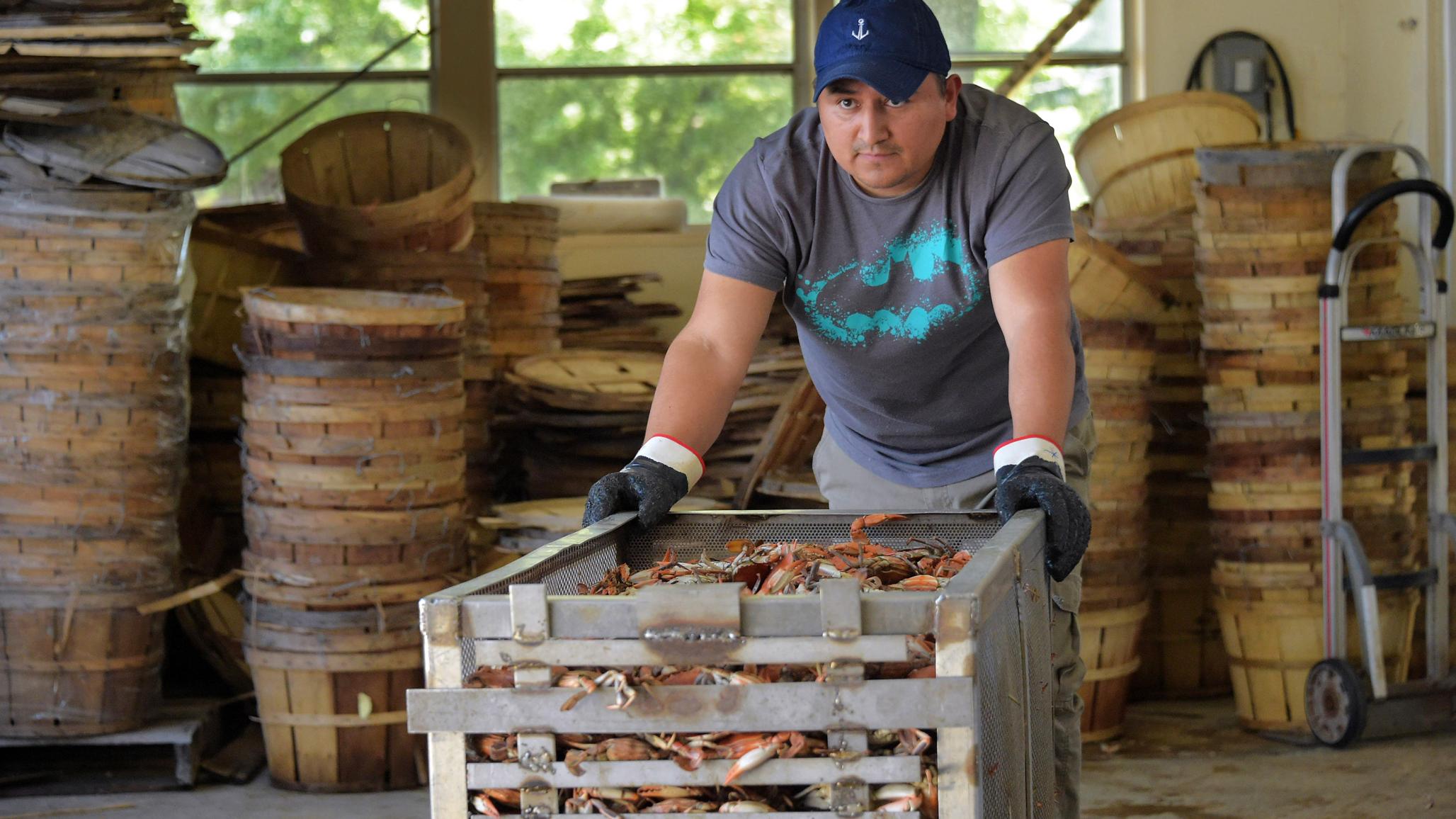
Most foreign workers who come lawfully to do manual, nonfarm jobs in America arrive on the H-2B visa. Key users include landscaping crews, hotels, seafood processors, carnivals, and forestry contractors. The visa legalizes a multibillion dollar annual industry in US imports of fundamental services.
Demand for the visa runs well above the annual quota set by Congress. So, the Department of Labor distributes the scarce slots the way a stadium handles oversubscribed tickets: by lottery. Some firms that apply are randomly authorized to hire the foreign workers they request, while otherwise similar firms are randomly turned away.
That presents a rare opportunity to isolate the pure effects of foreign workers. In most immigration research, the analyst makes numerous assumptions to reconstruct what would have happened to a firm had the immigrants never arrived. Here there is little to reconstruct. We surveyed 472 firms, winners and losers of the 2021 and 2022 lotteries. We had irreversibly posted our analysis methods online before we collected the data, so the findings could not be bent to fit preconceptions. Losing the lottery cut a firm's employment of foreign labor by roughly half. Did that open up jobs for US workers?
Immigrant labor is a factor of production: Thinking about bananas and pasta
Think for a minute about what basic economics suggests. The common worry that immigrants displace US labor for low-skill work rests on a specific mental picture of how the labor market works. And that picture is incomplete.
But it's not the simplistic slogan that "Americans won't do these jobs." There are always some Americans willing to do almost any job in the country. What's missing is the role that both native and immigrant labor play as factors of production, the economic activity that creates jobs for both. So, hiring an immigrant sets off two effects that pull in opposite directions.
Call the simple picture the banana model. When fewer sellers can supply bananas to an outdoor market, that means higher prices and more sales for the rest of the shops. Simple economics. If immigrants in an economic sense were just more people selling labor, by the same logic they must displace native workers sooner or later.
But what if native and immigrant labor are two key factors of production, like ingredients in a recipe? Call it the pasta model. Suppose you had planned to make pasta but discover you have less tomato sauce in the fridge than you thought. You can choose: change the recipe to use less sauce per cup (and more noodles), or scale back production with the same recipe (and less noodles). Chances are you would do some of both, so your "demand" for noodles could rise or fall.
Similarly, restricting one key factor of production (immigrant labor) can either reduce or raise firms' demand for another key factor of production (native labor). The first is a substitution effect, the second a scale effect. The answer from "basic economics" can go either way. In the pasta model, the response to restrictions on one factor of production is a mix of substitution and scale effects.
Both effects are always present. Which one wins is not a matter of opinion but an economic fact we can observe, a fact that can differ greatly for different kinds of immigration at different times. It turns on the degree to which natives and immigrants specialize in different tasks that complement each other, like cooking and serving, or construction and architecture. The H-2B lottery lets us reliably measure whether "scale" or "substitution" is the dominant force, in a crucial setting: the largest single visa for fundamental nonfarm work.
What the lottery showed
The scale effect won, by a wide margin. Firms randomly allowed to hire H-2B workers produced more, with revenue rising 12 to 14 percent. They saw higher growth in profits and reinvested more of those profits to grow the business. That fact is inconsistent with additional foreign workers just pushing out natives doing the same tasks. The two kinds of workers play complementary roles, like sauce and noodles making the pasta dish.
The consequence for American workers is the headline. Across all firms, randomly getting the chance to hire foreign workers did not reduce US hiring. If anything, US employment rose, particularly in rural areas where employers had the fewest alternatives.
The figure above shows the two competing effects that we could quantify with this experiment. Take a 10 percent increase in a firm's H-2B hiring. The substitution channel, the banana-stand logic in which each immigrant worker edges out a native one, would on its own trim the firm's low-skill US employment by about 0.6 percent, if the firms had not expanded operations to utilize the additional workers.
But hiring those workers did let businesses expand, and that scale channel pulls US employment up by about 1.4 percent. The scale effect is more than twice the substitution effect, so the net change in US jobs is positive, about 0.9 percent. In terms of the recipe: more noodles, not less.
How can these results be so positive, in contrast to the long-standing image of harm? Because immigrants and natives specialize somewhat. They do not do exactly the same tasks that fuel a business. A restaurant might depend on an immigrant delivery worker and a native accountant. A hotel might rely on an immigrant cleaner and a native concierge. A construction site might run on immigrants pouring concrete and natives installing plumbing. Not always, but often enough.
A skeptic might ask whether the 472 firms we surveyed are representative. But the pattern is not theirs alone. Working from the full universe of H-2B employers' administrative data, a research team led by Catalina Amuedo-Dorantes has reached broadly the same conclusion: Restricting low-wage foreign labor shrinks the firms that use it without protecting the workers already there.
Our results suggest important opportunities for increasing US economic growth and native job creation by expanding lawful channels for immigration. Without that critical step, the US government's current sharp turn toward immigrant exclusion will become a macroeconomic drag. Immigrant removals and militarized raids are already depressing US job creation in industries where immigrants fill key roles. The US government has many other tools at its disposal to replace unpopular chaos with lawful, orderly, and even more economically beneficial immigration. It has not yet begun to use them.
Data Disclosure
This publication does not include a replication package.