
In a clear rejection of being subject to the dictates of major powers, Canadian prime minister Mark Carney articulated a vision at the World Economic Forum annual meeting in Davos that was a call to action for middle-sized economies: “[I]ntermediate powers like Canada, are not powerless. They have the capacity to build a new order that encompasses our values....”What is the evidence that Carney is right?
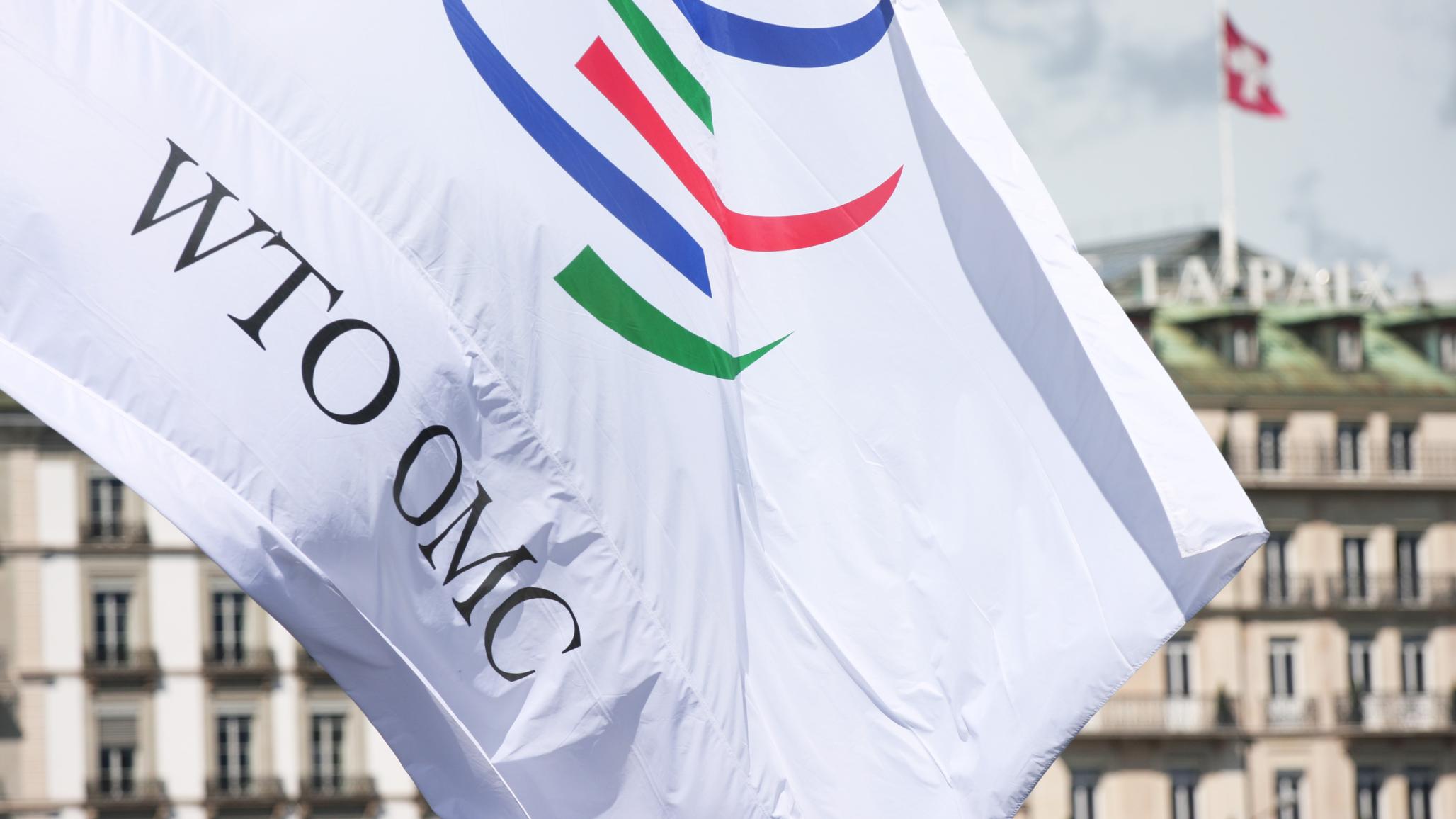
Carney’s stirring rhetoric points to the fact that countries have agency. All countries, to the extent they trade, have a stake in shaping the international order. It is understandable that the Canadian prime minister pointed to the middle powers forging paths forward, but history shows that the list of countries acting to promote positive change for the world trading system is not confined to a list defined by their shares in world trade. One of the most active countries in shaping the World Trade Organization (WTO) rulebook is New Zealand, and it is not on the middle powers list defined by share of world trade, as it stands at 0.2 percent.[1] The strength of the WTO is that the voice of every country can be heard and be effective if its message is compelling. The WTO is the only place where the common good, on a global scale, can be addressed by any member with the ideas and drive to do so.
Middle powers have a clear track record in bringing trade agreements to fruition
The record is clear on which countries have acted to improve the trading system. Canada in fact was the first to propose a global trade institution that became the WTO. The leaders in the plurilateral negotiations at the WTO for rules for e-commerce are Singapore, Australia, and Japan. Chile and Korea led the talks that resulted in the Investment Facilitation for Investment Agreement. Costa Rica, Australia, the European Union, Canada, Japan, Singapore, and Uruguay were instrumental in achieving the Joint Initiative on Services Domestic Regulation. Saudi Arabia, when it held the presidency of the Group of 20, launched a Riyadh Initiative to identify the values countries held in common that they felt the WTO embodied.
It was a mix of variously sized economies that energized WTO members to collectively build the world order for trade. Moreover, an exclusive lens for looking for leadership of great and “mid-sized” countries would also exclude broad swaths of WTO members, those from the Caribbean, much of Africa and Latin America, Central Asia, and the Middle East.
Size is not the primary criterion for leadership in the WTO, where each member has one vote, but no votes are ever taken. If there is ever to be an agreement to curb the dumping of plastic waste in the ocean, it will come from the partnership of Fiji and China, neither of which is a middle power (one is literally the “middle kingdom” in Chinese). In the WTO it was a representative of Guatemala who carried forward the practical work on improving dispute settlement, and it was the representative of Uruguay who led the negotiations for the Joint Initiative on Services Domestic Regulation. New Zealand has led the effort for regulating fossil fuel subsidies. The fish subsidies negotiations have been chaired by the representatives of New Zealand, Colombia, and Iceland, with an important role played by those countries stressing the importance of the environment, as well as small Pacific island states.
Such activism is not confined to middle powers, as the successful negotiation of significant international trade agreements outside the WTO demonstrates. The Comprehensive and Progressive Trans-Pacific Partnership (CPTPP) began as the P3 (P standing for Pacific), and then P4, Singapore, New Zealand, and Chile began, and then added Brunei. The United States joined with the objective of making the agreement a comprehensive free trade agreement but was unable to win approval by Congress. Ultimately the partnership included Japan, which saw the agreement through to its adoption by 11 members who then added the United Kingdom.
Likewise, a single subject agreement negotiated outside the WTO, the Digital Economy Partnership Agreement (DEPA), was originally formed byChile New Zealand and Singapore, and joined by Korea in 2024, with a growing list of applicants: Canada, China, Costa Rica, Peru, the United Arab Emirates (UAE), El Salvador, Ukraine, Thailand, and Uruguay.
The EU could exercise a key role in crafting a new trade order
Positive leadership is needed from Europe as well. In geopolitical terms, the European Union is a middle power. Whether it will take more than a middle power role in the WTO and in global trade relations in the shaping of the international trading system remains to be seen. In quantitative trade terms, the European Union is among the great powers. The EU share of world trade in goods and services is estimated to be around 15.8 percent, above that of the United States (13.6 percent) and China (13.4 percent). The European Union has led the process of constructing an alternative appellate panel for the WTO dispute settlement system, the Multi-Party Interim Appeal Arrangement (MPIA), which at present includes as participants countries accounting for 60 percent of world trade. The European Union currently has the largest trade agreement network in the world, with over 40 individual agreements with more than 70 countries, not counting the agreements with India and the South American economic bloc Mercosur, as well as around 30 “asymmetrical” arrangements with developing countries (which do not have to reciprocate the European Union’s zero tariffs).
The collective heft of the EU members’ economies, and its deep bench of trade policy expertise, means that the European Union could exercise a key role in crafting a new trade order. It would have to ally itself with like-minded countries, middle-sized and small. It would also have to re-orient its focus from the vast number of bilateral negotiations in which it has no equal to broad plurilateral arrangements, and, where they can be achieved, multilateral agreements at the WTO. Perhaps a first step toward a more far-reaching global approach is the agreement it reached to coordinate its trade policy with the 12 countries of the CPTPP. Acting together, these 39 countries have the capacity to begin to construct the trade part of the new world order that the Canadian prime minister spoke of.
The global rulebook for trade dates mostly from an ever more distant period, from 1948 to 1995. Vitally important as its rules are, they are not current. The WTO has no rules for digital commerce, no rules for measures dealing with climate change (such as a carbon border adjustment mechanism), no rules governing how measures related to artificial intelligence (AI) may affect trade, no effective common approach for dealing with trade-related responses to pandemics, and no approach to deal with food insecurity. Moreover, the WTO as an institution, for all its value, which is great, does not function well. It cannot at present legislate by negotiating and adopting new agreements, resolve disputes for all its members, or organize member deliberations to allow the production of results in the form of new trade agreements.
The WTO members, including the middle-sized, have agency. They have the capacity to act. They have proven they can initiate agreements and conclude them. Many of their endeavors are likely to be in smaller groups, both within and outside the WTO. The initiative must come from them. These plurilateral agreements should be designed to one day become an integral part of the global trading system administered by the WTO. Those who plan to engage in talks with others to achieve further trade liberalization, or new rules that go further than the WTO rulebook reaches at present, should design their agreements to be building blocks for the new global trade order.
Note
1. In one approach, middle-sized countries are defined as having a share of 1 percent to 4 percent of world trade. This list would only include the United Kingdom, France, Italy, the Netherlands, Spain, Ireland, Belgium, Poland, Switzerland, Japan, Korea, India, Singapore, Hong Kong, Thailand, Indonesia, Canada, Mexico, Brazil. UAE, Turkey and Australia.
Data Disclosure
This publication does not include a replication package.
