When President Donald Trump announced a sweeping set of tariff increases on April 2, he predicted that date would be remembered as "the day that we began to make America wealthy again."
Global investors expressed doubt in the following days. Both US stock and bond prices declined sharply, pushing bond yields higher. Surprisingly, the US dollar fell steeply as well against most other major currencies—the opposite of the usual result of tariff hikes.
These market reactions suggest a rise in perceptions of the relative risk of holding US assets—a rise in the risk premium demanded by investors. This shift, if persistent, would greatly amplify the projected economic damage of Trump's tariffs, according to new research detailed in the PIIE Working Paper, "The global economic effects of Trump's 2025 tariffs."
Under five different scenarios examined, we find the tariffs result in slower US economic growth through the coming decade and higher inflation this year than without them. The global economy and many other countries also see lower real GDP than otherwise. The US results worsen if other countries retaliate by imposing their own matching tariffs on American goods.
The harm to US employment and income deepens further if the higher US risk premium lasts, driving capital flows away from the US to other countries. Conversely, increased net capital inflows into most other countries lower their interest rates, stimulate investment, and cushion the impact of the US tariffs on their economies. The exceptions are Mexico and Canada, which also suffer a rise in investment risk.
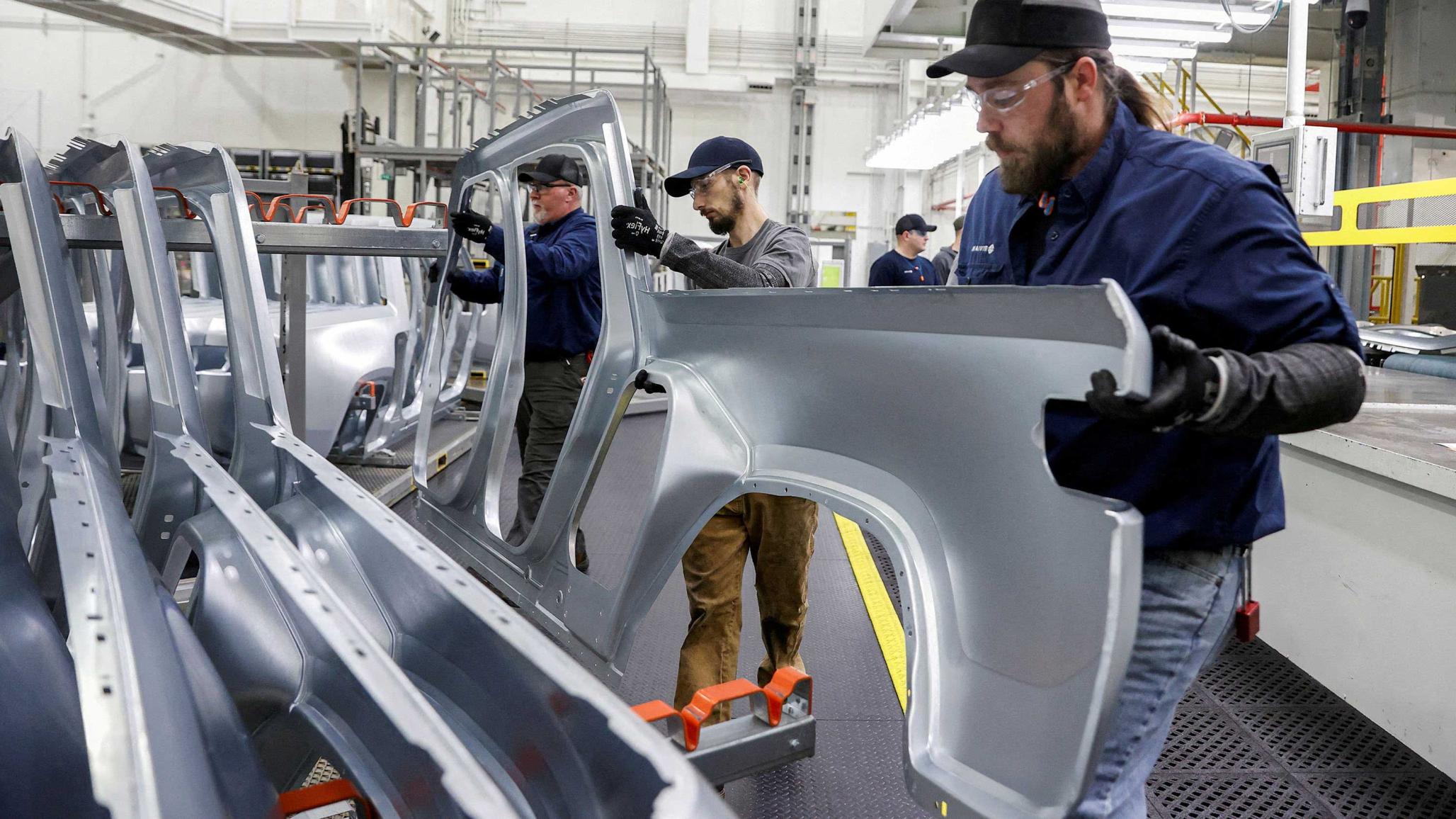
And contrary to Trump's promises to revive US industry, America's manufacturing and agriculture sectors see disproportionate losses in production and employment due to his tariffs.
Liberation Day tariffs, adjustments, and scenarios
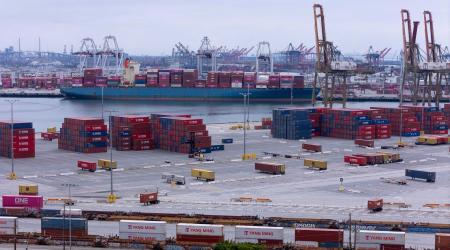
The tariffs Trump announced on April 2—which he dubbed Liberation Day—included specific so-called reciprocal increases on many individual economies, even free trade partners such as South Korea (assigned a 25 percentage point tariff increase), Jordan (20 percentage points), and Israel (17 percentage points). He also announced a blanket 10 percentage point additional tariff on all imports from other economies (except for trade with Canada and Mexico compliant with the United States-Mexico-Canada Agreement [USMCA]). Noncompeting products like bananas and tin were subjected to US tariffs for the first time since the 19th century.
The negative market reaction forced Trump to modify these tariffs to allow some sectoral carveouts and to postpone the "reciprocal" tariffs for 90 days.1 Meanwhile, he announced tariffs on steel, aluminum, and autos.
Given the tremendous uncertainty about the ultimate level and structure of US tariffs, we analyzed five scenarios—high US tariffs, low US tariffs, high US tariffs with retaliation, low US tariffs with retaliation, and high US tariffs with retaliation and a higher US risk premium. These are detailed further in our paper and summarized here:
- High US tariffs. The reciprocal tariffs take effect after the 90-day postponement expires (with some exemptions). The 25 percentage point tariff on USMCA noncompliant trade and the 20 percentage point fentanyl-related tariff on China remain. The tariffs on steel, aluminum, and autos and parts remain, and the carveouts sunset.
- High US tariffs with retaliation. The tariffs of the first scenario plus other countries retaliating with matching tariffs on US goods. China keeps its 45 percentage point blanket tariff on imports from the US plus an additional 20 percentage points due to the fentanyl dispute. Any tariffs above 65 percent causes US imports from China to cease. The EU applies a 20 percentage point tariff on all US exports.
- Low US tariffs. The reciprocal tariffs die, leaving a 10 percentage point universal US tariff on all imports, apart from a higher tariff on China and some sectoral variation. The USMCA noncompliant tariff is reduced to 12 percentage points. The sectoral carveouts become permanent. The US sets its increase in tariffs on China to 30 percentage points on products not considered under special tariffs, the electronics carveout becomes permanent.
- Low US tariffs with retaliation. The tariffs of the previous scenario plus other countries matching those tariffs on US goods. China imposes mirror tariffs on imports from the US.
- High US tariffs, full retaliation, and higher US country risk. The high tariffs with retaliation scenario plus a 75 basis point increase in the risk of holding US assets. This is broadly consistent with the observed roughly 5 percent depreciation of the dollar relative to the euro as of May 10. We assume the same increases in the risk premia of holding of Mexican and Canadian assets, given the strong financial market correlations.
We added the fifth scenario to mimic the surprising dollar depreciation that followed the April 2 tariff announcement. Usually, imposing US tariffs on imports drives the dollar higher: In theory, fewer US purchases of foreign goods reduce US demand for foreign exchange, putting fewer dollars in circulation abroad, making them more expensive in global currency markets. Instead, the US dollar fell around 5 percent relative to most major currencies between April 2 and May 10. At this writing in mid-June, major US stock indexes are roughly back to where they were at the start of the year and the yield on the 10-year Treasury note is close, but the dollar remains notably lower for the year to date.
In the model, we assume that bond market participants arbitrage between holding US government bonds and foreign government bonds. They compare the expected return on US bonds with the expected return on foreign bonds in foreign currencies, adjusted for the expected rate of depreciation of the foreign currencies and the relative risk of holding US versus foreign assets. If there is a rise in the risk of holding US bonds, then the dollar would depreciate as US bonds are sold in preference to holding foreign bonds.
In practice when country risk changes, many variables change, particularly central bank interest rates, so changes in bond markets and exchange rates respond to a range of factors.
We examine the scenarios using the G-Cubed economic model, detailed in our paper. First, we generate a baseline forecast for each economy for the coming decade, assuming the tariffs are not adopted. We then use the model to project the tariffs' effects, measured as deviations from that baseline. The chaotic nature of the introduction and subsequent amendment of these policies require us to end our period of analysis on May 10, 2025. A more complete set of economic results for most countries and regions—including variables such as trade balance, effective exchange rate, total imports of goods and services, and employment—can be found in the online dashboard.
US Results
Economic growth is slower in all five scenarios than if the tariffs were not adopted—declining more as the scale of the tariffs and of the retaliation grows. With the higher US risk premium added in the fifth scenario, we see higher inflation and significantly lower real GDP than in the other scenarios. Under the fifth scenario, relative to the baseline:
- Real GDP is 2.1 percent lower by 2026. It partially rebounds but remains lower through 2034 (figure 1).
- Durable manufacturing production falls almost 12 percent by 2026 while employment, measured by number of hours worked, drops more than 10 percent. They remain about 7 percent and about 6 percent lower, respectively, by 2034 (figure 2). While the weaker dollar increases foreign demand for US manufactured goods, domestic demand falls because of the investment slowdown in the US
- Agricultural production is 7 percent lower by 2026, while employment is almost 5 percent lower. Production is 10 percent lower and employment is almost 6 percent lower by 2034. While still substantial, the output loss is slightly reduced relative to the tariff scenario because the weaker dollar makes US agriculture exports more competitive overseas.
- Inflation jumps 1.8 percentage points higher in 2025, causing the Federal Reserve to tighten monetary policy to lower it back to almost the baseline level by 2026.
How much output falls and prices rise in each scenario depends on the scale of the tariffs that the US imposes on other countries and the scale of the response of different countries to the US tariffs. The exclusion of USMCA-compliant trade from tariffs confers a trade preference to Canada and Mexico relative to the other countries in the model. But they are subject to an offsetting contagion of financial risk from the US.
While the tariff war details change daily, it does appear that Trump's adjustments to his plans made in response to industry feedback, political pressure, and market movements have significantly mitigated the economic impacts of US tariff policy. Still, under all five scenarios we examine, the tariffs damage the US and global economies.
Note
1. Carveouts were announced for copper, pharmaceuticals, semiconductors, lumber, critical minerals, and energy, but Trump subsequently hinted that these sectors might also receive protection.
Data Disclosure
This publication does not include a replication package.