
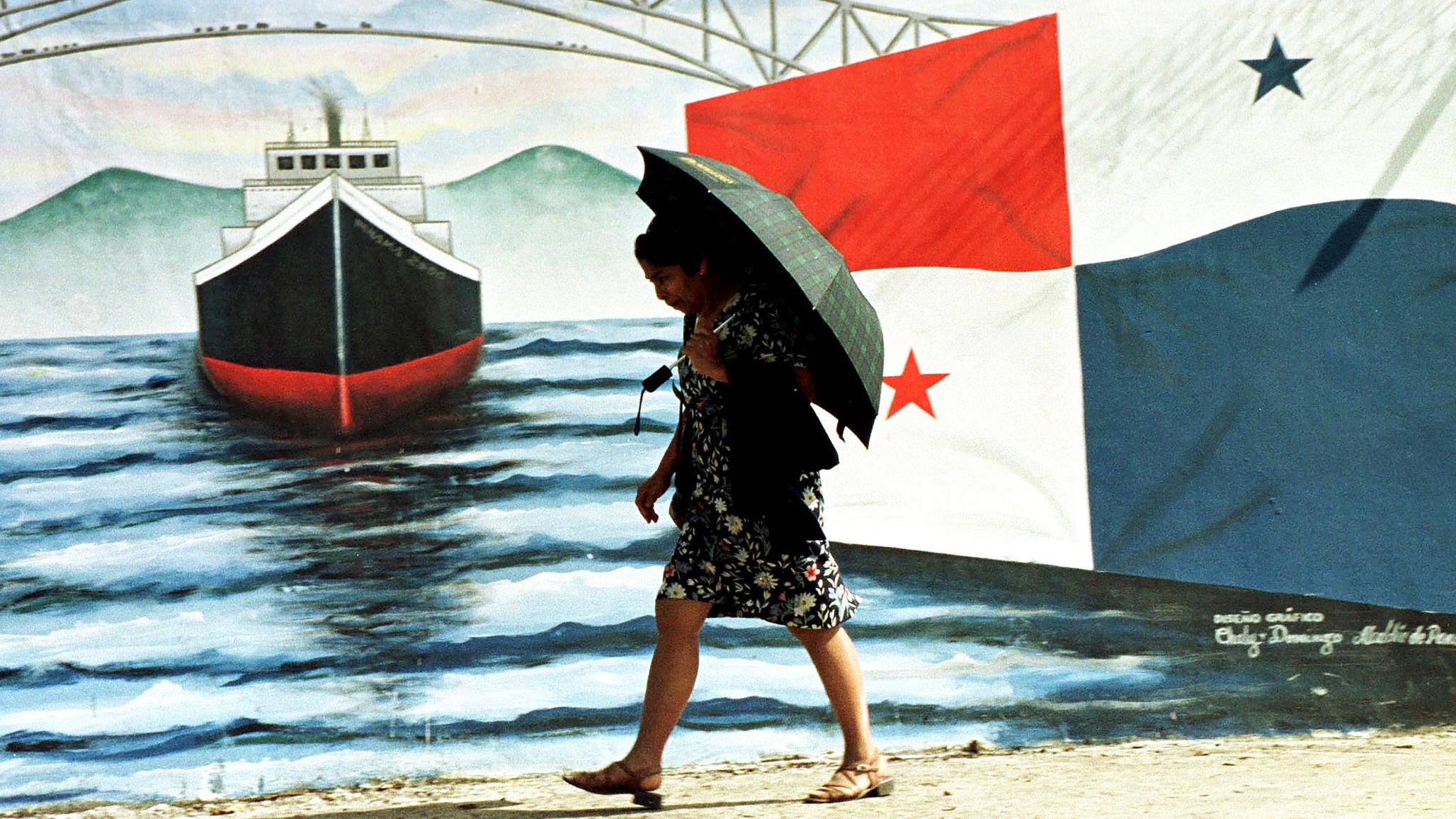
The Panama Canal has been vital to US interests since it was constructed more than a century ago. Some 70 percent of the total tonnage passing through the canal today are goods to or from the US, and it has become a strategic resource at a time of rising Chinese influence in the Americas.
But now a combination of factors, including climate change and shifting weather patterns caused by El Niño, has jeopardized the canal’s future. Its water levels are dropping, and its traffic has been disrupted at a time when China is expanding its infrastructure investments in ports and transit lines in Latin America to take the canal’s place.
Is the Panama Canal’s decline inevitable? Not necessarily.
That’s the view of my guest on the latest Policy for the Planet podcast. He is David Gantz, a retired law professor at the University of Arizona and the Will Clayton Fellow at the Baker Institute for Public Policy at Rice University in Houston. In this episode, we discussed the options to save the canal from marginalization.
The idea of connecting the Atlantic and the Pacific oceans through the Panama Isthmus dates back at least 500 years. Early Spanish and Portuguese explorers dreamed of creating a water route to connect east and west. Unlike the Suez Canal, which is entirely sea water, the Panama Canal is a freshwater linkage centered on Gatun Lake, requiring locks for ships to rise and fall in elevation to reach lakes within the isthmus.
The US controlled the canal when construction started in 1904, but it transferred sovereignty to Panama in the 1970s with the Panama Canal Treaty under President Jimmy Carter. Panama has made improvements over time. In 2016, a new set of locks were developed for larger container ships. The new locks reuse about 60 percent of the fresh water that is needed for every transit.
The droughts of 2023 and 2024 took their toll, requiring a reduction in the number of transits in order to conserve water. Panama also had to reduce the depth of the canal to conserve water, which limited the ships that could use it.
Rainfall returned to normal later in 2024, but ships still get backed up waiting for transit. What will be normal in the future? I asked Gantz if the canal was doomed. “I think doomed is probably a bit of an overstatement, but clearly, particularly from climate factors, obviously none of us know when the next drought could take place,” he said. “We don't know nearly as much about the effects of climate change as we would like to. But certainly, you could have a situation where the reduction in transit numbers, the difficulties this caused for world commerce, would occur again.”
He cited two projects to revive the Panama Isthmus as a transit hub: a $1.5 billion project to dam up the Indio River, which would require massive relocation of Panamanians, and a second, more ambitious, project to construct a pipeline for natural gas across the isthmus, with terminals on either end, costing as much as $8 billion. Such a pipeline would help deliver liquefied natural gas from the US Gulf Coast to Asia.
China, meanwhile, has made “enormous economic inroads” in the region, Gantz noted. China is building a new port in Peru that could make it easier and faster for goods from Latin America heading toward China to cross the Andes, removing the need to go through North America.
I asked him if soybeans from Argentina and Brazil will take such a route to China, cutting off markets for US farmers. What is the future of the canal? “Well, I guess I would be on the moderately optimistic side,” Gantz said. “But I think the great uncertainty here, as in so many other places in the world, is what is going to happen with climate change? Will droughts become more frequent? Will they become more severe? If there is a drought in Panama and you have a new dam in addition to the Gatun Lake, but there's no rain, it's still not going to solve the problem.”
Please listen to the podcast to hear more about this poorly understood but essential part of the US economic future.
Data Disclosure
This publication does not include a replication package.

The Policy for the Planet podcast explores how countries are responding to new economic, health, and geopolitical challenges raised by climate change, hosted by Monica de Bolle. Subscribe on Apple Podcasts, Spotify, or wherever you get your podcasts.