
China's ambitions to influence the world economy will fail if it cannot meet its outsized need for energy, especially electricity, to power its innovations in artificial intelligence.
But in an accomplishment that is little appreciated in the West, China has made strides in meeting those needs by expanding its electrical grid and tapping new energy sources, including in hydropower, nuclear energy, and renewables like wind and solar energy.
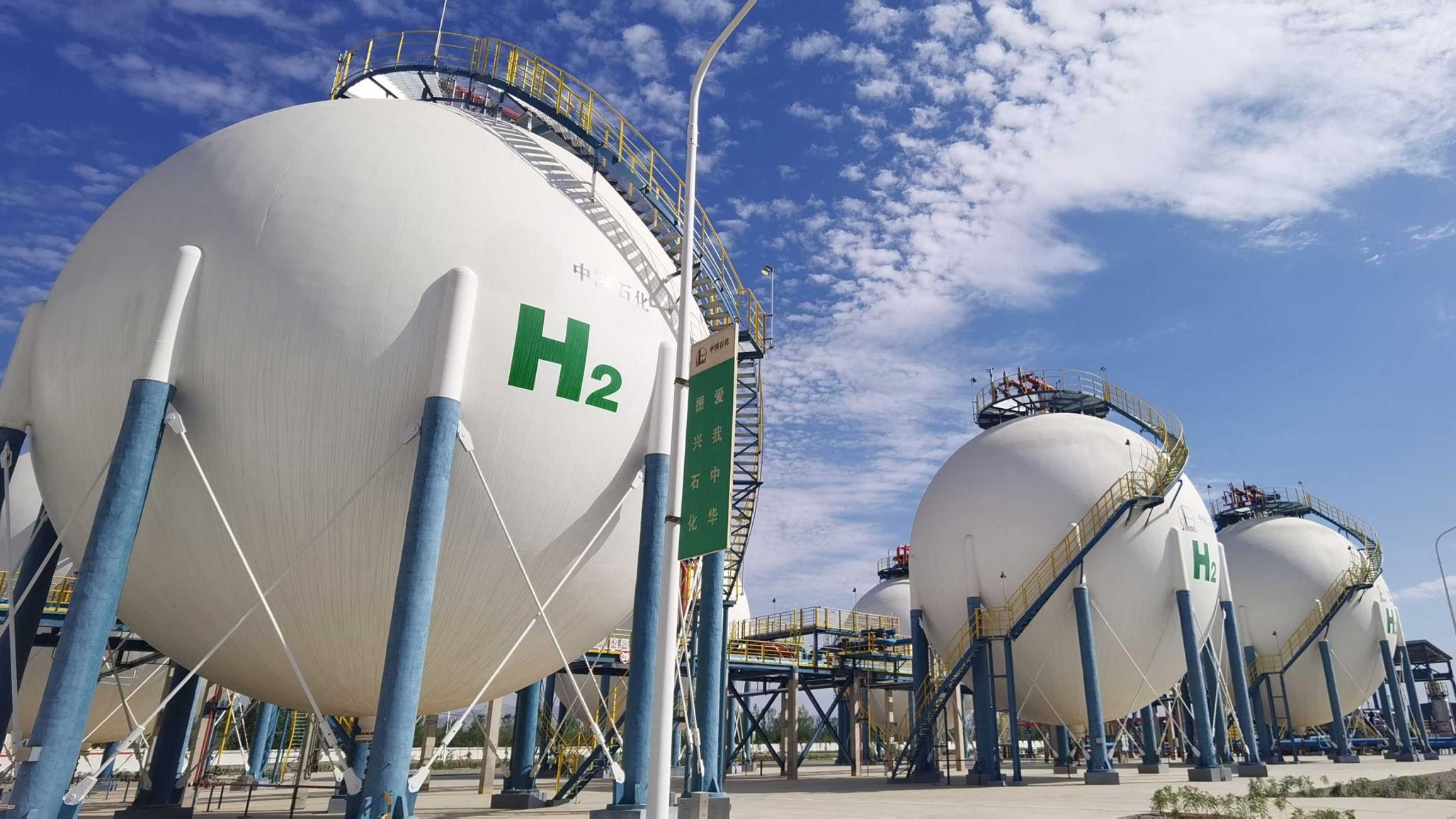
More impressively, it is investing in a novel energy source known as green hydrogen—a clean fuel produced by splitting a molecule of water into its hydrogen and oxygen components with electricity powered by a renewable energy source. From green hydrogen it is possible to obtain green ammonia, and thus environmentally sustainable fertilizers, a potential market that China also intends to dominate. To learn more about China's innovations, I spoke with David Fishman, a China expert with the Lantau Group, a leading private sector energy, electricity, and oil and gas consulting group focusing on the Asia-Pacific region. The conversation is for our PIIE podcast, Policy for the Planet. David is based in Singapore.
As he pointed out, China faced something of an energy crisis only a few decades ago, posing obstacles impeding its goal of becoming a modern industrial economy. Starting around 15 years ago, China realized that it had to lower its dependence on coal, not only to avoid pollution and environmental degradation but to address what was becoming the major issues of climate change.
Among the options it carried out were hydropower, nuclear power, and natural gas. No less impressively, China has added something like 1,600 gigawatts of wind and solar power capacity in the last 15 years. As he puts it, "You can see the role of coal in the generation mix is also rapidly declining as other types of generation, other types of power, are filling up the generation mix instead." Reliance on coal has plateaued, replaced by other sources.
I asked him how China's investments in electrical grids compare with other countries. Its grid capacity is growing at 5 or 6 percent a year, he said—the equivalent of the needs in Germany or Japan. In effect, China has to add "an entire country's worth of power generation just to meet its demand for growth," while also capping its demand for energy.
A future energy source that promises to alleviate global warming and pollution is hydrogen. But the problem is that hydrogen needs to be produced by some method other than coal gasification or other processes that rely on fossil fuels. A solution would be to use electricity from low carbon sources to produce green hydrogen. To make such processes cost effective, they have to be scaled up. "And that's where everybody encounters problems," David said. "Even China is going to encounter problems in that area. To overcome them, they'll have robust state backing."
State backing is something China knows how to do. But can China really achieve all these goals?
Despite a growing view that China's growth is unstoppable, David notes that China's path to success is filled with imponderables. "Let's be aware," he says, China "also has these great challenges…. But from where I see it, I really do see a lot of momentum on China's side when it comes to the ability to build the things that are needed to keep the industrial economy moving." On balance, "it's hard to argue even in the context of the caveats, that there's a lot of momentum on China's side."
Data Disclosure
This publication does not include a replication package.


The Policy for the Planet podcast explores how countries are responding to new economic, health, and geopolitical challenges raised by climate change, hosted by Monica de Bolle. Subscribe on Apple Podcasts, Spotify, or wherever you get your podcasts.