
The latest rationale to justify President Donald Trump's tariffs is the charge that US trading partners are condoning forced labor conditions—not in their own countries but in countries with whom they trade. The United States bans certain imports from China produced by forced labor. In effect, the Trump administration wants to globalize this ban.
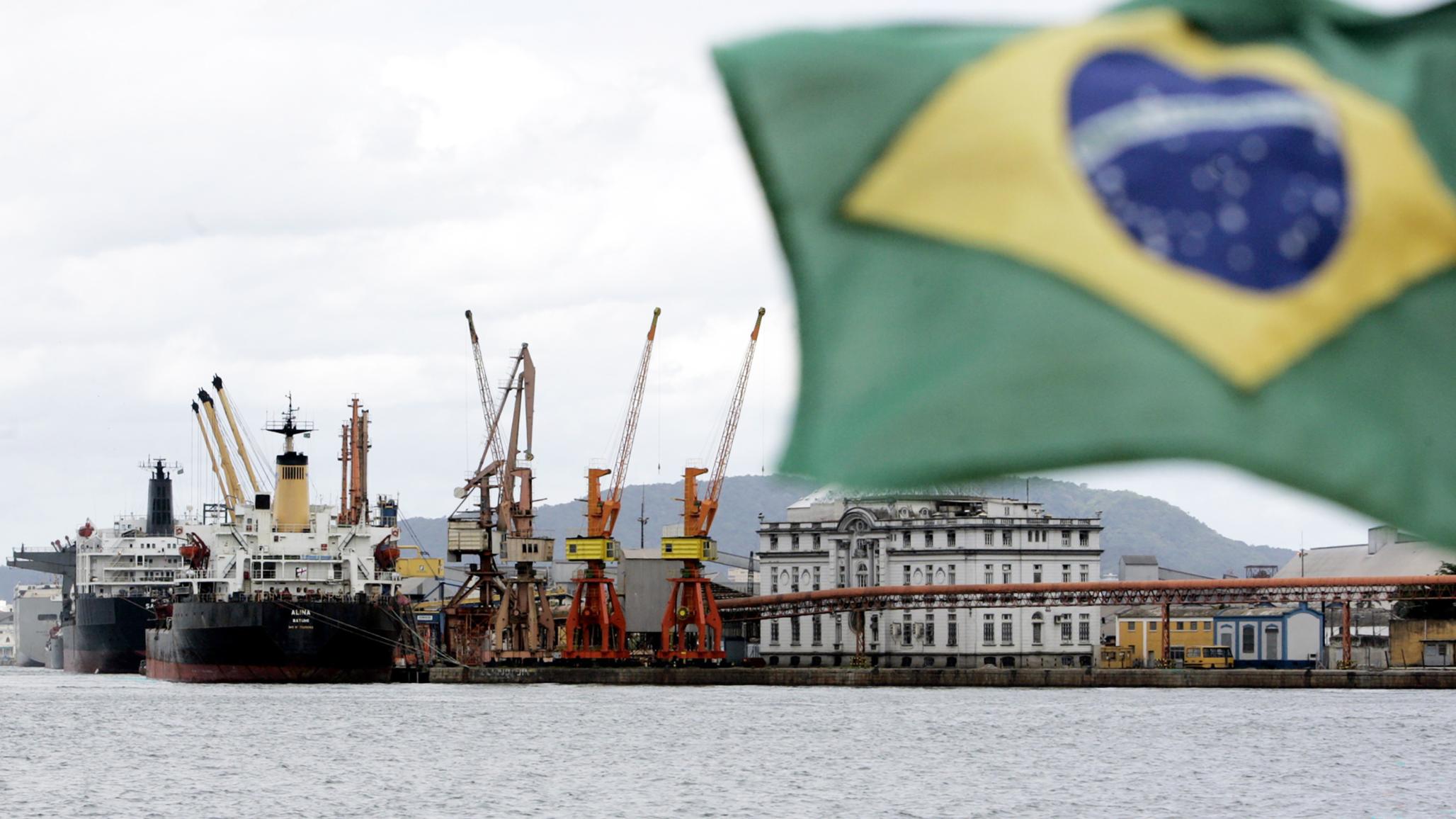
Brazil is one of the US targets, posing a problem since China is one of its biggest trading partners. But one thing is clear. This dispute is not about forced labor. None of the remedies being sought would do anything to address any forced labor conditions anywhere. No, this action is about the Trump team's effort to use any legal stratagem to wage its trade war and to single out Brazil for punishment.
Some background is in order. In June, the Office of the US Trade Representative (USTR) announced findings in 60 parallel investigations into trade practices deemed unreasonable or in violation of trade laws under Section 301 of the Trade Act of 1974. The USTR turned to this provision after the Supreme Court threw out its tariffs based on emergency laws earlier this year. Nearly every significant US trading partner, including Brazil, was targeted with a proposed additional duty of 10 to 12.5 percent. In taking this action, the United States charged these countries with failure to prohibit imports of goods made with forced labor elsewhere. Comments closed on July 6, hearings were held on July 7, and a final determination can now be issued at any time, likely on July 24, when a previous set of tariffs invoked under Section 122 of the same 1974 trade act are set to expire.
For Brazil, the practical question is what this second Section 301 action is likely to yield, given that it arrives on top of the 25 percent tariff that takes effect on July 22, aimed at presumed "unfair trade practices." The answer requires seeing the investigation for what it is: not a labor-standards exercise but a mechanism for exporting America's import ban on Chinese goods, as well as an attempt to recreate the tariff regime struck down by the Supreme Court in February.
Import bans on forced-labor goods, like the one the United States operates under Section 307 of the Tariff Act and the Uyghur Forced Labor Prevention Act (UFLPA), can be justified. But in reality, these bans suffer from leakage: Goods barred from one market divert to others, the offending production continues, and firms that comply with the ban are undercut in third markets by those that do not.
If every major importer adopted an equivalent ban, the leakage would close, and the ban might actually be effective. The USTR's findings roughly acknowledge the problem. They note that 54 economies, Brazil among them, have failed to impose and enforce such a prohibition; six others—including the European Union, Canada, and Mexico—have prohibitions on paper but enforce them only to an inadequate extent.
But the USTR report never examines forced labor in Brazilian production or imports. The USTR sets no benchmark a country could meet to exit the tariff, and it ties the application of tariffs to trade concessions rather than labor outcomes.
The tariff instrument is structured as follows: 10 percent for economies that have adopted a prohibition or entered into "reciprocal trade commitments" with the United States, 12.5 percent for everyone else. A country can, in other words, reduce the forced-labor tariff with concessions to the United States that have nothing to do with forced labor.
Not that forced labor is to be tolerated anywhere. On the use of forced labor in domestic production practices, however, Brazil is an interesting case. Its mobile inspection groups have raided properties using slave-like labor since 1995. The country's Article 149 of the penal code criminalizes the practice in terms international bodies have cited as a model. And since 2003 the "Lista Suja"—a periodically updated public registry of employers caught using forced labor, with real financing and reputational consequences—has been studied and praised by the International Labor Organization (ILO). The USTR findings do not dispute any of this, because they do not examine it; forced labor in Brazilian production is simply not the subject.
Brazil does lack an import prohibition mechanism, and adopting one is a foreign policy decision. Brazil's fight against forced labor in its own country predates the Section 301 investigation by three decades and will outlast it. Whatever one thinks of Brazil's dependence on trade with China, no Brazilian government, of any orientation, is going to adopt a Chinese-goods exclusion regime at Washington's demand, under tariff threat, in the middle of a bilateral trade war in which the United States is the aggressor. Which means that the faux US "investigation" therefore more or less automatically converts into tariffs.
The likelihood therefore is that an additional 12.5 percent—or 10 percent, if Brazil's domestic regime is generously counted as a "prohibition"—will likely be added to the 25 percent imposed on July 16. The proposed action nominally covers all products but contains its own list of exemptions, including articles already subject to Section 232 tariffs, raw materials unavailable domestically, and goods whose taxation would cause "economy-wide disruptions." These categories reproduce the logic of July's tariff carve-outs without automatically carrying over their list. As a result, coffee, orange juice, pig iron, and other Brazilian exports to the United States on which the United States depends would have to qualify for exemption, as they were qualified to get in previous trade actions.
Virtually every US ally—including the European Union, Canada, and Mexico—received materially identical USTR findings on the same day. Using slave labor as a bogus justification for a trade war becomes obvious when you realize that the tariff is being threatened against some 60 economies simultaneously. Brazil can fight against it by enlisting allies. In other words, the pressure is multilateral by construction and should be answered that way. The US demand that Brazil enlist in America's economic war on China is misplaced. The 301 case turns out to be about US economic force—not about forced labor.
Data Disclosure
This publication does not include a replication package.
