The Peterson Institute for International Economics is a private, nonprofit, nonpartisan research institution devoted to the study of international economic policy. More › ›
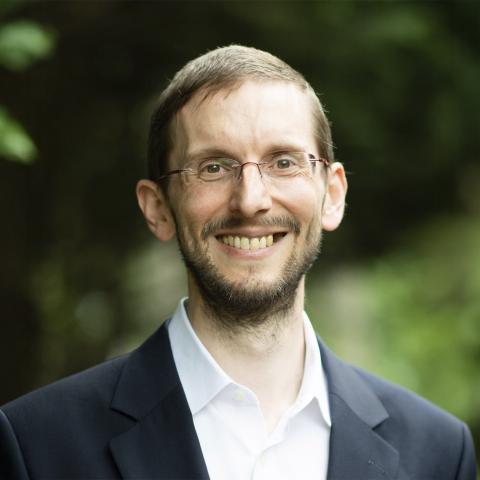
Anders Åslund has been a senior fellow at the Peterson Institute since 2006. He is also an adjunct professor at Georgetown University. He examines the economies of Russia, Ukraine, and Eastern Europe, as well as focuses on the broader implications of economic transition. He worked at the Carnegie Endowment for International Peace from 1994 to 2005, first as a senior associate and then from 2003 as director of the Russian and Eurasian Program. He also worked at the Brookings Institution and the Kennan Institute for Advanced Russian Studies. He earned his doctorate from Oxford University.
Åslund served as an economic adviser to the governments of Russia, Ukraine, and Kyrgyzstan. He was a professor at the Stockholm School of Economics and the founding director of the Stockholm Institute of East European Economics. He worked as a Swedish diplomat in Kuwait, Poland, Geneva, and Moscow. He is a member of the Russian Academy of Natural Sciences and an honorary professor of the Kyrgyz National University. He is co-chairman of the board of trustees of the Kyiv School of Economics and chairman of the Advisory Council of the Center for Social and Economic Research (CASE), Warsaw.
He is the author or coauthor of 13 books, including The United States Should Establish Permanent Normal Trade Relations with Russia (2012), How Latvia Came through the Financial Crisis (2011), The Last Shall Be the First: The East European Financial Crisis (2010), The Russia Balance Sheet (2009), How Ukraine Became a Market Economy and Democracy (2009), Russia's Capitalist Revolution: Why Market Reform Succeeded and Democracy Failed (2007), How Capitalism Was Built: The Transformation of Central and Eastern Europe, Russia, and Central Asia (Cambridge University Press, 2007), Building Capitalism: The Transformation of the Former Soviet Bloc (Cambridge University Press, 2001), How Russia Became a Market Economy (Brookings, 1995), Gorbachev's Struggle for Economic Reform, 2d ed. (Cornell University Press, 1991), and Private Enterprise in Eastern Europe (Macmillan, 1985). He is also editor or coeditor of 16 books, including Russia after the Global Economic Crisis (2010), Challenges of Globalization: Macroeconomic Imbalances and Development Models (2008), Europe after Enlargement (Cambridge University Press, 2007), and Revolution in Orange (Carnegie Endowment, 2006).
NPR's All Things Considered Two Nominations Round Out Obama's Second-Term Cabinet Audio with transcript | May 2, 2013 Jeffrey J. Schott expects the newly-nominated US Trade Representative, Mike Froman, to hit the ground running since he has been at the heart of everything the administration has done on trade.
Business News Network The Political Climate in Russia Video | May 6, 2013 Anders Åslund explains to BNN why the number of small enterprises in Russia is declining and how the reduced competition is slowing economic growth.
Voice of America Russia Re-Industrializes as Energy Boom Fades Video | March 22, 2013 Anders Åslund tells Voice of America we should expect to see a substantial revival of Russian manufacturing now that oil prices seem to be leveling out and Russia's energy sector is no longer crowding out other sectors.
Voice of America 2012 Ukrainian Elections Through the Eyes of US Experts Video | October 2012 Anders Åslund joins a Voice of America discussion to preview the upcoming parliamentary elections in Ukraine and to discuss future cooperation between Kyiv, Brussels, and Washington.
Onet.pl Poland Is Now Ready for Growth Video | September 25, 2012 Former Polish Prime Minister Jan Krzysztof Bielecki, guest interviewer on Onet.pl, Poland's largest internet TV channel, chooses Anders Åslund as his guest to discuss the European debt crisis and economic reforms in the Middle East from a East European perspective.
Business News Network German Court Ruling on European Stability Mechanism Video | September 12, 2012 Anders Åslund discusses the announcement of German courts ratifying the European Stability Mechanism (ESM), which is designed to act as a new bailout fund for the euro area.
Bloomberg TV ECB Decision Will Calm Bond Markets Video | September 6, 2012 Anders Åslund says the European Central Bank's decision to give up its preferred creditor status is a critical change that was needed to help raise confidence in the bond markets.
American Enterprise Institute Putin Made Two Mistakes About Medvedev Video | December 9, 2011 Anders Åslund speaks at the conference, "Russia's Revolution 20 Years Later: Hopes of the Past, Expectations for the Future," hosted by the American Enterprise Institute.
BBC Is Russia a "Mafia State"? Video | December 1, 2010 BBC Newsnight's Emily Maitlis asks the former British ambassador to Moscow, Sir Tony Brenton, and Anders Åslund, a former economic adviser to the Russian government, whether there is evidence to suggest a link between organized crime and the Russian government.
Bloomberg Latvian Austerity Plan Is a "Success," Peterson's Åslund Says Article | June 4, 2010 Latvia's strategy to narrow its deficit while keeping the lats fixed to the euro is a "success" and may be a model for other countries, says Anders Åslund.
University of California, Berkeley Conversations with History Interview | February 12, 2008 Conversations host Harry Kreisler welcomes economist Anders Åslund for a discussion of Russia after the fall of communism. He analyzes the reasons for the succcessful implementation of a market economy and the reasons for the failure to achieve a democratic revolution. He compares the leadership of Gorbachev, Yelstin, and Putin. Åslund also discusses the implications of authoritarian rule by Putin for Russia and relations with the West.